
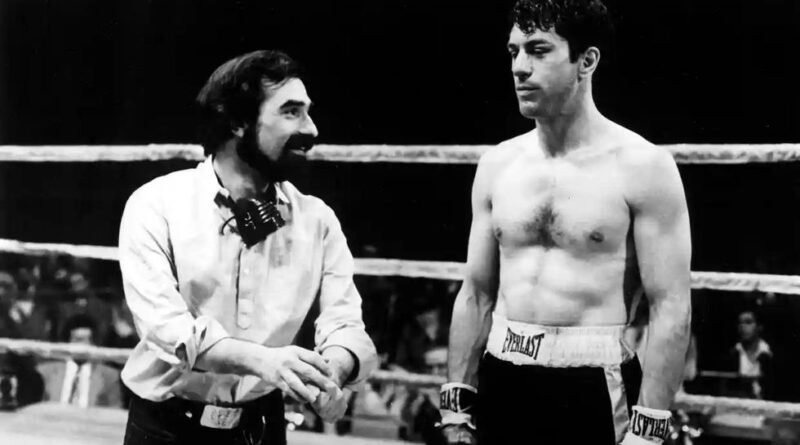
Martin Scorsese Movies: Filmography and Reviews
Martin Scorsese has spent decades exploring the relationship between desire and self-deception. His criminals, artists, religious figures and outsiders often believe they can control the stories told about them. His films reveal the cost of that belief.
His partnership with editor Thelma Schoonmaker and recurring collaborations with Robert De Niro and Leonardo DiCaprio have produced distinctly different periods of work. The crime films are a natural entry point, but stopping there would miss his studies of faith, cinema history, romance and American power.
Essential film reviews
Start here. Each review is a standalone analysis with spoilers, scene breakdowns and a verdict.
| Year | Film | Why it matters |
|---|---|---|
| 1976 | Taxi Driver | Isolation and a distorted moral perspective. |
| 1980 | Raging Bull | Jealousy, violence and the impossibility of winning against oneself. |
| 1990 | Goodfellas | The seductive promise and brutal cost of criminal belonging. |
| 2006 | The Departed | Two false identities and an institution that cannot protect the truth. |
More essential Scorsese reviews
- Casino (1995) — ambition, money and the limits of control.
- The Wolf of Wall Street (2013) — satire and the seduction of excess.
- The Irishman (2019) — loyalty, betrayal and old age.
The broader Scorsese filmography: selected feature films
| Year | Film | Why it matters |
|---|---|---|
| 1973 | Mean Streets | Friendship, obligation and guilt in Little Italy. |
| 1974 | Alice Doesn’t Live Here Anymore | An independent life after loss. |
| 1977 | New York, New York | Ambition and romance in a stylized musical. |
| 1982 | The King of Comedy | Celebrity, obsession and entitlement. |
| 1985 | After Hours | A night of escalating comic anxiety. |
| 1986 | The Color of Money | The mentorship and business of competition. |
| 1988 | The Last Temptation of Christ | Faith and human temptation. |
| 1991 | Cape Fear | Family vulnerability and vengeance. |
| 1993 | The Age of Innocence | Social conventions as a form of control. |
| 1995 | Casino | The intersection of organized crime, business and ambition. |
| 1997 | Kundun | Spiritual authority and political upheaval. |
| 1999 | Bringing Out the Dead | Exhaustion and the limits of rescue. |
| 2002 | Gangs of New York | Violence, identity and political myth. |
| 2004 | The Aviator | Howard Hughes and the cost of obsession. |
| 2010 | Shutter Island | Memory, trauma and the construction of truth. |
| 2011 | Hugo | The preservation and rediscovery of cinema. |
| 2013 | The Wolf of Wall Street | Excess and the seduction of financial power. |
| 2016 | Silence | Faith tested by persecution and moral uncertainty. |
| 2019 | The Irishman | A lifetime of loyalty ending in isolation. |
| 2023 | Killers of the Flower Moon | The exploitation and murders of Osage people. |
Where to start
Goodfellas is the most accessible demonstration of his rhythmic storytelling. Taxi Driver and Raging Bull show how he builds a film around an unreliable or self-destructive protagonist. The Departed is an excellent introduction to his later collaborations. For an entirely different Scorsese, try The Age of Innocence or Silence. His concert documentary The Last Waltz (1978) is essential for understanding his relationship to music.
Filmography sources: AFI and Berlinale. This is a curated guide, not an exhaustive list of documentary, short-film and television credits.