Heat (1995) Review: Michael Mann’s Masterpiece About Men Who Cannot Walk Away
Heat is often celebrated as a crime epic, but its most important scene is a conversation over coffee. Michael Mann allows a detective and a thief to acknowledge their similarities without suggesting that they occupy equivalent moral positions. Neither can imagine living without the work that is destroying his relationships.
Full spoilers. Written and directed by Michael Mann; starring Al Pacino, Robert De Niro, Val Kilmer and Amy Brenneman. AFI director filmography.
Explore the Michael Mann director page for more films and reviews.
The story: professionals on opposite sides
Neil McCauley runs a criminal crew while Vincent Hanna investigates major robberies in Los Angeles. The investigation places their professional routines in conflict, but Mann spends considerable time on the people whose lives are affected by those routines. Hanna’s marriage deteriorates, while McCauley’s relationship with Eady raises the possibility of abandoning his established way of life.
De Niro’s restrained performance and Pacino’s outward intensity create a contrast that conceals their shared inability to disengage. Neither character is simply a symbol of his profession. Their moments of fatigue, awkwardness and tenderness reveal lives that could have developed differently.
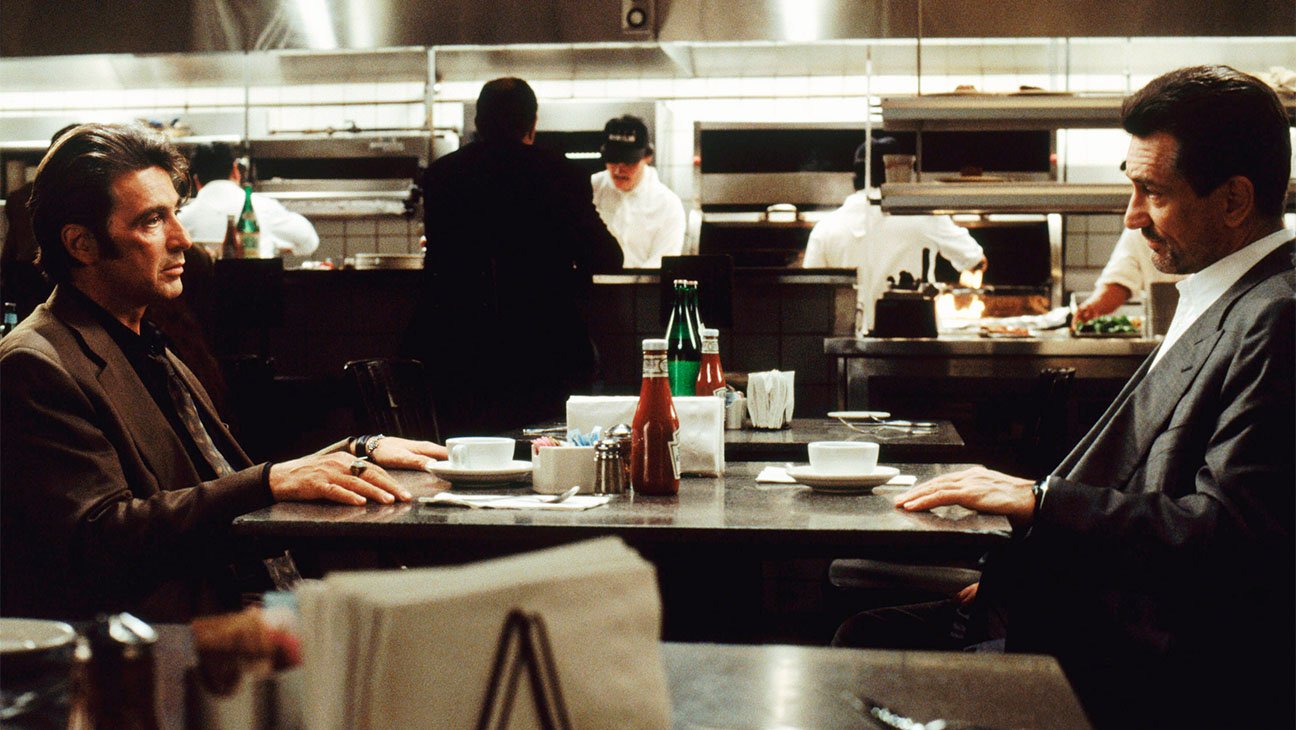
The diner: understanding is not absolution
The conversation between the men is striking because the film does not demand a revelation or a victory in the scene. Both understand the other man’s dedication. They also recognize that if their professional interests collide, that understanding will not protect either of them. The scene is an agreement about the impossibility of reconciliation.
Los Angeles as an emotional landscape
Dante Spinotti’s photography gives the city a nocturnal scale that frequently makes individual characters look small. Glass, highways, lights and empty spaces suggest the possibility of movement without intimacy. The action is famous for its sound and spatial clarity, but the quiet scenes are equally important to Mann’s vision of the city.
The ending: Neil breaks his own rule
McCauley is on the verge of leaving with Eady when he chooses to settle his grievance against Waingro. That choice is the tragedy: a man who defines himself through the willingness to abandon attachments proves unable to abandon revenge. The final encounter at the airport ends with Hanna beside the dying McCauley, holding his hand.
The gesture is not forgiveness. It recognizes a shared human cost at the moment when both men’s professions have determined the outcome. Hanna’s victory does not resolve the problems in his private life. The film allows the emotional meaning of the moment to be larger than the outcome of the investigation.
Why Heat remains essential
Verdict: 10/10. Mann’s achievement is giving a sprawling crime story the emotional concentration of a tragedy. The best reason to revisit it is not the action but the recognition that its characters are most vulnerable precisely where they believe they are strongest.
Related: Heat 2 story analysis and Heat 2 casting coverage.