Goodfellas Review (1990): Martin Scorsese Makes Crime Seductive Before Tearing It Apart
Goodfellas is often remembered for its most entertaining moments, which is exactly what makes it such an effective film about corruption. Martin Scorsese knows the attraction of the world he is exposing. He invites the audience to experience the privilege of belonging to it before showing how little protection that privilege offers.
Spoilers throughout. Directed by Martin Scorsese, adapted with Nicholas Pileggi from Wiseguy; starring Ray Liotta, Robert De Niro, Joe Pesci and Lorraine Bracco. AFI film record.
Explore the Martin Scorsese director page for more films and reviews.
The story of a man who wants to belong
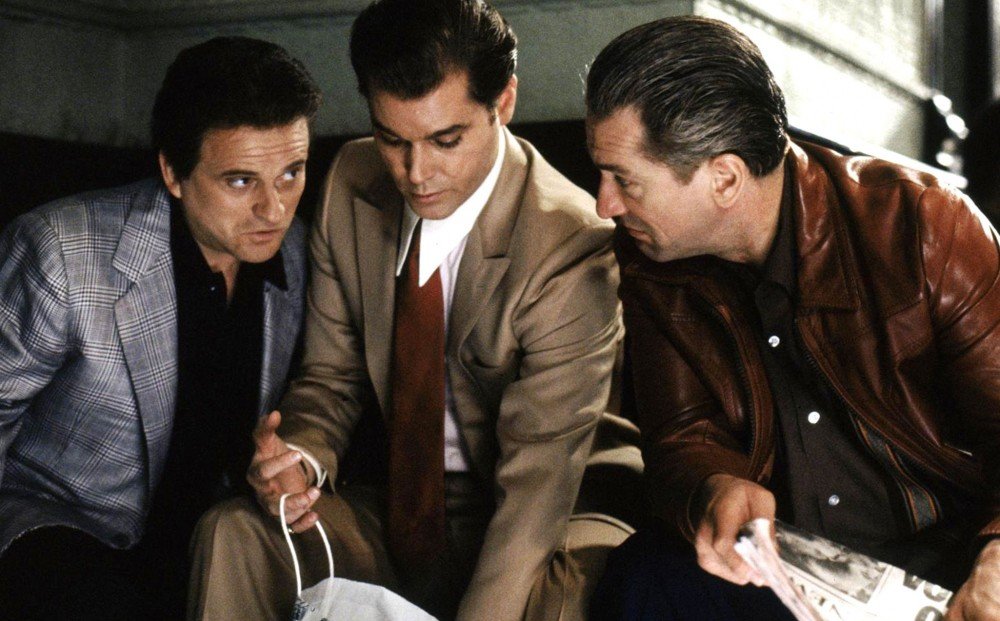
Henry Hill grows up admiring the local gangsters. What attracts him is the impression that ordinary restrictions do not apply to them. His relationship with Jimmy Conway and Tommy DeVito gives him access to money and status, but he is never as secure as his narration suggests. As an associate of mixed ancestry, he cannot become a made member under the rules depicted in the film.
Ray Liotta’s voice-over is not an objective account of the system. It is the story Henry tells about himself. The movie’s editing repeatedly exposes things he would rather reduce to anecdote. His excitement and the viewer’s growing dread can coexist in the same sequence.
The Copacabana shot and the illusion of access
The famous tracking shot follows Henry and Karen through the service entrance and into a nightclub. The camera travels with them rather than presenting their destination as a static reward. Everyone seems to recognize Henry; obstacles disappear; a table materializes. Karen’s astonishment is understandable. The scene turns social privilege into a physical experience.
Later, Karen’s narration changes the perspective. Her attraction to Henry is not simply ignorance. Scorsese allows her to describe the uncomfortable relationship between fear, excitement and complicity. Lorraine Bracco makes Karen a participant whose choices have consequences, rather than a convenient witness to Henry’s story.
Tommy’s death and the end of loyalty
Tommy expects admission to the inner circle, only to be killed in retaliation for an earlier murder. The scene punctures the mythology of personal loyalty. Jimmy’s grief is real, but so is his willingness to eliminate people who become liabilities. The film never suggests that belonging to the group suspends the logic of self-preservation.
The final day: editing becomes paranoia
Thelma Schoonmaker and Scorsese accelerate the film as Henry’s drug use and fear of surveillance take over. Instead of the smooth passage through the Copacabana, everyday errands now feel impossible to coordinate. The formal contrast between the two sequences is the movie’s argument in miniature: a man who believed he controlled access to the world can no longer control his own attention.
The ending
Henry agrees to testify and enters witness protection. His complaint about ordinary suburban life reveals how little moral insight he has acquired. He mourns the disappearance of his privileges rather than the harm that made them possible. The abrupt final image of Tommy firing toward the camera refuses a comforting conclusion.
Verdict: 10/10. Scorsese’s most exhilarating crime film is also an unsparing study of how glamour conceals exploitation. The discomfort of enjoying it is part of the design.