Collateral (2004) Review: Michael Mann’s Night in Los Angeles Changes Everything
Collateral is a thriller about a man who keeps postponing his life until another man forces him to confront the cost of postponement. Michael Mann compresses many of the concerns of Heat into a single night in Los Angeles, replacing two sprawling professional worlds with the confined space of a taxi.
Full spoilers. Directed by Michael Mann, written by Stuart Beattie, starring Tom Cruise, Jamie Foxx and Jada Pinkett Smith. Eye Filmmuseum film programme.
Explore the Michael Mann director page for more films and reviews.
The story: the man who plans and the man who acts
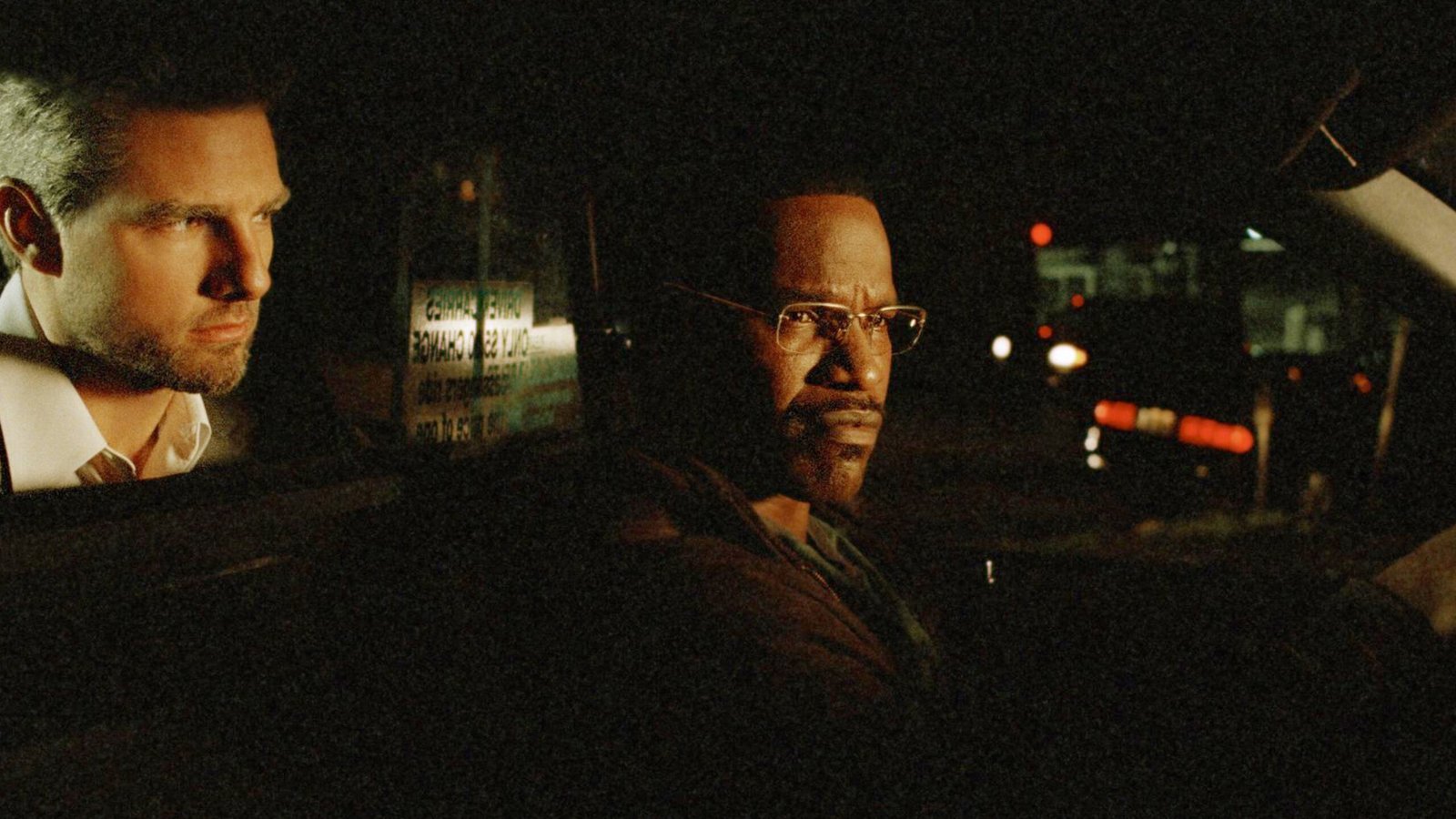
Max is a cab driver who dreams of starting a limousine business but has not turned that dream into action. Vincent becomes his passenger and forces him into a night of violence. The film’s structure turns a familiar working routine into a series of situations Max can no longer manage through politeness and avoidance.
Tom Cruise’s Vincent is a particularly effective reversal of his familiar screen persona. His assurance becomes menacing because he treats personal detachment as superior insight. Jamie Foxx makes Max’s frustration and intelligence visible even when he is unable to act on them. Their conversations are the film’s core, not incidental pauses between thriller sequences.
The city at night
Mann’s use of digital cinematography alongside film gives the night a distinctive texture. Distant lights remain visible; roads and intersections do not disappear into conventional darkness. The scene involving coyotes crossing the street is especially memorable because the film pauses without offering an explanation. The city contains lives and movements beyond the plans of either man.
Vincent’s bleak view of Los Angeles imagines people as interchangeable. Mann’s images quietly contradict that attitude by making the environment alive with particularity. Max’s encounters with his passengers at the beginning establish the same idea on a smaller scale.
Annie and Max’s decision to act
When Max realizes Annie is in danger, his relationship to the night’s events changes. He can no longer treat survival as a sufficient outcome. The earlier conversation with Annie matters because it established the possibility of a meaningful connection before the thriller plot placed it under threat.
The ending: a man nobody notices
The final confrontation leaves Vincent mortally wounded on a train. His earlier observation about a dead passenger going unnoticed becomes a reflection of his own fate. Mann gives the moment a melancholy quality without making it a redemption. Vincent’s professional self-image cannot grant him the significance he imagines himself to possess.
Max and Annie leave the train. The film does not guarantee that Max will achieve his business ambitions or become a different person overnight. It establishes something more modest: he has discovered that he can make a choice under pressure rather than waiting for ideal conditions.
Verdict
9/10. A focused, visually extraordinary thriller that finds its deepest suspense in the question of whether a person can stop deferring his own life. Its pairing of Cruise and Foxx remains among Mann’s most effective collaborations.