Possum Horror Movie: The Puppet You’ll Wish You Never Saw
Smart summary
Possum horror movie is Matthew Holness’s 2018 British film about Philip, a disgraced puppeteer played by Sean Harris, who returns to his Norfolk childhood home and cannot get rid of a hideous puppet. It is slow, quiet and built on trauma rather than jump scares, so it rewards patient viewers.
THE UNHOLY ARCHIVE / 04 · DEEP CUTS · EDITORIAL
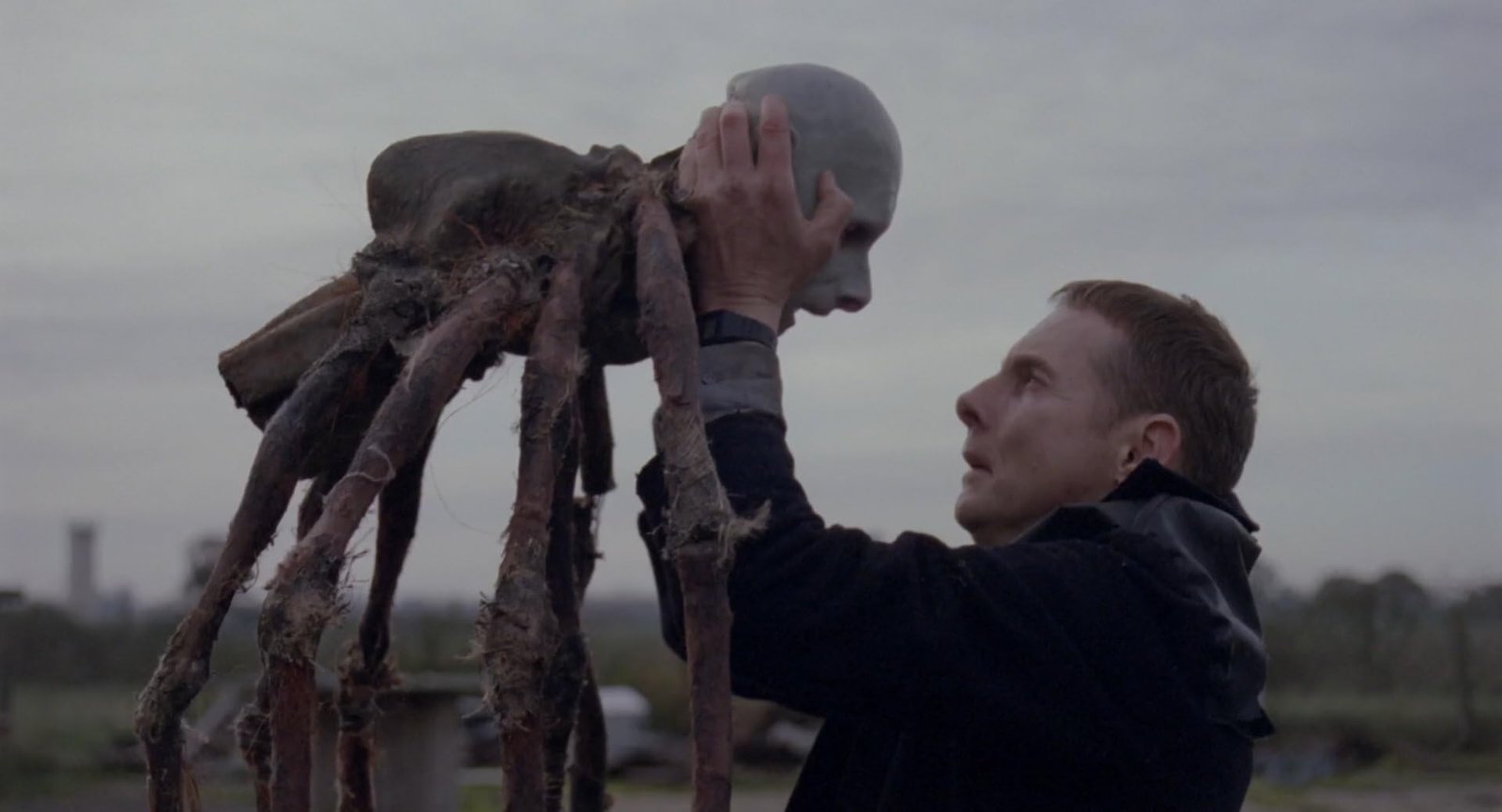
A spider’s body is already unsettling to many people. Give it a human face and the familiar rules of recognition collapse. The result is the object at the centre of Matthew Holness’s 2018 film Possum, a puppet carried in a bag by a disgraced puppeteer returning to the place where he grew up.
We came to this film through the image of the puppet. The more we researched its creation and the critical response, the clearer it became that the creature is not simply a successful monster design. It is a way of giving physical weight to a past that the central character cannot escape.
The man carrying the bag
Sean Harris plays Philip, a withdrawn man returning to his childhood home in Norfolk. Alun Armstrong plays Maurice, a disturbing presence in the house. The British Film Institute describes the film as a psychological fable that favours implication and ambiguity over conventional shocks. Holness’s feature debut is based on his own short story, rather than a familiar supernatural franchise.
The central question is unusually intimate. Philip wants to get rid of the puppet he carries. Yet its presence persists. A story about a haunted object ordinarily begins with someone encountering a thing they did not create. Here the protagonist is a puppeteer, a person whose work is to give inanimate objects apparent life. The distinction between creator and victim becomes complicated.
Why the design works
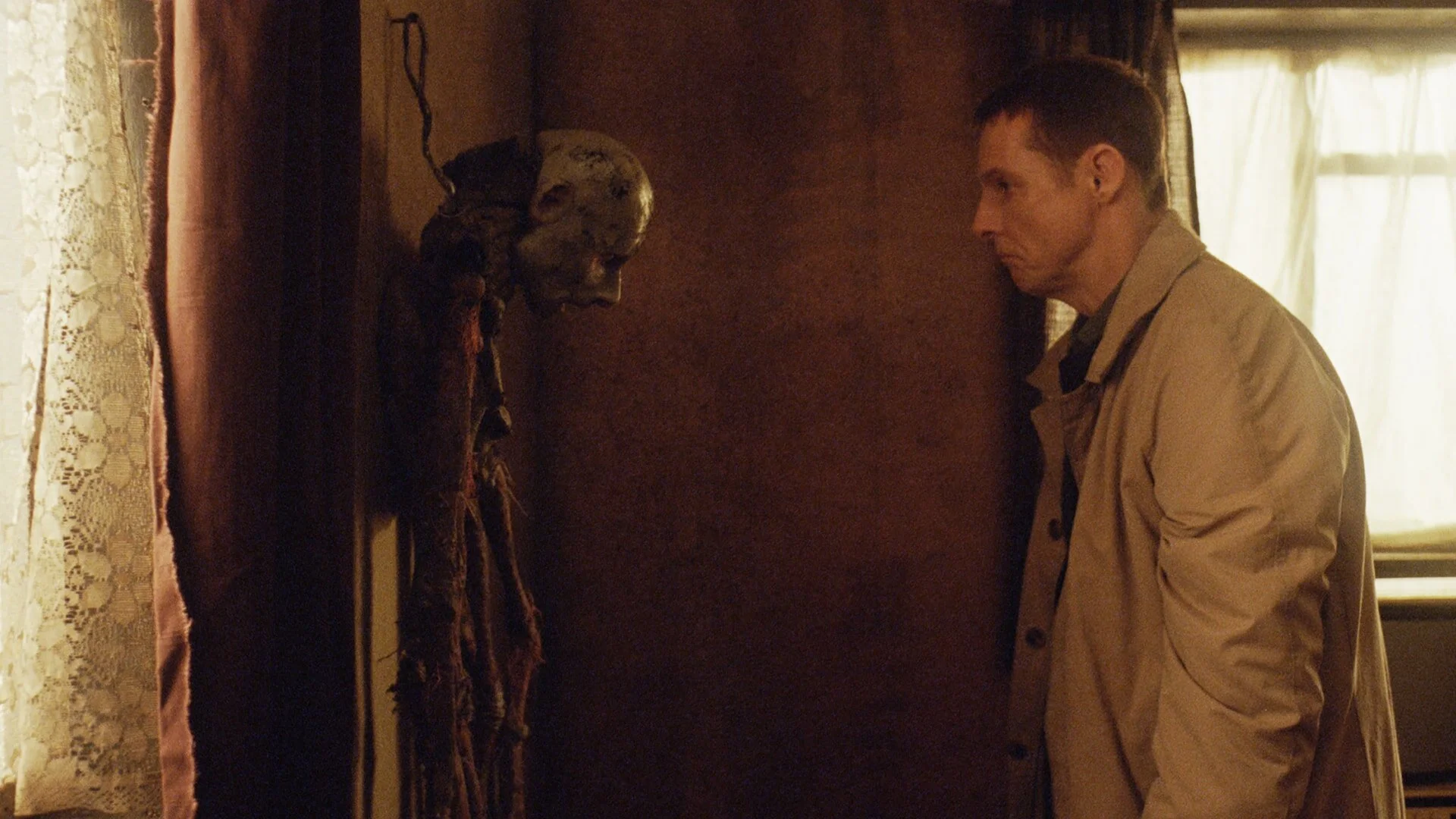
Possum is a contradiction in materials and proportions. Its long, arachnid limbs suggest unpredictable movement, while its pale human-like head suggests vulnerability, identity and an expression we cannot fully read. A recognisable face in the wrong place can be more upsetting than an entirely alien creature because we already know how faces are supposed to behave.
The bag is as important as the object. Concealment lets the imagination assemble the creature from partial information. Once the design has been established, an ordinary bag on a floor can carry much of the fear of the creature itself. The image does not have to be constantly repeated.
Norfolk as an emotional landscape
Critical accounts emphasise the empty buildings, marshland and sparse interiors through which Philip moves. Rather than creating a richly ornamented gothic mansion, Holness places the horror in surroundings that look exhausted. The colour and texture suggest neglect, a world that has been allowed to deteriorate without anyone noticing.
That visual strategy can feel related to Goya’s The Dog. Both use extensive space to make a subject look exposed and small. The comparison is ours, not a claim that Goya directly influenced the film. In each case, the environment refuses to provide reassurance. The space around a vulnerable figure becomes part of its predicament.
Silence, repetition and the return of the unwanted
The film’s sound world is associated with the Radiophonic Workshop, known for experimental electronic sound. Reviews describe the score and the performance as central to its oppressive effect. Harris’s character communicates much through posture and facial expression rather than explanatory dialogue.
That restraint is risky. Repetition can become frustrating if a viewer expects each new encounter to reveal a fresh piece of plot. But it is especially appropriate for a story concerned with memories that resist being put away. When the narrative repeatedly returns to the object, the repetition itself becomes meaningful.
Without spoiling the resolution, we should note that the film deals with childhood abuse and its aftermath. The puppet is not a substitute for taking that subject seriously. It gives the story a visual language for a person who struggles to articulate what has happened to him. Treating it solely as a collection of creepy screenshots would miss what makes the horror substantial.
Is the Possum horror movie worth your time?
Based on the filmmaker’s interviews, available footage and critical coverage, this is a strong recommendation for people interested in slow psychological horror and practical creature design. It may be less rewarding for someone looking for a rapid escalation of scares or a clear supernatural mythology. The disturbing atmosphere is the main attraction, not an obstacle on the way to a more conventional film.
The most unsettling idea here is that a frightening object can be both a burden and a language. Philip wants to abandon what he carries. The story asks whether a person can discard a physical reminder without addressing what made it meaningful in the first place.
The PYLCROW Horror Index
Editorial assessment of the film’s reported techniques and subject matter, not a firsthand viewing score.
The Rabbit Hole
- The Hands Resist Him — a doll poised between human presence and inanimate matter
- Goya’s Black Paintings — negative space as emotional pressure
- Skinamarink — horror built from domestic space