Scavengers Reign Builds an Alien World That Doesn’t Care About Humans
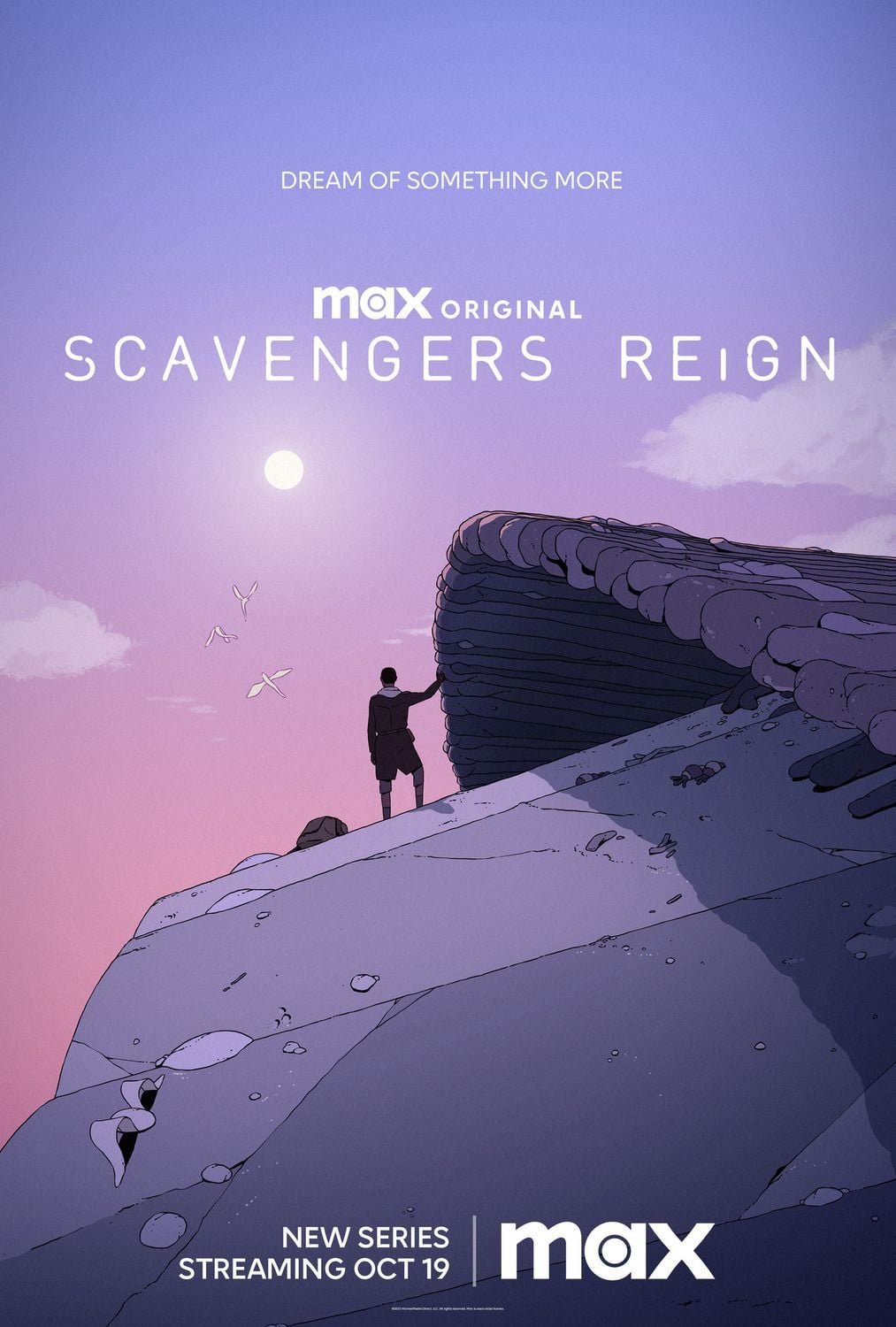
Most science fiction assumes an alien planet is a problem waiting to be solved by a human being. Scavengers Reign imagines a world that does not recognize our right to ask the question. Its extraordinary ecosystem is beautiful, deadly, cooperative, parasitic and often indifferent to the survivors moving through it.
The 2023 animated series from Joe Bennett and Charles Huettner follows survivors of a damaged freighter stranded on an unfamiliar planet. That setup could have produced another sequence of monsters to defeat. Instead, the creatures and environments become the narrative’s most intriguing presence.
The alien ecosystem is not a level to clear
In many games and space adventures, a new organism has one visible purpose: attack, provide a resource or explain the next obstacle. Here, a creature may have a strange biological process that does not exist for human convenience. Sometimes that process is useful; sometimes it is appalling. The same world can make survival possible and render it precarious.
The series earns its sense of otherness through specificity. Biological mechanisms are presented as though they belong to a system with rules, even when those rules remain largely mysterious. That consistency is more persuasive than a constant parade of random visual surprises.
Why animation is essential rather than decorative
Live-action science fiction often has to decide between expensive digital spectacle and a relatively familiar physical world. Animation lets Scavengers Reign design its biology, landscapes and human figures as parts of one visual vocabulary. The result rarely needs to pause and announce that a particular creature is extraordinary. It is extraordinary because the whole world is.
Colors, textures and movement are doing narrative work. An organism’s motion can tell us something about its relationship to its surroundings before a character speaks. The art direction becomes a method of environmental storytelling, not just a collection of impressive backgrounds.
Human drama without human ownership
The survivors bring recognizable fears and conflicts, but their personal stories do not automatically reorganize the environment around them. That tension keeps the drama from becoming purely anthropocentric. Survival requires observation, adaptation and the uncomfortable recognition that one’s own priorities may be irrelevant to the world itself.
Some viewers may wish the show explained more of its mechanisms or offered a more conventional dramatic rhythm. The unanswered biology is a feature, but it can also be a barrier. The important distinction is between purposeful mystery and incoherence; the series works because its oddities usually feel connected to something larger.
Where to begin
Watch the opening episodes slowly enough to examine the ecology, not simply the plot. When a new creature appears, ask what it appears to need from its environment before asking what danger it poses to the humans.
Follow the Rabbit Hole
Next, explore Ichiko Aoba’s Windswept Adan Is an Imaginary Island You Can Hear and In Other Waters Lets You Explore an Ocean Without Looking Through Human Eyes. The connection is a question of technique and tone, not a claim that the creators directly borrowed from one another.
References: Warner Bros. Discovery launch announcement · Official streaming synopsis. Spoiler-light Deep Cuts editorial feature.