Pulp Fiction (1994) Review: Quentin Tarantino’s Miracle in a Diner
Pulp Fiction appears to be a collection of entertaining criminals doing unexpected things. Beneath that surface, Quentin Tarantino is constructing a film about how the same event can become meaningless coincidence for one person and a reason to change for another.
Full spoilers. Directed by Quentin Tarantino, starring John Travolta, Samuel L. Jackson, Uma Thurman, Bruce Willis and Ving Rhames. Miramax’s official film page.
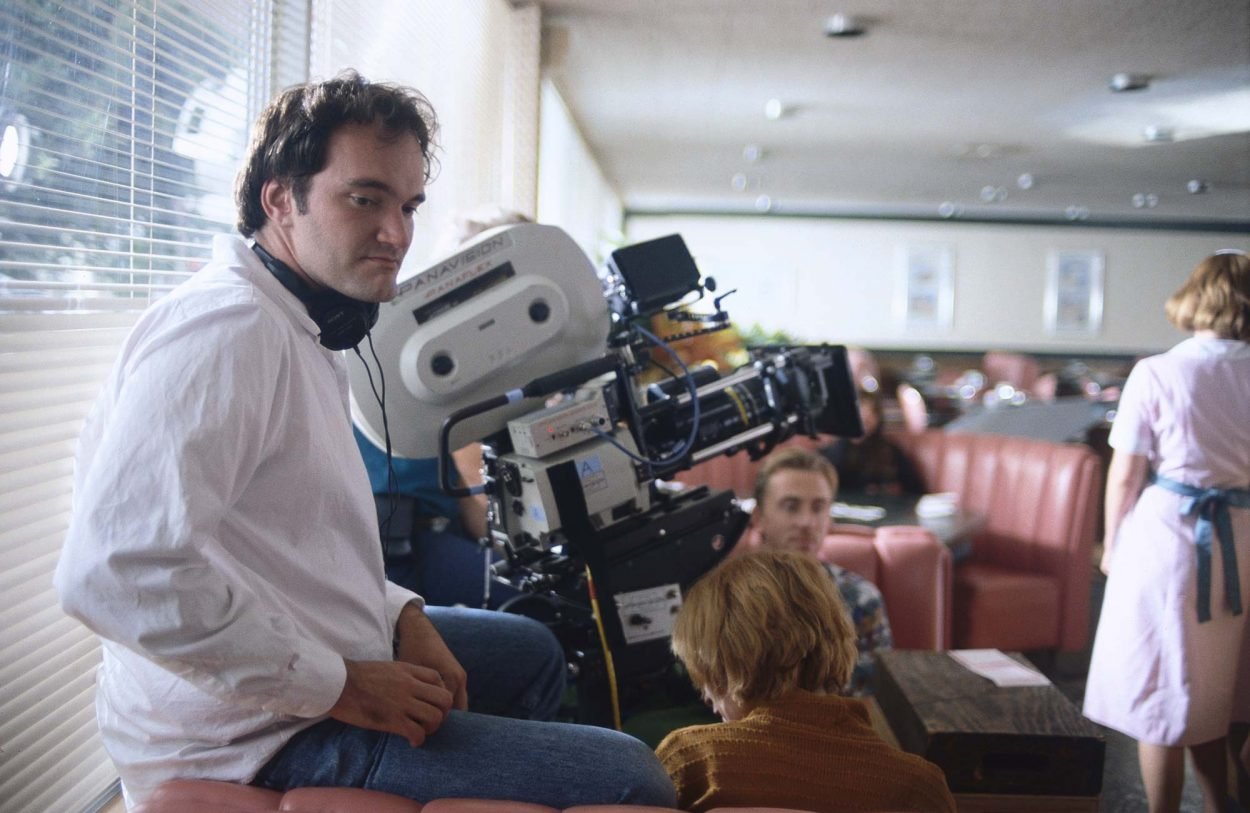
Explore the Quentin Tarantino director page for more films and reviews.
The story: why chronology changes the meaning
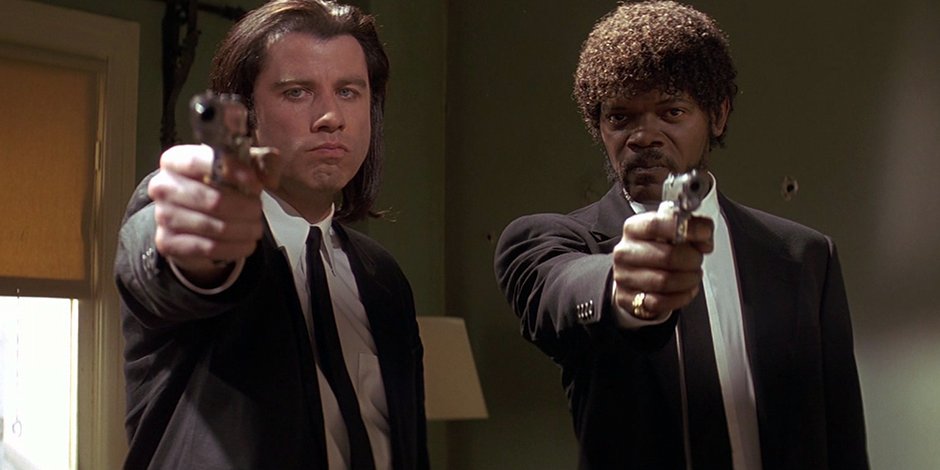
The film interweaves Vincent Vega and Jules Winnfield’s assignments, Vincent’s night with Mia Wallace and boxer Butch Coolidge’s decision to betray Marsellus Wallace. The events do not appear in chronological order. That structure is important because it permits a character who has already died in one section to return in the final act, changing how we judge the choices he and Jules make.
Travolta’s Vincent has the confidence of a man who does not believe he needs to reconsider his life. Jackson’s Jules is initially equally comfortable with the rituals of their work. The movie creates a philosophical disagreement by putting both men through the same improbable event and letting them interpret it differently.
Dialogue as suspense
Tarantino’s conversations often begin with subjects that appear to have little relevance to the immediate danger. This is a way of shifting control. A character who can talk casually during a tense encounter seems to possess time that the other person does not. When that rhythm changes, the audience detects the danger before the film explains it.
The dance between Vincent and Mia is memorable partly because it suspends the expectation of a conventional romantic scene. Both performers understand the peculiar awkwardness of trying to look relaxed while knowing that the relationship has boundaries. The later overdose sequence punctures their temporary control of the evening.
Butch’s return and Jules’s decision
Butch has the chance to escape an appalling situation but chooses to return for Marsellus. The decision is neither necessary for his immediate safety nor consistent with their earlier hostility. It creates one of the film’s unexpected moments of moral agency.
Jules’s encounter in the diner supplies the ending’s corresponding choice. He decides not to kill the robbers and interprets his familiar speech differently, acknowledging that he may not be the righteous man he has imagined. Vincent has rejected the possibility that their survival carries meaning. The audience knows the eventual consequence of his continuing on the same path.
What has aged less gracefully
Tarantino’s fascination with provocation can sometimes feel more self-conscious than revealing. Some of the language and violence invite legitimate questions about what the film asks audiences to find entertaining. These limitations do not negate its structural achievement; they are part of the reason the film remains worth discussing rather than merely imitating.
Verdict: 9.5/10. A playful crime film that turns narrative order into moral argument. Its most memorable choice is ending with a character who decides he can stop.