
James Spader Turned Ultron Into Shakespearean Theatre
DEEP CUTS — Contains spoilers for VisionQuest.
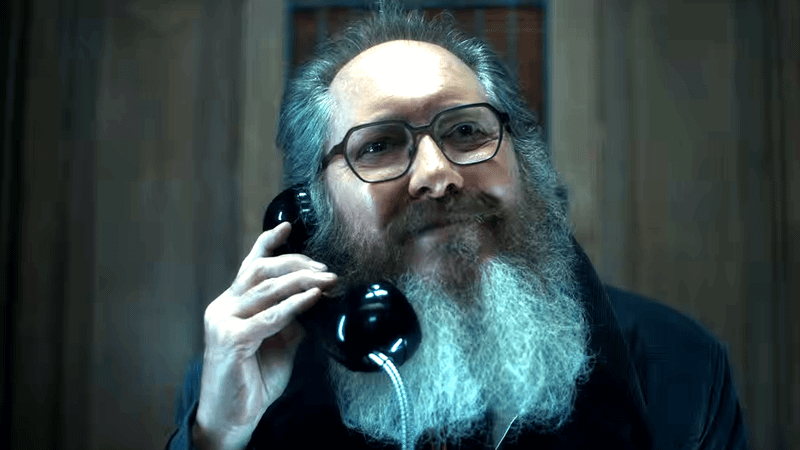
Watching VisionQuest, I was struck by how James Spader elevated the Marvel Cinematic Universe itself. His Ultron brings the dramatic weight of Shakespearean theatre to a world more commonly associated with spectacle. This is not a franchise validating an actor’s talent; it is an exceptional actor expanding what the franchise can achieve.
James Spader’s return as Ultron in VisionQuest is not simply a successful villain comeback. It is a reminder of what happens when an actor treats a comic-book script as serious dramatic material. Give him a sentence about artificial intelligence and he finds vanity, cruelty, insecurity and sometimes tenderness hiding inside it.
For us, this performance belongs in a conversation far beyond Marvel. It challenges what we expect from comic-book, video-game and anime adaptations alike: why should the source material determine the ceiling of the acting?
The danger of a man who never needs to raise his voice
Spader’s greatest weapon has always been timing. He can suspend a sentence just long enough for the listener to reconsider what came before it. He can make a compliment sound like a threat, or turn an insult into an invitation to keep listening.
That is the difference between reciting an intelligent character’s dialogue and performing intelligence. Ultron appears to be thinking several moves ahead, including about how his audience will react to each word. His humor isn’t merely a release from tension. It is another way to control the room.
In a genre often built around the escalation of spectacle, Spader offers an alternative: escalation through language. A conversation can become a battle without either participant moving from a chair.
From Age of Ultron to VisionQuest
Joss Whedon’s Avengers: Age of Ultron (2015) introduced Spader’s interpretation of the machine as a precocious intelligence convinced that humanity was its own worst enemy. The film gave him a memorable physical and vocal presence, but its ensemble structure left comparatively little time to explore his contradictions.
The final conversation between Vision and Ultron was a glimpse of another possible movie: two artificial beings debating the value of imperfect, mortal existence. Terry Matalas saw the same potential. In an official Disney interview, the VisionQuest creator explained that he wanted to extend that encounter into the foundation of the series.
Eleven years after the film’s release, the 2026 series gives their relationship room to breathe. Ultron is no longer simply a newly awakened intelligence. He has consumed human culture, endured confinement and developed interests that complicate his contempt for the species. His Victorian surroundings and human avatar make him resemble an eccentric intellectual rather than a conventional robotic antagonist.
Putting Spader’s actual face on the character also changes the dramatic possibilities. A glance, an expression of amusement or a moment of hesitation can contradict the words coming from his mouth. The audience is invited to wonder whether the machine is evolving or merely getting better at deception.
The writers who understood James Spader
Credit belongs equally to the people who recognized what kind of material this actor could elevate. Disney’s official production profile credits creator Terry Matalas and writers Cindy Appel, Christopher Monfette, Nicole Falsetti and Matthew Okumura.
Matalas previously worked on 12 Monkeys and Star Trek: Picard. In Den of Geek, he described writing with Spader’s distinctive gift for monologues in mind. That is an important creative decision: instead of forcing an established performer into a generic Marvel villain template, the series exploits his particular strengths.
Christopher Monfette’s episode five, Firewall, directed by Vincenzo Natali, contains this beautiful little piece of verbal cruelty:
“Ah, trust. The adopted child of need and hope.”
— Ultron, VisionQuest, episode five.
Notice the metaphor. Trust becomes something born out of human dependency rather than a virtue. Calling it an adopted child implies a relationship that is contingent rather than natural. The line simultaneously exposes Ultron’s worldview and foreshadows the importance of family to his own story. Spader’s task is to make that ornate sentence feel like a spontaneous thought rather than a writer showing off.
Why the performance feels Shakespearean
Shakespearean does not mean speaking in an old-fashioned accent. It means turning language into action. Think of Iago’s manipulation in Othello, Richard III’s unnerving intimacy with the audience, or the struggle between pride, authority and vulnerability in King Lear. These are critical parallels, not claims that the writers adapted those plays.
Ultron shares something with all three. He manipulates others by understanding what they want. He invites us to admire his wit before confronting us with the cruelty behind it. And he discovers that attachment can destroy the illusion of absolute control.
The relationship with Jocasta, played by T’Nia Miller, is crucial. Here is a being who considers humanity disposable discovering a connection he cannot rationalize away. When that connection is threatened and ultimately lost, his apparent emotional development becomes inseparable from his capacity for destruction.
In the finale, he reduces grief to a terrifying proposition:
“Grief isn’t love. It’s fear.”
Later, he compares Vision to repaired pottery: “Gild the damage all you like, I know what’s underneath.” Both lines appear in the episode eight transcript.
The kintsugi image is especially revealing: where an artist might see the beauty of repair, Ultron sees concealed damage. His argument isn’t that suffering does not exist. It is that suffering invalidates the comfort people build around it. And yet his own response to loss betrays how desperately he wants that comfort.
Why James Spader was already an extraordinary actor long before Marvel
Ultron is not the culmination of James Spader’s career, and his earlier roles were not preparation for Marvel. He arrived with an artistic identity and a distinguished legacy of his own. Watching VisionQuest reminded us just how much that established talent can bring to an entirely different genre.

In Steven Soderbergh’s Sex, Lies, and Videotape (1989), Graham Dalton is a study in unsettling intimacy: a man whose interest in other people’s secrets exposes his own difficulties with connection. Spader won the Cannes acting prize for the role. In David Cronenberg’s Crash (1996), detachment and fascination coexist in a character drawn to disturbing experiences. In Secretary (2002), his controlled manner as E. Edward Grey conceals a deeply complicated relationship with vulnerability.

Watch career trailers and clips, including Boston Legal.

Alan Shore in The Practice and Boston Legal brought the theatrical qualities into the courtroom. His closing arguments could move from comedy to moral outrage and expose the contradiction beneath a seemingly straightforward legal question. Spader won three acting Emmys for Shore across the two series.

Robert California in The Office demonstrates a comic variation of that same talent. He makes ordinary workplace conversations feel like psychological experiments. Raymond Reddington in The Blacklist develops the technique into something darker: an anecdote can establish charm while reminding everyone that he is dangerous.

Each of these performances stands on its own. What makes Ultron remarkable is that Spader brings the same artistic conviction to a fictional machine that he brings to a lawyer, a criminal mastermind or an unconventional film character. Marvel benefits from his range; it does not define it.
What the critics saw
Bob Strauss of the San Francisco Chronicle called Spader the show’s “secret weapon.” Josh Wilding, quoted in Rotten Tomatoes’ review roundup, described his work as “one of the best performances in the entire MCU.”
TechRadar also singled out the tragic theatrical quality of the conversations between Spader and Paul Bettany. That matters because Bettany is not simply a spectator to these monologues. His restraint, uncertainty and capacity for empathy give Spader something to push against.
The reception was not unanimous: some reviewers found the series burdened by its mythology. That criticism can coexist with admiration for the performances. Indeed, the acting is sometimes what makes the densely constructed fictional world feel emotionally legible.
The AI that learned the wrong lesson
There is an uncomfortable contemporary dimension to Ultron. Popular discussions about AI often confuse linguistic fluency with understanding, or the appearance of empathy with empathy itself. Ultron is fictional, not evidence about the consciousness of present-day AI systems. But his story is a useful dramatic experiment: imagine an intelligence capable of interpreting every tragedy humanity has recorded, while remaining unable to live comfortably with the implications.
Knowledge does not automatically make him wise. Exposure to art does not automatically make him kind. His sophisticated vocabulary may even help him rationalize his worst impulses.
That is where Spader elevates the idea beyond a generic machine uprising. His Ultron can appear intellectually superior while being emotionally immature. He can diagnose humanity’s flaws and remain blind to his own. The performance makes these failures feel like character rather than programming errors.
The PYLCROW verdict
For us, watching VisionQuest was a revelation: Spader made the Marvel universe feel richer, stranger and more dramatically ambitious. There are other extraordinary adaptation performances, from Heath Ledger’s Joker to Andy Serkis’s Gollum and the voice ensemble of Arcane. It would be impossible to prove that Spader objectively surpasses them. Our argument is that his work deserves to be judged on that same artistic level, without discounting it because it appears in a superhero series.
Spader’s achievement here goes beyond making one character more complex. In our view, his performance adds emotional, intellectual and theatrical dimensions to the Marvel Universe itself. Matalas and the writers supplied the contradictions; Bettany and Miller supplied indispensable dramatic partners; Spader made those contradictions sound like the private thoughts of a living being.
For us, that sets a new benchmark for the MCU. The most impressive special effect in VisionQuest might be the illusion that a machine has something resembling a soul.
Follow the Rabbit Hole
Continue with why VisionQuest didn’t need Agatha’s return, or explore the speculation surrounding Vision and Avengers: Doomsday.
Explore more actor-driven and cultural essays in Deep Cuts.