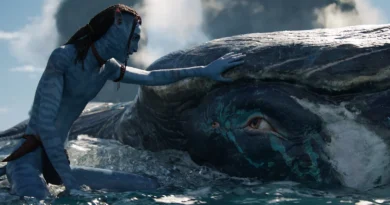
Avatar 2009 Spoiler Review: The Choice That Made Pandora Home
Jake Sully begins Avatar with a body that cannot take him where he wants to go. The film ends with him opening his eyes inside another body, in a world he has chosen over the one that sent him there. Everything in James Cameron’s film is constructed to make that transformation feel earned.
Full spoilers for Avatar (2009). Directed by James Cameron; starring Sam Worthington, Zoe Saldaña, Sigourney Weaver and Stephen Lang. Official film page and trailer.
Explore the James Cameron director page for more films and reviews.
The story: a soldier sent to infiltrate a civilization
Jake replaces his deceased twin brother in the Avatar program, allowing him to operate a genetically matched Na’vi body. The human expedition wants access to mineral deposits beneath the forest, and Colonel Quaritch sees Jake’s growing connection with the Na’vi as a military opportunity. Scientist Grace Augustine sees the same contact as a chance for understanding. Jake is caught between these incompatible definitions of success.
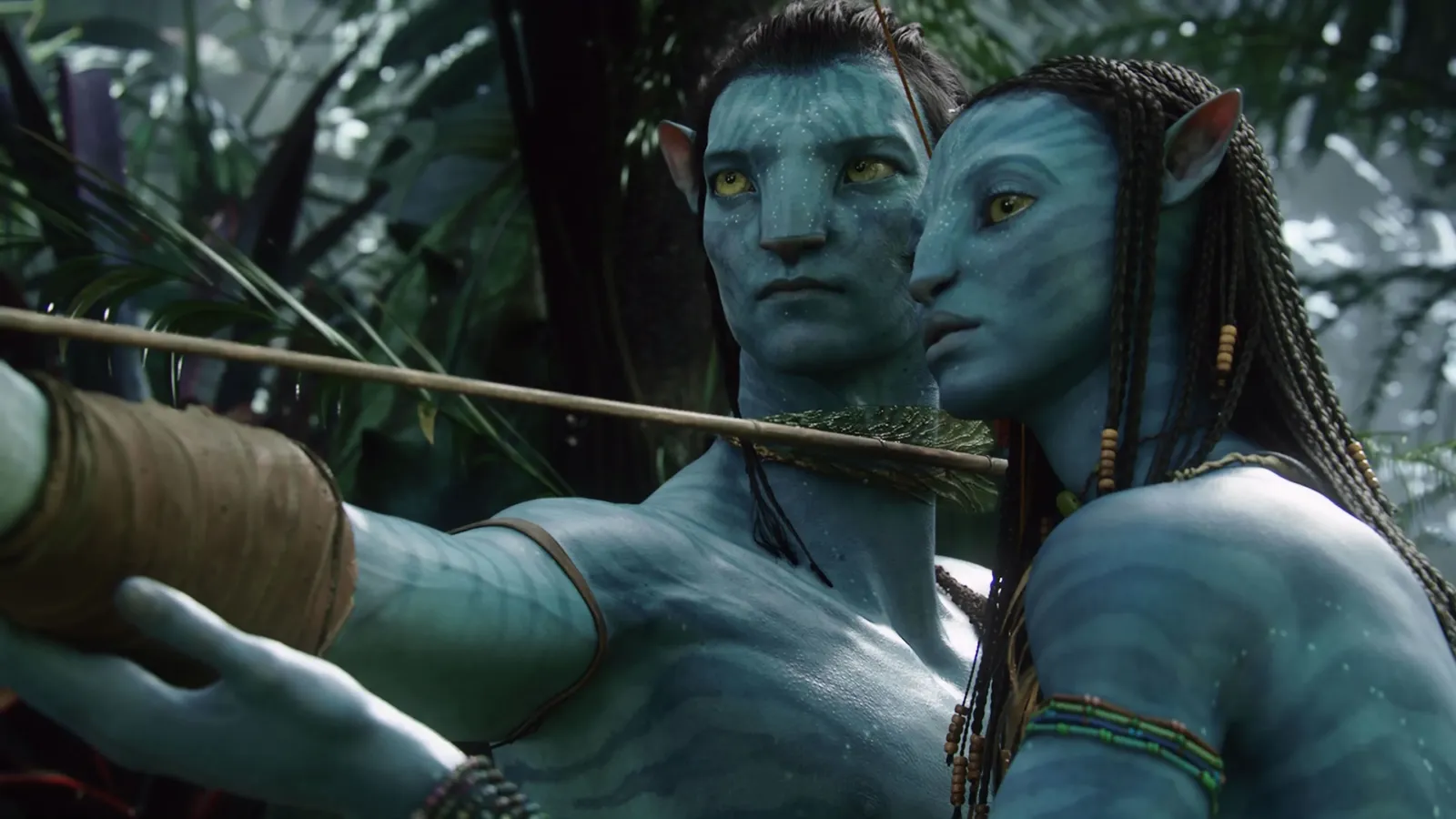
His rescue by Neytiri is important because it establishes his ignorance immediately. She does not exist to admire him; she is irritated by his inability to understand what he has disturbed. Their relationship begins with responsibility rather than romance. Over time, the training gives Jake a second education, one that exposes the inadequacy of the first.
The best sequence is not the final battle
Jake’s first flight is the moment the film converts a technical achievement into a dramatic one. The difficulty of bonding with a banshee matters because the creature will not simply obey. Flight becomes a visible reward for developing a relationship with the environment. That is why the sequence would lose much of its power if it existed only as an aerial demonstration.
James Horner’s score supports the transition from danger into liberation. Cameron often lets the viewer absorb the scale of a space before changing its dramatic meaning. The forest is first overwhelming, then intelligible, then beloved. By the time it is under threat, the audience has developed memories of it.
Hometree changes the moral stakes
The destruction of Hometree is the point where the film stops allowing Jake to compartmentalize his loyalties. His earlier assurances cannot protect the community from the company that employs him. Neytiri’s grief and anger are consequences of deception as well as destruction. The film is strongest when it allows her response to remain painful rather than making reconciliation immediate.
Grace’s fatal injuries and unsuccessful transfer ritual underline the limits of the connection the humans have discovered. Eywa is not a machine they can operate with certainty. The loss also removes Jake’s most important human mentor just as he needs to make a decision about who he will become.
The ending: why Jake’s final choice matters
Jake gains the support of the clans, the battle ends with the human expedition defeated, and Neytiri saves his vulnerable human body. That reversal is essential: the man who has been presented as a liberator remains dependent on the person who taught him to survive. His final transfer to his avatar is successful, and the closing shot replaces an earlier image of awakening with a permanent new identity.
The environmental fable is direct, sometimes too direct. Quaritch and the corporate leadership receive less complexity than the world they threaten, while the outsider-hero narrative risks centering Jake in a story about indigenous self-determination. The later movies have an opportunity to move beyond that framework. Still, the original makes its moral and emotional argument with unusual clarity.
Why the film holds up
Avatar’s dialogue can be functional, but its visual storytelling is exceptionally disciplined. The audience understands the geography of the forest, the rules of physical connection and the value of the threatened home before the climax depends on any of them. The movie’s technology is not the story; it is the means by which the story becomes tangible.
Verdict: 9/10. A familiar narrative transformed into an unusually coherent cinematic experience. Its most enduring achievement is the way the world changes the character, and the character changes the way we see the world.
Read the complete Avatar retrospective and ranking and our Avatar 4 release-date report.