Junji Ito Horror Manga: How a Simple Drawing Becomes a Nightmare
Smart summary
Junji Ito horror manga turns ordinary shapes, a spiral, a beautiful face, a hole in a rock, into obsessions that swallow people whole. Start with Uzumaki or the short story The Enigma of Amigara Fault to see how his page turns do the scaring.
THE UNHOLY ARCHIVE / 09 · DEEP CUTS · EDITORIAL
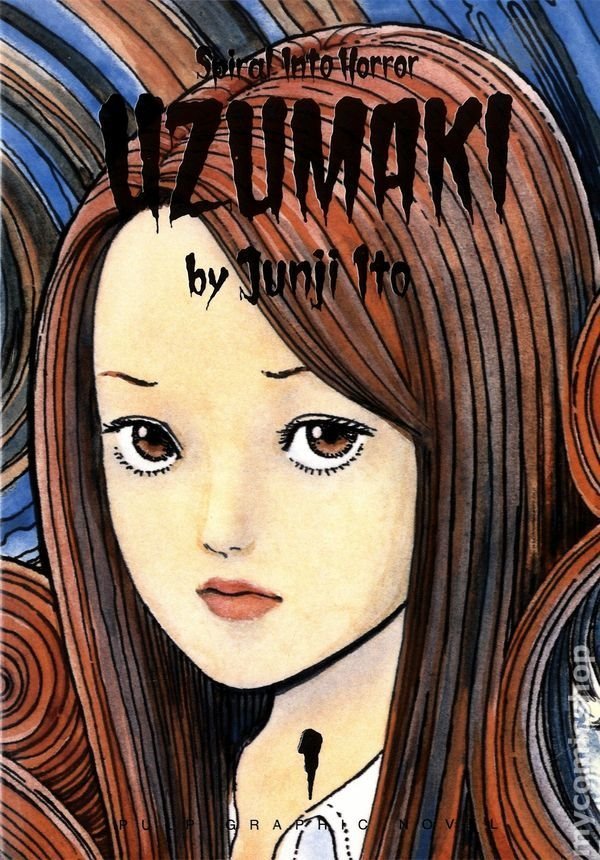
A spiral is not a monster. It is a familiar pattern, found in shells, water, hair and decorative objects. The extraordinary premise of Junji Ito’s Uzumaki is that a pattern this ordinary can become the organising principle of an entire nightmare. After examining the publisher’s catalogue and the visual language of his work, we found an artist whose most unsettling ideas often begin with something we have seen countless times.
What happens when we can no longer trust that an ordinary shape is merely a shape? Ito’s horror is particularly effective on the printed page because the reader is responsible for the speed at which the nightmare appears. A drawing can wait indefinitely for its observer.
Uzumaki: when a motif becomes a world
Uzumaki follows the inhabitants of a Japanese town afflicted by a strange obsession with spirals. Instead of limiting the danger to a single creature or haunted object, the premise allows the same motif to emerge across environments and bodies. The reader can begin recognising it everywhere, even in scenes that might initially look ordinary.
That is a powerful form of repetition. A conventional monster may disappear between scenes, giving the audience an interval of safety. A pattern does not need to enter a room. It can already be part of the room, and it can appear in unrelated settings without requiring a new explanation each time.
Ito’s elaborate linework makes the contrast between an ordinary surface and its impossible transformation especially striking. The more carefully an image is drawn, the more convincingly its impossible details can occupy the same space as recognisable reality. The page is not trying to simulate a photograph; it is making a visual impossibility feel coherent within its own rules.
Tomie: beauty that refuses to disappear
The recurring figure Tomie, whose stories helped establish Ito’s career, complicates a different familiar convention: the beautiful figure whose appearance conceals danger. Her uncanny persistence and the destructive obsessions surrounding her turn attractiveness itself into an unstable premise.
Our comparison with Franz von Stuck’s Lucifer is not a claim of direct influence. In both works, however, a face can dominate the viewer’s attention without providing a reliable explanation of what it means. The disturbing aspect is not simply a monstrous surface. It is a human-looking presence that seems impossible to understand through ordinary social cues.
Tomie’s stories can also be read through their recurring questions about desire and possession. Horror develops from relationships and expectations, not merely from the existence of an unusual figure.
The Enigma of Amigara Fault: the shape of a person
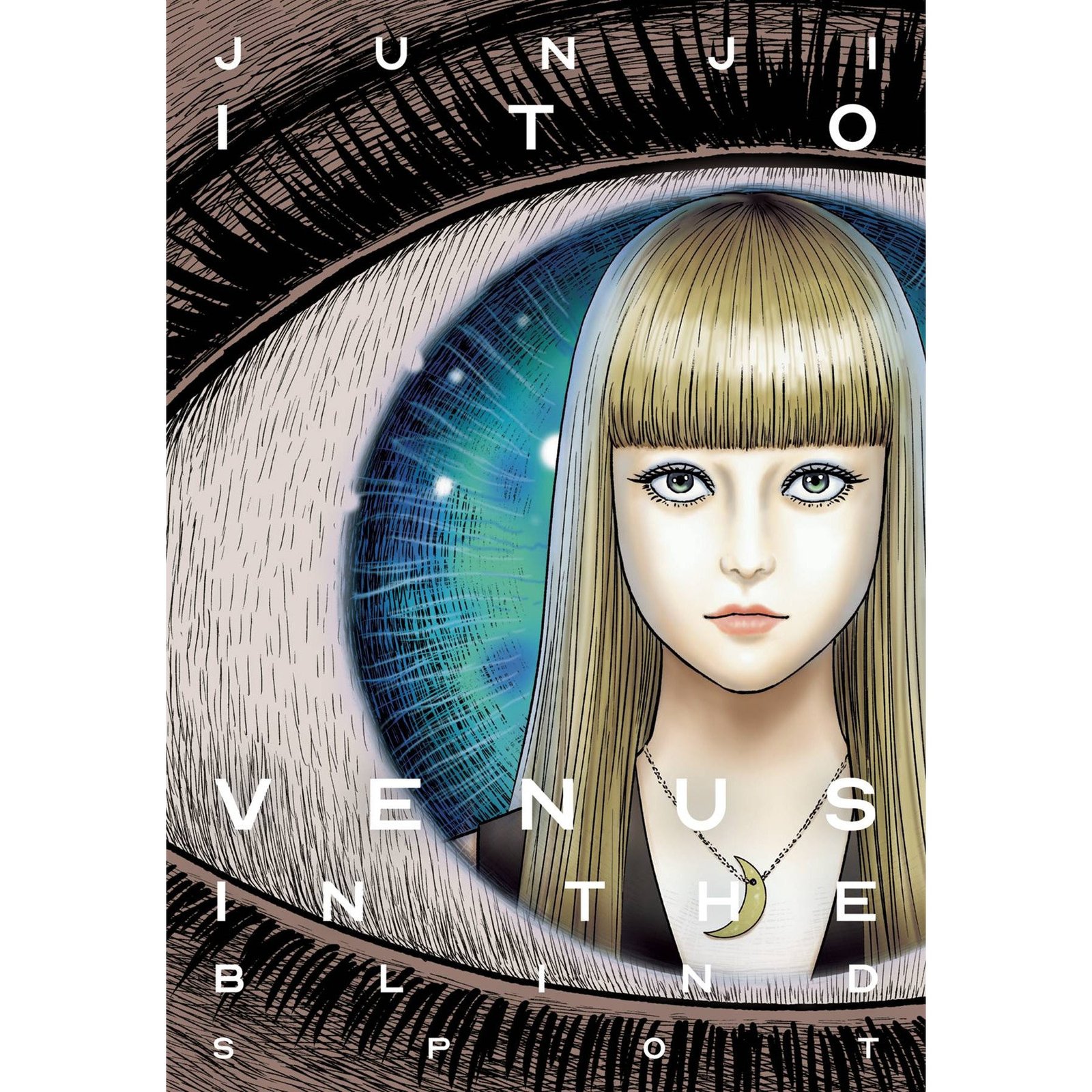
In this widely discussed short story, people discover human-shaped openings in a mountainside. The unsettling idea is that certain individuals become convinced a particular opening corresponds to them. VIZ includes the story in Venus in the Blind Spot, a collection that also contains Ito’s adaptation of Edogawa Rampo’s The Human Chair.
The power of the premise lies in its simplicity. A person’s outline normally signifies their uniqueness, their physical presence in the world. Here an empty shape seems to recognise them before they recognise it. The invitation is frightening because it appears personally addressed, yet its origin and purpose remain opaque.
This is where a drawing can achieve something particularly distinctive. It can present a shape that would be expensive or technically difficult to construct on screen while allowing the reader to inspect the edges for as long as they wish. The image becomes a problem the reader cannot solve by looking away for a moment and then returning.
The page turn as a horror technique
Manga offers a specific advantage over moving images: the artist can build anticipation across panels and reserve a revelation for the next page. The reader participates in that timing. A large image after a sequence of small, relatively ordinary panels can make the whole visual field change at once.
Unlike a jump scare accompanied by a sudden noise, the disturbing drawing remains in place. You can examine it, return to it or study its construction. That persistence is part of the unease. The original stimulus does not disappear when a soundtrack returns to silence.
Where should you start with Junji Ito horror manga?
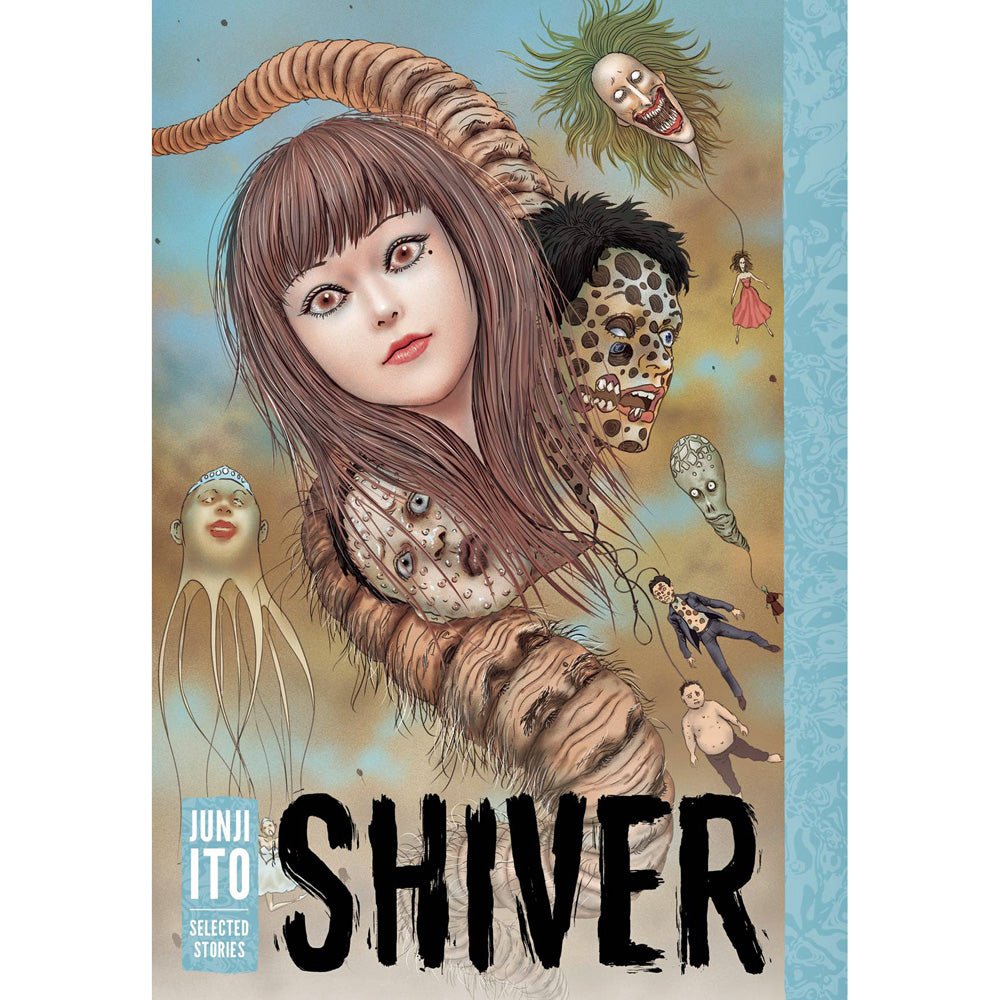
For a sustained story, the publisher’s Uzumaki edition is the natural starting point. For shorter encounters, Shiver and Venus in the Blind Spot offer different samples of his approach. Tomie is worth exploring for the way recurring characters and themes can sustain multiple unsettling variations.
The best reason to investigate Ito is not to find the most extreme drawing in his catalogue. It is to notice how he changes our relationship to ordinary things. A spiral, a face and an empty space can become frightening without changing their basic identity. The artist provides the image; the imagination carries the pattern outside the book.
The Rabbit Hole
- Beksiński — the detailed depiction of impossible forms
- Lucifer — a face that unsettles the observer
- The Hands Resist Him — an image that becomes a story