The Terror True Story: Why the Franklin Expedition Is Scarier
Smart summary
The Terror true story is the Franklin expedition: HMS Erebus and HMS Terror left England in 1845 to find the Northwest Passage, were trapped in ice in 1846 and abandoned in 1848, and none of the 129 men came home. AMC adds a supernatural creature, but the real disaster is the more frightening part.
THE UNHOLY ARCHIVE / 08 · DEEP CUTS · EDITORIAL
Two ships disappear into the Arctic. Their crews have provisions, experience and some of the most advanced equipment available to the Royal Navy. More than a century and a half later, the wrecks are found. The fate of the expedition is partly understood, but many questions remain.
That is not the opening premise invented for a horror series. It is the historical foundation of The Terror, the 2018 AMC adaptation of Dan Simmons’s novel. The story adds a supernatural threat to the lost Franklin expedition. After examining the historical records and the material surrounding the adaptation, we found the most compelling horror was already present in the documented story: the gradual failure of systems that were supposed to keep people alive.
The Terror true story: what happened to the Franklin expedition?
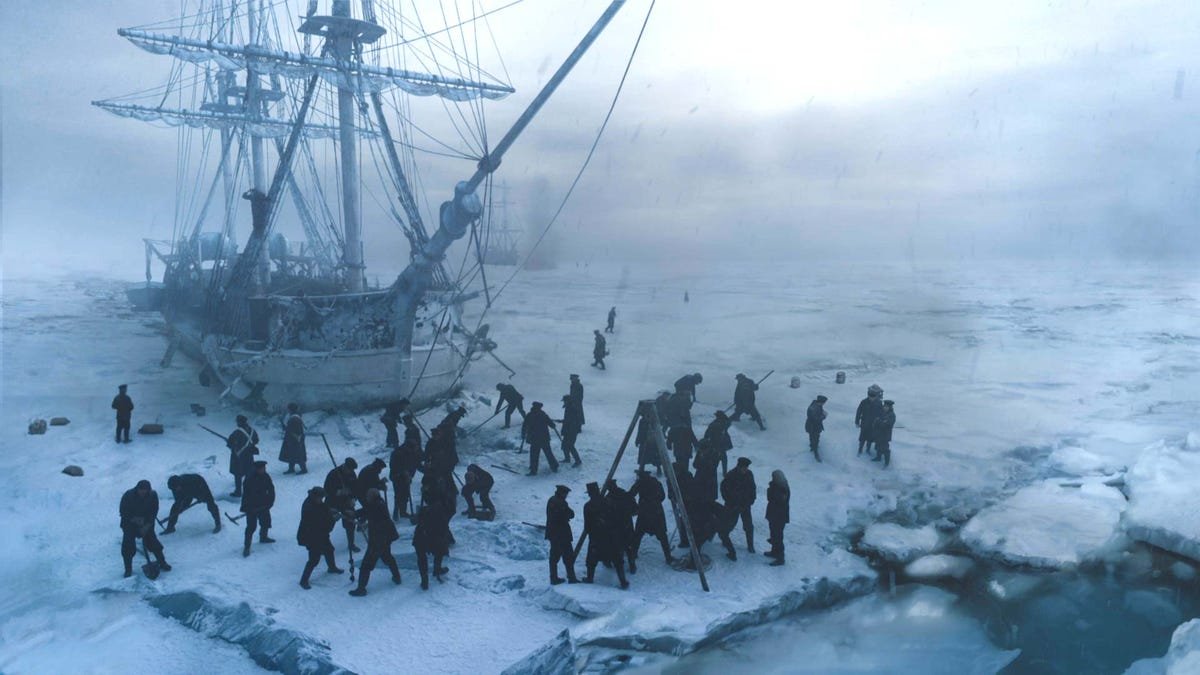
In 1845, Sir John Franklin departed England with HMS Erebus and HMS Terror to seek a navigable Northwest Passage. Parks Canada documents that 129 men continued after the supply vessel separated from the expedition. The ships were caught in ice in 1846. Franklin died the following year, and a surviving written record establishes that the ships were abandoned in April 1848.
The disappearance did not mean that the people living in the Arctic had no knowledge of what happened. Inuit witnesses and the oral histories passed down through their communities preserved crucial evidence. Those accounts contributed to the eventual identification of Erebus in 2014 and Terror in 2016. The historical tragedy is also a story about whose knowledge was heard and whose expertise was underestimated.
A ship is a small society
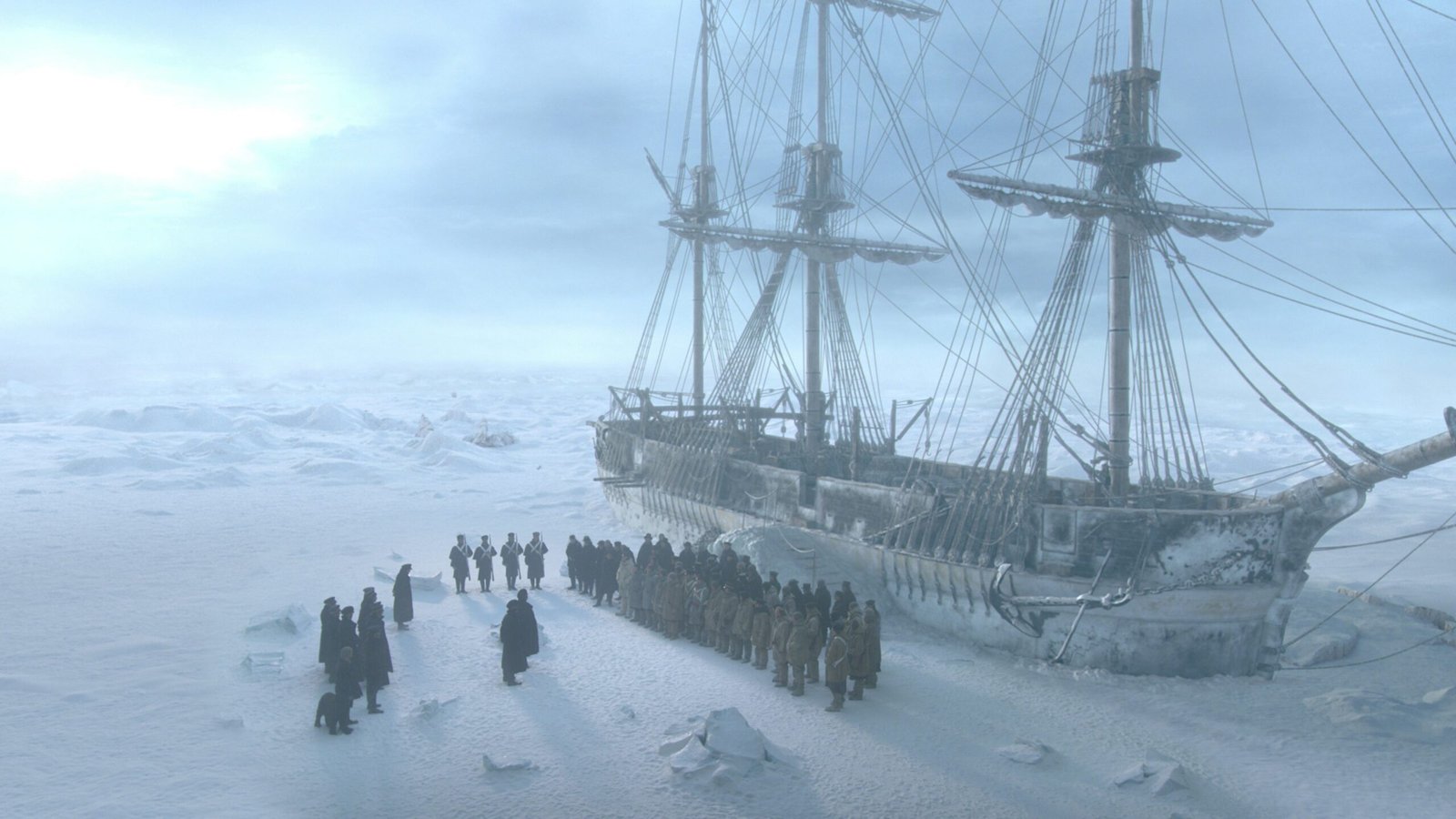
The first season stars Jared Harris as Captain Francis Crozier, Tobias Menzies as James Fitzjames and Ciarán Hinds as Franklin. The expedition’s naval hierarchy provides a ready-made structure for drama. Each officer’s authority depends on an institutional order, while each sailor depends on other people to maintain the ship and distribute supplies.
What makes that structure so productive for horror is the isolation. In ordinary life, someone who loses trust in an institution can sometimes leave it. On an icebound ship, there is no obvious alternative. The same people must continue living together while the conditions supporting their authority deteriorate.
The environment changes the meaning of every disagreement. An argument over judgment or resources is not merely a question of personality. Its consequences can extend to everyone. The familiar structure of duty becomes fragile precisely when the characters need it most.

Why a monster is almost unnecessary
The adaptation draws on a fictional creature as part of its supernatural storyline. The historical expedition offers no evidence for such a being. That distinction is essential, particularly because an Arctic setting involves real communities, traditions and histories that should not be reduced to exotic horror decoration.
As a dramatic device, the creature gives visible form to the fear of an environment the crew cannot control. But the series’ central dilemma would remain frightening even without it: supplies are finite, communication is limited and the possibility of rescue becomes increasingly uncertain. A monster can make danger immediate. The historical circumstances make it sustained.
White space as horror
Horror is often associated with dark corridors, yet the Arctic setting offers the opposite visual possibility. An enormous pale landscape can be as oppressive as a narrow room. The crew can see an extraordinary distance and still find no useful route out of its predicament.
The effect recalls the landscape paintings in the opening chapters of this archive. Beksiński uses impossible architecture to diminish the human figure; Goya’s The Dog reduces an animal to a small presence against extensive empty space. The Terror uses an environment that is real to create a comparable imbalance between human ambition and the scale of the surrounding world.
What the real history offers beyond the series
Parks Canada’s research provides a way to continue this story outside fictional entertainment. The discoveries of the two wrecks, the work of underwater archaeologists and the contribution of Inuit traditional knowledge deserve attention independently of the television drama. They also challenge the notion that the Arctic was an unknowable blank space before European exploration. It was home to people who understood it.
Based on the documented premise and critical context, The Terror is a compelling recommendation for viewers interested in historical drama and sustained psychological pressure rather than rapid scares. Its most unsettling proposition is that highly organised people can reach a point where the organisation they rely on is no longer sufficient. The ice does not need to hate them. It simply does not negotiate.
The PYLCROW Horror Index
Editorial assessment based on research and the available material; not a firsthand viewing score.
The Rabbit Hole
- Beksiński — landscapes that overwhelm their inhabitants
- Goya’s Black Paintings — the terror of empty space
- Cure — the failure of institutional certainty