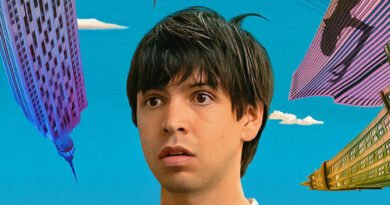
What We Leave Behind Turns a Childhood Wound Into Animated Mystery

What happens when a wound becomes the only part of a person everyone can see? What We Leave Behind is a Canadian animated short distributed by Travelling Distribution and featured in the 2026 LIAF Into the Dark programme. Its reported premise follows a man with a mysterious hole in his neck must face an unsettling childhood memory. Rather than flattening that setup into a list of festival facts, the more useful question is what kind of story this medium makes possible.
The body as a memory you cannot edit
A literal hole in a character’s neck is a striking image because it makes absence physical. Trauma is often represented through flashbacks or explanatory speeches; animation can give a feeling an impossible anatomy. The viewer is confronted with something present that also stands for what is missing.
The effect is not simply grotesque decoration. The central question becomes how a person lives with a gap they cannot account for. Memory is neither a perfect recording nor something that can be restored by identifying one missing detail.
Why an animated body can carry a psychological argument
Live-action horror may rely on a convincing effect to make a bodily transformation believable. Animation starts from a different agreement with the audience: every body is already constructed. The artist can stretch a form, shift a color palette or make a familiar gesture unfamiliar without asking us to suspend disbelief in exactly the same way.
The distributor’s official stills suggest a sharply stylized visual world. They are evidence of design, not permission to invent what happens between scenes. That distinction allows us to appreciate the ambition of the concept while still treating the plot as something to discover.
The return to childhood is never neutral
Stories about returning to a formative location are often structured like mysteries, but the emotional stakes involve more than solving an incident. The adult who returns is no longer the child who left; the setting may remain recognizable while its meaning changes. An animated short can compress those contradictions into a few images.
The film’s published materials suggest an encounter with unresolved experience. Whether it offers a satisfying resolution is a question for the screening. What makes it intriguing before that point is how cleanly one impossible bodily image creates a whole field of emotional questions.
How to explore it
Use the distributor’s official page for stills and screening information. Pay attention to how the animation connects the body, the setting and the movement between present and remembered time.
Follow the Rabbit Hole
For another way of exploring related ideas, read Aftersun: Why a Small Holiday Memory Can Feel Enormous and Lake Mungo: The Horror Movie That Looks Like a Family Documentary. These are thematic connections, not claims of direct influence.
Sources and scope: Travelling Distribution film page · LIAF 2026 programme. This is a research-led festival discovery, not a claimed firsthand screening or scored review.