MEMORIES Is Three Different Anime Nightmares in One Film
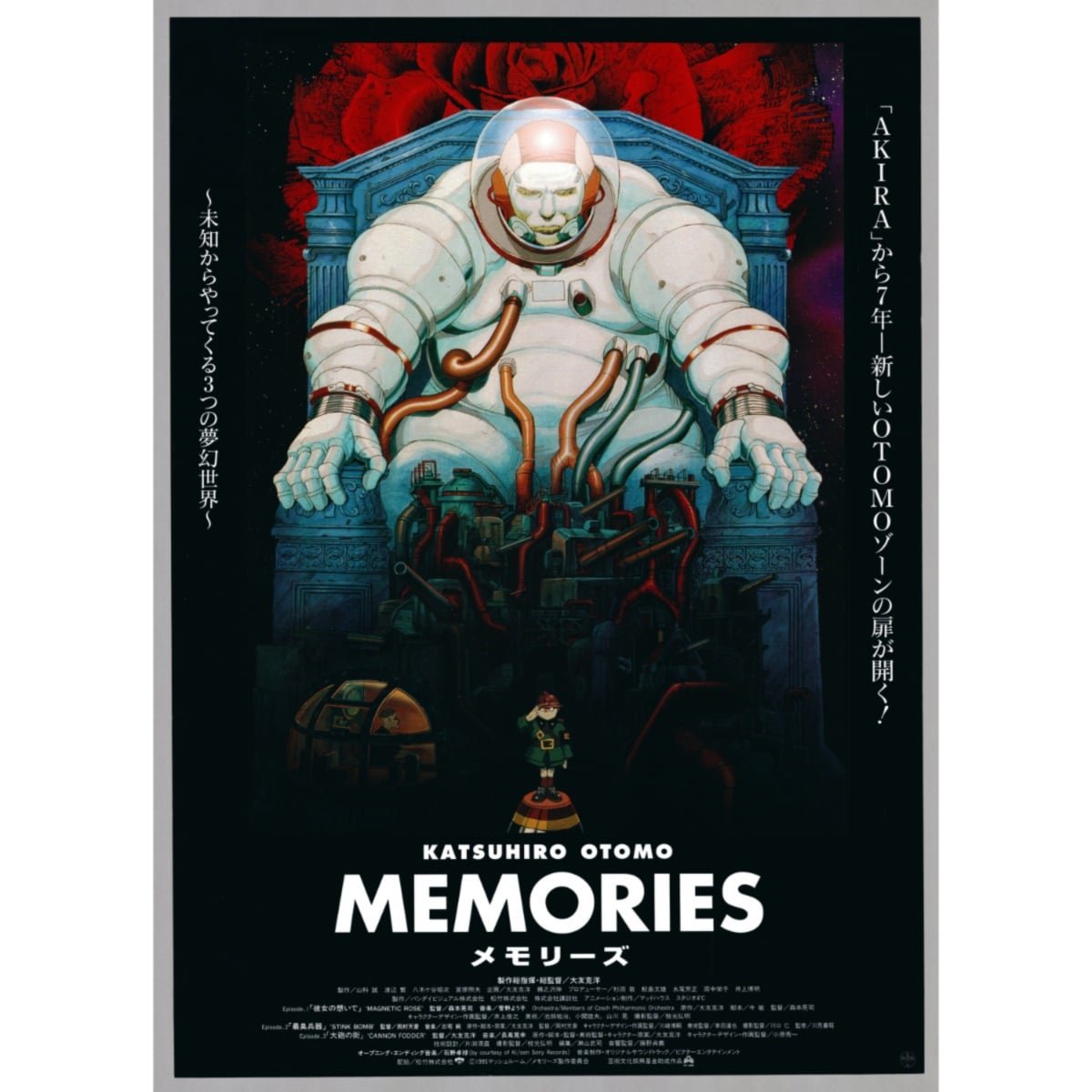
One film, three stories, three very different ideas about what makes the future frightening. MEMORIES is not a conventional anthology that merely groups unrelated shorts under one title. It demonstrates how animation can change the visual grammar of science fiction without changing the medium.
The 1995 Japanese anthology associated with Katsuhiro Otomo includes Magnetic Rose, Stink Bomb and Cannon Fodder. Each segment pursues its own form of danger, from psychological space horror to grotesque social satire and a world organized around warfare.
Magnetic Rose and the danger of a beautiful memory
A rescue mission enters an environment where remembered beauty has become a trap. The premise makes outer space less important than emotional space: an image of the past can become so compelling that it displaces what is happening in the present.
The most productive way to watch is to think about memory as architecture. What would a place look like if it were designed to keep someone from admitting that time has moved on? Animation lets the answer take a visual shape without having to justify every detail scientifically.
Stink Bomb makes catastrophe absurd
The second story pushes in a different direction, using dark comedy and escalating consequences. Its central idea suggests that a disaster can be generated not by a grand villain but by the mismatch between ordinary behavior and institutional responses.
There is something distinctively unsettling about that approach. Incompetence and procedural certainty can be just as destructive as malicious intent. The outrageous imagery helps the satire move quickly while forcing viewers to contemplate systems that cannot stop themselves.
Cannon Fodder is a world with a single purpose
The final segment imagines a society organized around artillery. Its visual conception is an argument in itself: the physical environment and its inhabitants exist inside an apparently endless ritual of firing weapons.
That makes it a compelling example of political world-building without the need for lengthy exposition. The technology does not liberate the citizens; it determines how they live. The anthology’s achievement is the cumulative contrast among these visions rather than one simple explanation of the future.
Where to begin
Watch the segments in order and notice their different relationships with spectacle. Ask which story makes the most efficient use of animation rather than which contains the biggest explosion.
Follow the Rabbit Hole
For another creative route into these questions, see Scavengers Reign Builds an Alien World That Doesn’t Care About Humans and Tekkonkinkreet Is an Anime Film About a City With a Soul. The connections concern creative choices and themes, not unverified direct influence.
Sources: Studio 4°C production history. PYLCROW analysis.