Netflix’s Dark: what if H.G. Tannhaus’s time machine actually worked?
Spoiler warning: this is a personal reading of Netflix’s Dark with major spoilers for all three seasons, including the final episode, “The Paradise”.
My answer is yes: H.G. Tannhaus’s time machine worked. He built it to undo the crash that killed his son’s family, and by the end of Dark that crash never happens. The machine just got there in the strangest way possible: by creating two whole worlds whose people eventually went back and saved his family, then disappeared. He never even knew he succeeded.
Why is Dark such an extraordinary show?
There are complicated television shows, and then there is Dark. Three seasons of missing children, impossible family trees, different versions of the same people, alternate worlds, and a small German town where almost everyone is related to everyone else in ways that shouldn’t be possible.
And somehow, it all works. The complexity has a purpose. Every conversation, every photograph and every date eventually becomes part of something larger. The writing is disciplined. The atmosphere is cold and unsettling. The casting across ages is almost ridiculously convincing: you believe a teenager, an adult and an old man are the same person because the faces, the posture and the sadness line up. And unlike shows that open mysteries and abandon them, Dark commits to explaining its own madness.
But what stays with me is that under all the physics, it’s a story about loss. People trying to bring back someone they love. People refusing to accept what happened. People willing to break everything to change one moment. At the centre of it is a clockmaker who, in my reading, did exactly what he set out to do.
What happens in Dark? The plot behind the knot
Dark opens in 2019 in the fictional town of Winden, where a boy goes missing. Jonas Kahnwald, a teenager still reeling from his father’s suicide, gets pulled into the search for Mikkel Nielsen.
Mikkel hasn’t just vanished. A passage in the caves under Winden has sent him back 33 years, to 1986. He grows up there, takes the name Michael Kahnwald, and becomes Jonas’s father. Jonas only exists because a child fell into the past. That 33-year link is just the start: later, time machines and the apocalypse itself open other routes through time.
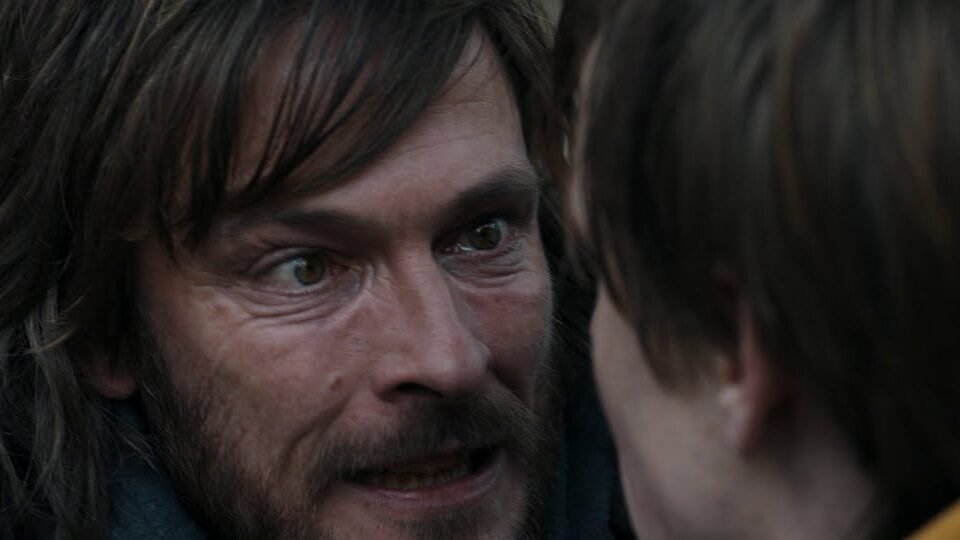
From there the show builds a world where the past creates the future and the future shapes the past. People cause the very events they’re trying to stop. The older Jonas becomes Adam, who wants to destroy the endless cycle. In a second, parallel world, an older version of Martha Nielsen becomes Eva, who fights to preserve it.
Both think they’ve found the source of the problem. Both are wrong. The characters aren’t simply travelling through time. They’re trapped in a knot where every attempt to change the past becomes part of the history that was always going to happen. The harder they pull, the tighter it gets.
Then the finale changes everything. Neither Adam’s world nor Eva’s world is the original. There is a third.
What is the Origin World in Dark?
In the original reality, the Origin World, the clockmaker and scientist H.G. Tannhaus loses his son Marek, his daughter-in-law Sonja and his granddaughter Charlotte in a car crash in 1971. Grief takes over his life. He builds a machine to reverse time. Not to explore the future or make history as a scientist. He just wants his family back.
His experiment doesn’t send him back to that night. Instead it splits reality, and the moment of the split is tied to June 21, 1986. Out of it come the two worlds of Adam and Eva, the worlds we spend almost the whole series inside. (This is a different thing from the Tannhaus we meet inside Winden, who repairs and builds time devices from plans handed to him. The experiment that matters here happens in the Origin World.)
It’s the older Claudia Tiedemann who works out the truth. Adam and Eva are locked in a fight to destroy or save the knot, and she steps outside that fight. The origin of it all isn’t Jonas, Martha or their child. It’s Tannhaus’s experiment.
With that knowledge, Jonas and Martha cross into the Origin World on the night of the crash. They stop the car on the road before the bridge, and Marek, Sonja and Charlotte turn back home. The family survives. Tannhaus never lives through the tragedy, so he never builds the machine, and the two worlds it created fade away, with Jonas and Martha in them.
Did H.G. Tannhaus actually build a working time machine?
I believe he did. In fact, I think his experiment was a complete success.
Most explanations call it a failure. He tried to save his family and instead created two broken worlds that trapped countless people in suffering, until those people finally undid the damage. If success means a machine that carries you safely and repeatably to a chosen moment, that’s fair. It did nothing of the kind.
But think about what Tannhaus actually wanted. He wanted to change one night in 1971 so his family would live. And at the end of Dark, his family doesn’t die. The past is changed. His tragedy is erased. If we judge the machine by whether it achieved what it was built for, it worked.
Pylcrow’s take: the two worlds weren’t the failure. They were the route.
Follow the chain. A family dies. A grieving man builds a machine. The machine splits the world in two. Those worlds produce generations of people, relationships, time machines and suffering. Inside them, Claudia spends years studying the knot until she finds the third world. Jonas and Martha use that knowledge to reach the right night. They save the family. And the machine is no longer needed.
Tannhaus never rides his own machine into the past. He never sees a dial set to 1971. He never understands the worlds his experiment created, and he never remembers a rescue. None of that changes the outcome. His family comes home.
That’s why I see the two worlds as the route rather than the mistake. To fix one simple problem, three people dead in 1971, the experiment produced two universes and everything that happened inside them, until those universes produced the two people who could fix it. It’s almost like an enormous calculation. The input was a tragedy. The process was two tangled worlds. The output was a corrected past.
I want to be clear about what this is. It’s a metaphor, not something the show tells us. Dark never says the machine or the universe planned any of this. Nobody designed the knot to correct itself, and Tannhaus never intended anyone to suffer for his wish. The worlds were an accident. My point is only that an accident can still be the road to the result you wanted.
Why did Jonas and Martha have to disappear?
One of the most painful moments in Dark is watching Jonas and Martha fade after they save the family. They spent their lives fighting, watched people they love die, and struggled against forces they barely understood. When they finally win, their reward is to stop existing.
Under my reading, it makes sense. They only existed because Tannhaus’s family died and he built his machine. Once they prevented the crash, the conditions for their own existence were gone. Their worlds didn’t disappear because they failed. They disappeared because they succeeded.
But I don’t want that to sound cold. Those people aren’t just a mechanism. Their love, grief and choices were real inside the story, and their erasure doesn’t make that suffering meaningless or justify it as “useful”. Jonas and Martha chose to end the knot knowing what it would cost them. That’s sacrifice, not a side effect. And not everyone vanishes: the people of the Origin World, who never belonged to the knot, go on living.
Doesn’t the rescue erase its own cause?
Yes, and that’s the final paradox. If Jonas and Martha only existed because of the machine, and they stopped the machine from ever being built, how could they have been there to save the family?
Under ordinary rules, that’s a contradiction, a cousin of the grandfather paradox. An event can’t usually erase the circumstances that made it possible. Dark doesn’t give us a full scientific answer. The finale stages the moment when the two worlds end at once and lets Jonas and Martha act outside the loop that trapped everyone else. The show leans on causal loops and quantum language for atmosphere, but it isn’t proof of anything, and I’d rather leave the paradox open than pretend it’s solved.
What’s the strongest case against this theory?
It’s a good one. As engineering, Tannhaus’s experiment was a disaster. It was uncontrolled, it split reality, and it caused enormous suffering. And Tannhaus didn’t save anyone himself. Jonas and Martha did.
I accept all of that. What the show actually depicts is clear: the experiment creates the two worlds, Claudia finds the origin, and Jonas and Martha’s intervention saves the family. Calling that a “success” is my judgement, not something the series confirms. The creators haven’t endorsed this reading, and I’m not claiming they do.
Still, calling it success depends on what we measure. Measure the machine as a reliable invention and it fails. Measure it as the start of the chain that brought his family home, and it succeeds. If someone builds a machine to change the past, and the end result of switching it on is a changed past, can we really call it a failure?
What does the ending of Dark really mean?
For most of Dark, we’re told the characters are trapped in a cosmic mistake: broken worlds, corrupted timelines, impossible family trees. Maybe we’ve been reading it backwards. Maybe the knot was a long, painful path toward making one thing right.
A grieving man built something that created two universes. Those universes created the people who could change his past. They saved his family, and then everything that made their existence possible disappeared. No one remembers. Not even the scientist responsible. In the Origin World, Tannhaus just gets an ordinary evening with the people he loves.
That’s the most successful time machine I can imagine, and the saddest. It gave one man his wish, and the price was paid by lives that history no longer records. We’re the only ones who remember them.
Frequently asked questions
Did Tannhaus’s time machine work in Dark?
The show doesn’t call it a success. It never sends Tannhaus back in time, and it splits the world in two. Our reading is that it still achieved his goal indirectly, because the worlds it created produced the people who saved his family.
What is the Origin World in Dark?
It’s the original reality, revealed in the series finale. Tannhaus’s experiment there splits it into Adam’s world and Eva’s world, the two worlds we watch for most of the show.
Who saves Tannhaus’s family?
Jonas and Martha. They reach the Origin World on the night of the crash and stop Marek, Sonja and Charlotte before they reach the bridge.
Why do Jonas and Martha disappear at the end of Dark?
Their worlds only existed because of Tannhaus’s experiment. Once the crash is prevented, he never builds the machine, so the two worlds and everyone born into the knot fade away.
Who is Eva in Dark?
Eva is the older version of Martha from the second, parallel world. Adam is the older version of Jonas from the first world.
Is this theory official?
No. It’s our personal interpretation of the ending. The creators haven’t confirmed it.
What should you read next?
Grief that drives a scientist to break the rules is also why Mr. Freeze is next on our Pylcrow Villain-First Test. If you like endings that get darker the closer you look, read how Other Mommy’s novel ending compares to the film, and for another story about survivors carrying loss, why Godzilla Minus One makes the sequel hit harder. More from the TV & Film section is waiting.
Was Tannhaus’s experiment a catastrophe that got corrected, or was the creation of Adam’s and Eva’s worlds the very thing that made his success possible? Tell us what you think.
Sources: Dark seasons 1 to 3 on Netflix, especially season 3, episode 8, “The Paradise”; the finale recap from TV Guide; series background from Wikipedia. Character links go to the community-run Dark Wiki, which is a fan reference, not official confirmation. The interpretation in this piece is Pylcrow’s own.