Mary Celeste theories ranked by evidence: the Pylcrow Case File scorecard
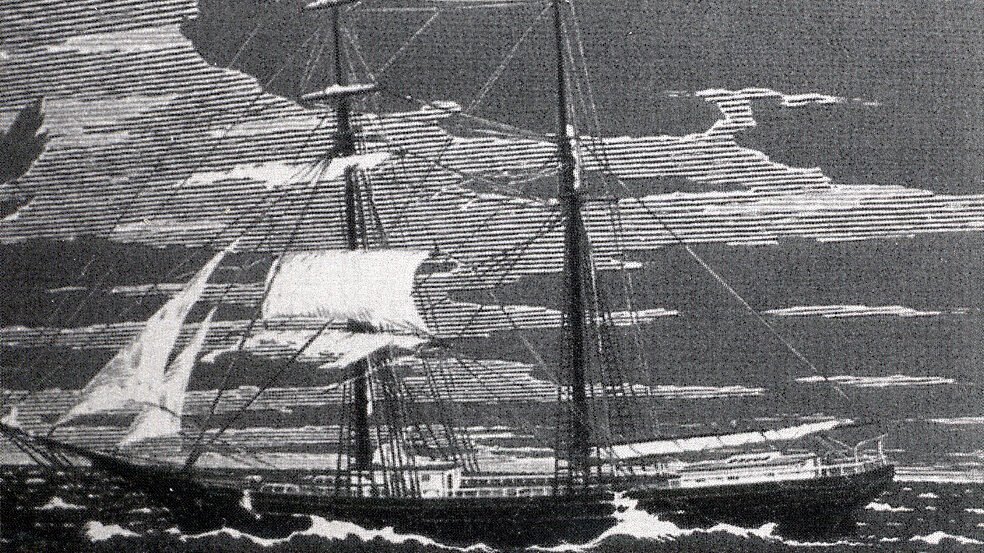
The best-supported explanation for the Mary Celeste is that Captain Benjamin Briggs believed the ship was sinking and ordered everyone into the lifeboat. Research for a 2007 documentary pointed to a pump problem, and one of the ship’s two pumps was found taken apart. Leaking alcohol barrels are a close second. Pirates, mutiny and sea monsters barely score at all. Here’s every major theory, ranked.
New to the case? Start with our Mary Celeste explainer.
How does the Pylcrow scorecard work?
Each theory is graded on what the record shows, not how exciting it sounds: Strong, Some, Weak or None. The key facts every theory has to explain: the ship was seaworthy, there was food and water for months, belongings were left behind, the only lifeboat was missing and one of the two pumps had been taken apart (Smithsonian).
1. A pump problem and a false alarm: Strong
In 2007, Anne MacGregor made the documentary The True Story of the Mary Celeste, partly funded by the Smithsonian. Her research suggests the ship’s pumps may have been clogged, possibly by debris from an earlier cargo, so Briggs couldn’t tell how much water was coming in (Smithsonian).
Why it scores high: it explains the disassembled pump, the missing lifeboat and the untouched belongings. A captain with his wife and two-year-old daughter on board, unsure whether his ship was sinking, would have every reason to get off fast.
2. Alcohol fumes: Some
The ship carried 1,701 barrels of industrial alcohol, and nine were found empty. Leaking fumes, or a small flash of vapour, could have made Briggs fear an explosion and abandon ship (EBSCO).
Why it doesn’t score higher: no fire or blast damage was found, and most of the cargo was in good condition.
3. A waterspout or sudden storm: Weak
A waterspout could have thrown water on deck and made the ship seem to be going down. But the ship’s overall condition doesn’t strongly support a violent weather event, and there’s no direct evidence of one.
4. Mutiny or piracy: Weak
There were no signs of a fight, and valuables and personal belongings were left on board. Pirates who don’t take anything aren’t very good pirates.
5. Insurance fraud: Weak
The idea that the crew of the Dei Gratia, which found the ship, staged the whole thing for salvage money has been raised before, but no convincing evidence supports it.
6. Sea monsters and the supernatural: None
Great for stories. Zero evidence. Much of the spooky version of the legend, including warm tea on the table, comes from Arthur Conan Doyle’s 1884 short story, which was fiction (covered in our explainer).
Pylcrow verdict: what most likely happened?
A frightened captain made a fast decision to save his family. He believed, wrongly, that his ship was in danger, took everyone into a small boat, and the Mary Celeste sailed on without them. It’s not a ghost story. It’s a story about a wrong call made under pressure, and that’s somehow worse.
Frequently asked questions about Mary Celeste theories
What is the most likely Mary Celeste theory?
That the captain thought the ship was sinking, possibly because of a pump problem, and abandoned it in the lifeboat.
Did alcohol fumes cause the Mary Celeste to be abandoned?
Possibly. It’s a serious theory, but there was no fire or blast damage.
Were pirates involved?
Very unlikely. Nothing valuable was taken and there were no signs of violence.
What should you read next?
Read our Mary Celeste explainer. For another case scored on evidence, see whether D.B. Cooper was Richard McCoy.
We scored another maritime mystery the same way: what sank the Edmund Fitzgerald, theory by theory.
Sources: Smithsonian Magazine, Smithsonian (2007), EBSCO.