Tulsa King Is the Kind of Television We Forgot We Loved
There is nothing revolutionary about a gangster arriving in a new town, assembling a crew and building an empire. Yet Tulsa King feels like a welcome interruption to modern television precisely because it makes that familiar premise entertaining again.
We came to this show late, and as we catch up with season four, the first three seasons deserve their own reckoning. This is not a claim that Tulsa King invented a genre. It is an argument that it remembers what made the genre fun in the first place.
PYLCROW in brief: A spoiler-light retrospective of seasons 1–3, with a look at the ongoing fourth season. Stallone’s performance, the unlikely ensemble, comedy and direct storytelling make the show worth watching despite predictable plotting.
Why Dwight Manfredi is more interesting than another television antihero
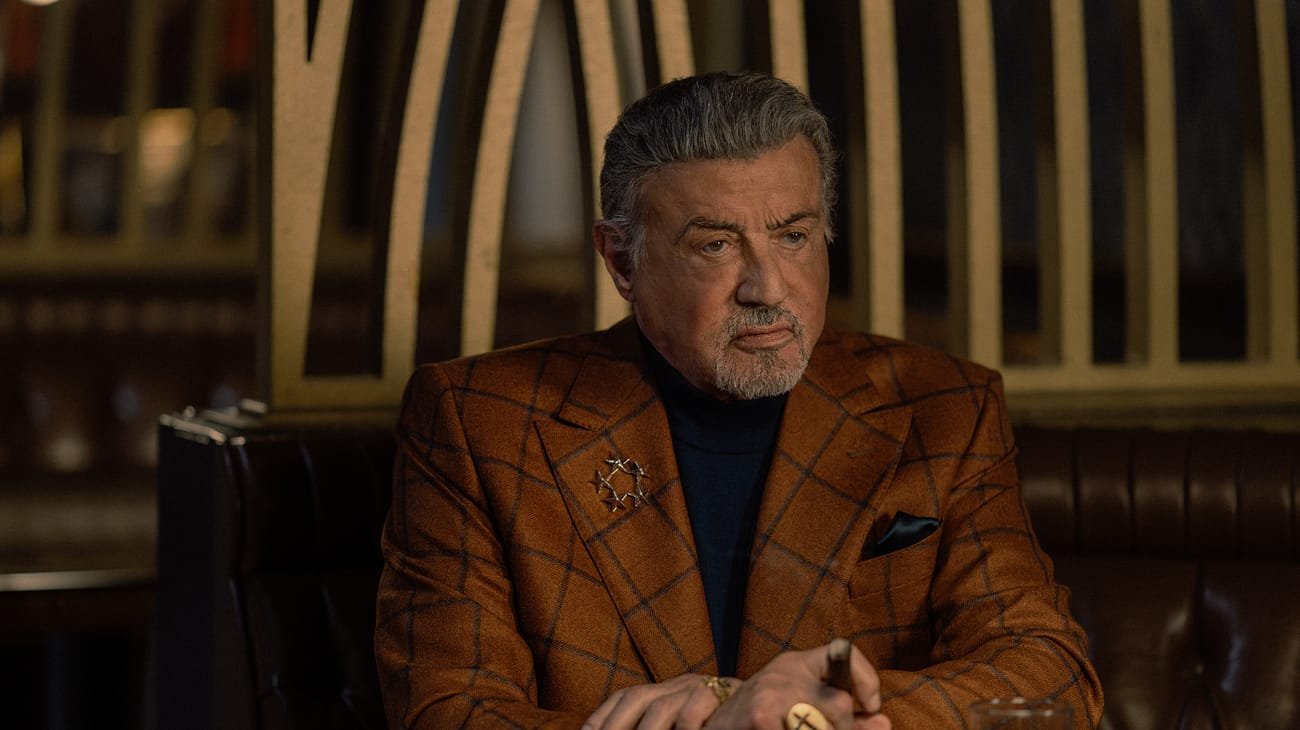
Dwight has served 25 years in prison. He expects his loyalty to count for something; instead, his New York organization sends him to Oklahoma. The humiliation is the premise, but the real story is a man discovering that his old rules are no longer enough. The world changed without him. He has to work out how to belong to it without surrendering the instincts that kept him alive.
Stallone plays him as a man whose confidence is partly armor. He can command a room, but the contemporary world confuses him. He can read an adversary faster than a smartphone. The humor is not simply that an older man is out of touch: it is that the audience can see him learning, improvising and occasionally getting it wrong.
What Stallone brings is a history of characters who have been written off. Rocky was an underdog; Rambo was a veteran discarded by the society he returned to. Dwight is not morally equivalent to either, but he shares their displacement. He is the wrong man for the world he finds himself in, and that is exactly what makes him worth following.
Season one: the pleasure of watching a crew come together
The first season is the cleanest expression of the concept. Tulsa is not just a backdrop; it punctures the New York gangster’s self-importance. Dwight’s encounters with Tyson, Bodhi and Mitch give him allies who do not resemble a traditional mob hierarchy. Jay Will brings ambition and vulnerability to Tyson; Martin Starr’s dry delivery makes Bodhi an essential counterweight. Garrett Hedlund’s Mitch lends the gang a quiet sense of history.
Instead of asking viewers to memorize a dozen competing criminal dynasties immediately, the story lets relationships form in front of us. It is an old-fashioned ensemble-building exercise, and the show is better for it. The contrast between Dwight’s instinct for domination and his new associates’ very different priorities gives its business schemes comic energy.
Season two: the cost of building something
The second season shifts from discovery to defense. Once Dwight has something worth taking, rivals and legal pressure test whether this improvised family can function as an organization. Frank Grillo and Neal McDonough bring different kinds of antagonistic energy, while the supporting characters increasingly have reasons to question Dwight rather than merely react to him.
That escalation is entertaining, though the formula becomes more visible. The series sometimes uses a threat simply to give Dwight a chance to outmaneuver it. The upside is momentum; the downside is that danger can feel temporary. Its best scenes still involve people negotiating loyalty, not just territory.
Season three: bigger stakes, familiar pleasures
The third season adds the Dunmire family and the complications of the bourbon business. Samuel L. Jackson’s arrival as Russell Lee Washington Jr. also opens a door beyond Dwight’s immediate world. The temptation with a successful crime series is to confuse more enemies with more drama. Tulsa King occasionally falls into that trap, but the ensemble and Stallone’s easy screen presence remain strong.
The series is at its best when an ostensibly powerful man realizes that he cannot control everybody around him. The more the show allows Tyson, Bodhi and its other characters to have their own desires, the more it earns the time it asks from us. The less it relies on Dwight always being right, the better it becomes.
| Season | What changes | PYLCROW’s assessment |
|---|---|---|
| 1 (2022) | Exile and the founding of a crew | The freshest premise; strongest fish-out-of-water comedy. |
| 2 (2024) | Territory, rivalry and consequences | Expands the ensemble without losing its swagger. |
| 3 (2025) | Bourbon, larger rivals and divided loyalties | Ambitious and fun, sometimes more crowded. |
| 4 (2026) | An empire seeking legitimacy | Still airing; no final review yet. |
How does Tulsa King compare with other crime shows?
| Series | Its distinctive appeal | Where Tulsa King differs |
|---|---|---|
| The Sopranos | Psychology and moral corrosion | More buoyant and less psychologically exhaustive. |
| Breaking Bad | A sustained transformation and escalating dread | More interested in camaraderie and reinvention. |
| Boardwalk Empire | Period detail and political institutions | Contemporary culture clash rather than historical reconstruction. |
| MobLand | Family power struggles and menace | More comedy and a looser ensemble adventure. |
These are differences of intention, not a claim that one show is objectively better. Tulsa King does not need the intellectual architecture of The Sopranos or the precision of Breaking Bad. It needs characters we want to spend time with. It generally delivers.
Is the critical enthusiasm justified?
At the time of writing, Rotten Tomatoes lists critics’ approval at 78% for season one, 100% for season two and 83% for season three. Those are approval percentages, not average scores, and the seasons have different review counts. Season three’s six reviews in particular make its percentage a limited signal. Metacritic offers a useful second perspective, including criticism of the show’s uneven comedy.
There are fair objections. Some dialogue is broad, a few antagonists feel interchangeable and the show can romanticize criminal power. But a series need not pretend to be a documentary to make its characters compelling. The appeal is not that Dwight is a good man; it is that watching him navigate his contradictions is engaging.
Season four is still unfolding
Paramount+ began season four on October 16, 2026. Its official season guide schedules the finale for December 18, 2026, and season five has already been announced. We are deliberately withholding a final season-four verdict. The interesting question is whether Dwight can pursue legitimacy without destroying the relationships that built his empire.
Watch the official season-four trailer on Paramount+ · Official series page.
The PYLCROW verdict
Tulsa King is not trying to reinvent television. It is trying to be good television: character, conflict, humor, a little swagger and a reason to return next week. Sometimes the genuinely refreshing thing is a show that knows exactly what it is. Stallone, now 80, is still making an audience care about a man starting over. That is a more interesting achievement than any claim of reinvention.
PYLCROW rating, seasons 1–3: 8.5/10. Editorial assessment; not an aggregated score.
Explore the PYLCROW Stallone series
- Sylvester Stallone Is Still One of Hollywood’s Most Compelling Stars
- Beyond Rocky and Rambo: 30 Stallone Films Worth Revisiting
Frequently asked questions
Is Tulsa King worth watching?
Yes, especially for viewers who enjoy crime drama with humor and ensemble chemistry.
Has season four ended?
No. Paramount+ schedules the finale for December 18, 2026.
Is season five confirmed?
Yes, Paramount+ announced the renewal on October 5, 2026.
Further reading: The true story behind I Play Rocky.