The Incident at Galley House Is a 2026 Mystery for Puzzle Fans
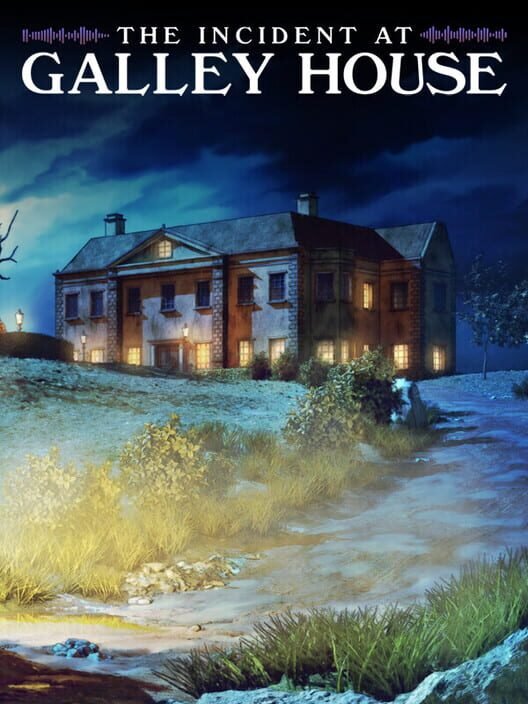
A house, a mystery and a player who must put the pieces together. The Incident at Galley House belongs to the branch of indie games that values inference over spectacle: instead of asking how fast you can react, it asks what you can prove from what you have seen.
The 2026 detective-puzzle release places investigation at the center of the experience. Its appeal comes from the possibility of solving something through observation and reasoning rather than through a highlighted objective path.
A clue is not the same as an answer
In a weak mystery game, the clue glows, a notebook updates and the character announces the conclusion. The player’s role is reduced to moving between approved locations. A stronger puzzle requires a connection between two details that have no obvious relationship until a hypothesis makes them fit.
That moment of insight is the genre’s real reward. It makes the player an active participant in the construction of meaning rather than a tourist in somebody else’s mystery.
The architecture of a fair puzzle
A satisfying detective story must balance surprise with evidence. If the answer is too obvious, the player feels patronized. If a decisive fact was never available, the player feels cheated. A house setting is especially useful because it constrains the world to objects and relationships that can be revisited.
The interesting critical question is how the game controls information: which details are withheld, which are available from the start and how much the interface helps or hinders genuine deduction.
Why small mysteries still matter
Large games often equate quality with geographical scale. A contained mystery can be more ambitious in a different way, using a handful of rooms to create a dense network of relationships.
Its limitations are also clear. If the puzzles are not coherent, there is no open world to compensate for the weakness. That is why the small detective game is an unusually honest test of design: almost everything depends on the precision of the questions it asks.
Where to start
Enter with a notebook if you enjoy deducing rather than guessing. Track what the game demonstrates and what you have merely assumed. For comparison, see The Roottrees Are Dead.
Official game page: The Incident at Galley House on Steam. Editorial Deep Cuts analysis, not a claimed playthrough or scored review.