Predator Timeline Explained: Every Movie, Dutch and Naru’s Fate, and Where the Comics Fit
Smart summary
The Predator timeline does not follow the films’ release dates. Killer of Killers visits 841, 1609 and 1942; Prey happens in 1719; Predator takes place in 1987; Predator 2 is set in 1997; and Badlands takes place in an unspecified far future. The Alien vs. Predator movies form an optional crossover branch. The extended Killer of Killers ending features Dutch, Naru and Harrigan in cryogenic captivity, with no confirmed date for those scenes. Comics add separate continuity strands: Dark Horse’s John Schaefer stories, Marvel’s Theta trilogy, superhero crossovers and an official Badlands movie prequel. Here is the clean map without forcing contradictions into one false canon.
The scariest thing about the Predator universe might be its calendar. Human civilizations rise and collapse. Languages disappear. Wars begin, end and begin again. Entire generations of people think they are the first to encounter something beyond Earth. Meanwhile, somewhere out there, a species of hunters keeps showing up to test itself against us.
That is what makes this franchise’s timeline more interesting than a list of dates. For us, the encounters become history. For the Yautja, Earth might just be a recurring destination.
The films now stretch from Viking-era Scandinavia to a remote planet in the distant future. The comics go even further, but they are not all part of one uncontested screen canon. This guide keeps the distinction clear. If you want a recommended watching sequence instead of the narrative chronology, start with our complete Predator movies ranking and watch order. If you came here for the new comeback story, see what Arnold Schwarzenegger actually said about returning as Dutch.
Predator movies in chronological order: the timeline table
| In-universe setting | Film or chapter | What happens |
|---|---|---|
| 841 | Predator: Killer of Killers — “The Shield” | A Viking warrior enters the hunt |
| 1609 | Predator: Killer of Killers — “The Sword” | A Japanese warrior confronts a Yautja |
| 1719 | Prey (2022) | Naru’s encounter on the Great Plains |
| 1942 | Predator: Killer of Killers — “The Bullet” | A WWII pilot faces a hunter in the air |
| 1987 | Predator (1987) | Dutch’s Central American jungle mission |
| 1997 | Predator 2 (1990) | Harrigan encounters a hunter in Los Angeles |
| 2004 | Alien vs. Predator (optional branch) | Antarctic expedition and ancient Yautja ritual |
| 2004, immediately afterward | Aliens vs. Predator: Requiem (optional branch) | Crossovers spill into an American town |
| Contemporary / unspecified exact date | Predators (2010) | Abducted people hunted on an alien game planet |
| 2018 | The Predator (2018) | Genetically modified hunters and human conflict |
| Far future; year unconfirmed | Predator: Badlands (2025) | Dek and Thia’s expedition beyond Earth |
| Time unconfirmed | Killer of Killers arena / epilogue | Captives from different eras overlap |
Important: This is a story-event table, not a movie playback playlist. Killer of Killers contains several periods within one film, and the chronological placement of its framing story is deliberately unclear. An early glimpse of ancient Yautja activity in Alien vs. Predator is a flashback, not a reason to treat that whole film as happening thousands of years BCE. The crossover films’ continuity relationship to the modern franchise is best treated cautiously.
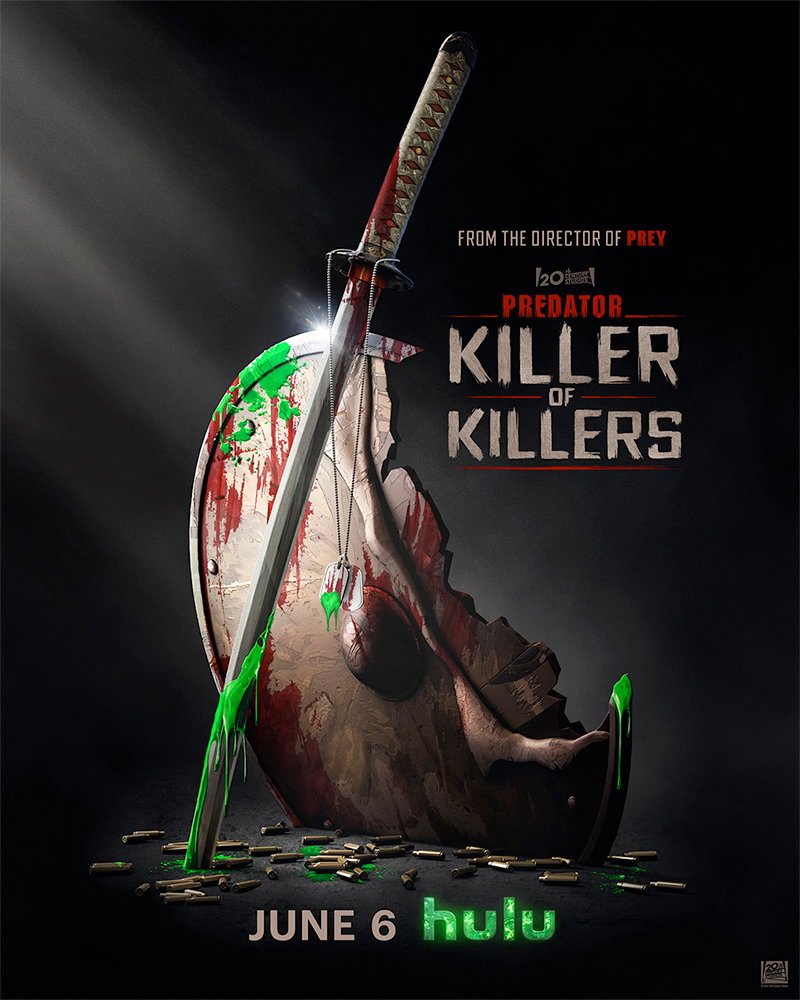
841, 1609 and 1942: Killer of Killers rewrites what a Predator story can be
For decades the formula suggested a Predator versus the military, police or some specially selected warriors. Killer of Killers asks a richer question: what happens when the hunter encounters people whose understanding of battle looks nothing like modern warfare?
The Viking chapter (“The Shield”) takes place in 841, the Japanese chapter (“The Sword”) in 1609, and the Second World War chapter (“The Bullet”) in 1942. The Yautja’s weapons remain technologically superior, but the people facing them have radically different tactical knowledge. The anthology’s later arena and cryogenic sequences connect people from these separate periods without supplying a precise calendar year.
My favorite implication is that a Predator’s idea of a “worthy opponent” is not a universal truth. It depends on the hunter’s culture, biases and appetite for challenge — not necessarily on whether a human has a machine gun.
1719: Prey, Naru and the mysterious pistol
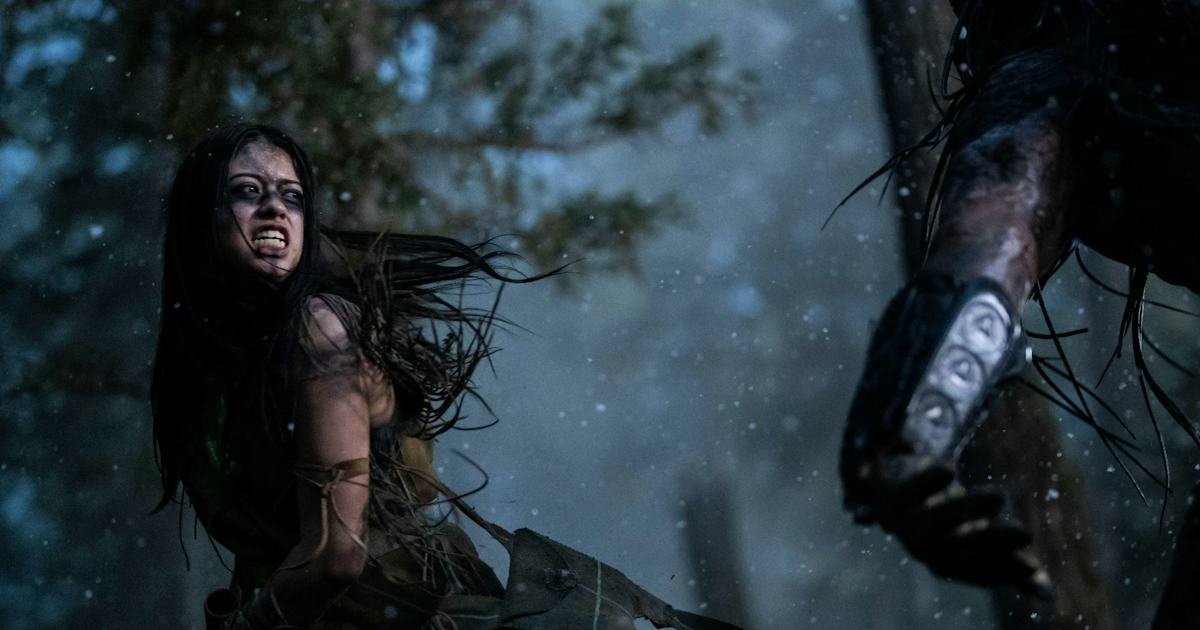
Prey gives Naru, a Comanche warrior played by Amber Midthunder, one of the franchise’s most memorable encounters. Beyond proving that ordinary human observation can defeat superior alien weaponry, the film plants a specific historical mystery: a flintlock pistol bearing the name Raphael Adolini and the year 1715.
Fans recognize that pistol from the end of Predator 2, where a Yautja gives it to Harrigan. So Prey explains one part of its history but leaves a gap: how does a weapon associated with Naru’s 1719 story later return to the Predators’ possession?
There is a fascinating continuity conflict here. A 1996 Dark Horse comic called Predator: 1718 offered an earlier, different backstory involving Raphael Adolini and a Predator. Prey subsequently gave the film’s pistol a new history. Instead of treating two conflicting versions as simultaneously literal, it is more useful to see the comic as a legacy continuity interpretation and the film as the current on-screen explanation. Compare the original comic account.
1987 and 1997: the two human survivors who changed everything
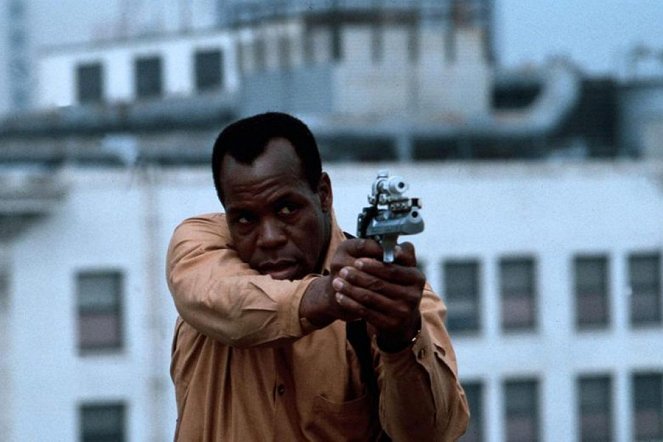
In 1987, Major Alan “Dutch” Schaefer survives an encounter that destroys his team in the original Predator. Ten years later in the story chronology, Lieutenant Mike Harrigan faces a different alien hunter in Predator 2. These are distinct humans, distinct Predators and distinct survival stories.
Why does that matter? Because later installments start to imagine the Yautja as collectors of the people who beat them. Surviving is no longer merely the end of a movie. It may be the beginning of a lifetime of consequences.
The title of Predator 2 often confuses newcomers: yes, it premiered in 1990, but it is explicitly set in 1997. You do not need to invent another film between the two events. The change from jungle to city is the whole experiment.
2004 through 2018: crossovers, game preserves and enhanced hunters
Alien vs. Predator and its immediate follow-up Requiem occupy the early-2000s crossover branch, though the former references much older Yautja rituals. These films are useful for understanding how the two franchises have been marketed together, but do not assume every detail from them governs every future Predator movie.
Predators (2010) moves the action to an alien game preserve. Its exact in-universe year is not explicitly established with the same clarity as Predator 2; it is safest to call it contemporary to its release era rather than assert a precise year. Then The Predator (2018) brings the series back to Earth and expands the premise with genetically enhanced hunters.
This is where the mythology begins to overwhelm the calendar. Fortunately, you do not need to make every installment fit perfectly to appreciate the core idea: different hunters, different rules, different tests of who counts as worthy prey.
Far future: Badlands and the Alien connection
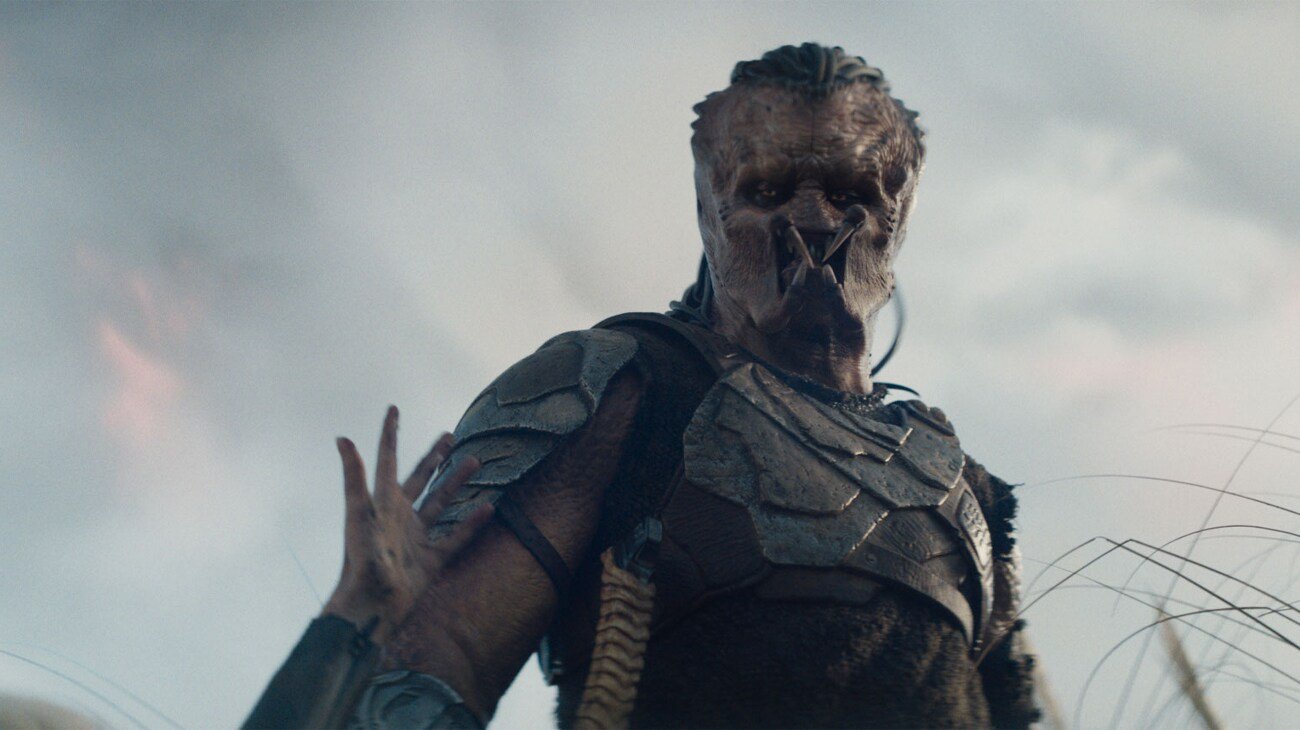
In Predator: Badlands, an outcast Yautja named Dek travels to a hostile world and meets Thia, a synthetic linked to Weyland-Yutani, the corporation familiar from the Alien universe. Director Dan Trachtenberg has explained that the story was pushed far into the future specifically to give the franchises room to coexist without breaking what other storytellers were doing. He discussed that reasoning with The National.
Some fan timelines attach an exact future year to Badlands. I would not present one as confirmed. The significant fact is that it takes place long after the familiar human-centered movies, not that somebody can pin its events to one calendar box.
So why are Dutch, Naru and Harrigan in cryogenic storage?
Spoilers for the extended Killer of Killers ending. The anthology’s later sequences show that Yautja can collect, preserve and relocate humans from different historical periods. An expanded ending reveals Dutch, Naru and Harrigan among the frozen captives. That image opens the door to these characters meeting one another even though their human lifetimes would ordinarily make it impossible.
Does it guarantee Arnold Schwarzenegger returns in live action? No. Is the reveal a clever potential route for bringing him back? Absolutely. Our November 2026 update separates what Arnold has said publicly from the film storyline fans are building around that reveal.
The bigger theme is strange and beautiful in a grim way: the humans who defeated the hunter might have become trophies in a museum that does not obey human time.
Where the Predator comics really fit: three useful branches
The comics are far richer than a footnote, but they are also where simplistic timelines fall apart. They have moved between publishers, sometimes followed film characters, sometimes introduced original hunts and frequently staged playful crossovers. Instead of promising one seamless canon, the sensible approach is to read three strands.
1. Dark Horse’s original expanded universe: Dutch’s brother and the lost years
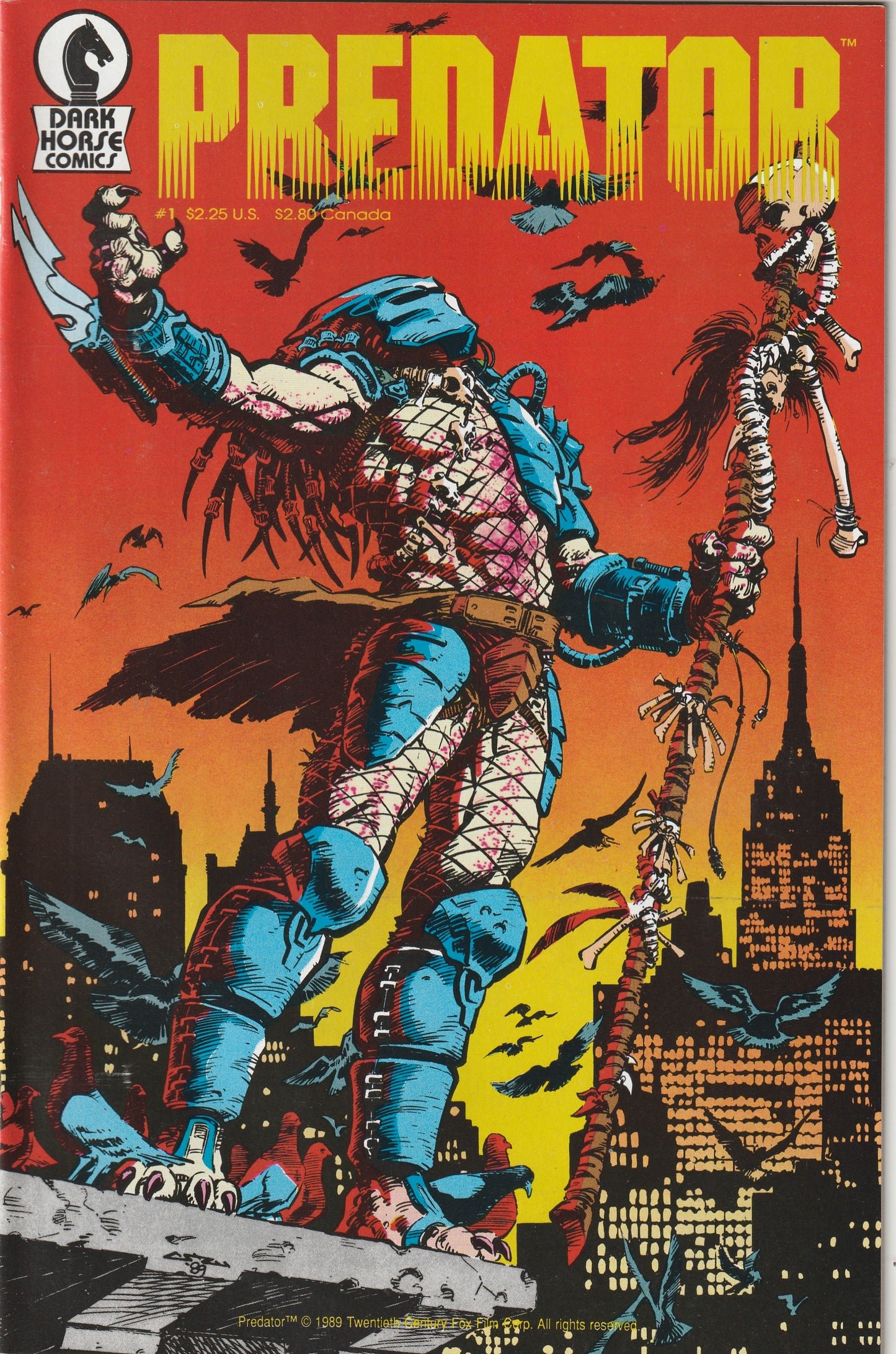
In 1989, Dark Horse published Mark Verheiden’s Predator, later known as Concrete Jungle. It followed Detective John Schaefer, Dutch’s brother, in a New York hunt. That alone should make fans of the original movie curious: the world kept moving after Dutch’s helicopter lifted off. The story later continued into works such as Cold War and Dark River. A detailed comic history explains the cast and publishing background.
Dark Horse also developed the Alien vs. Predator comics and long-form continuities such as Fire and Stone and Life and Death. These are worthwhile extended-universe stories, not a guarantee that every moment is binding on the modern films. The contradiction between the old Predator: 1718 pistol origin and Prey is a perfect example.
2. Marvel’s Theta trilogy: a focused starting point
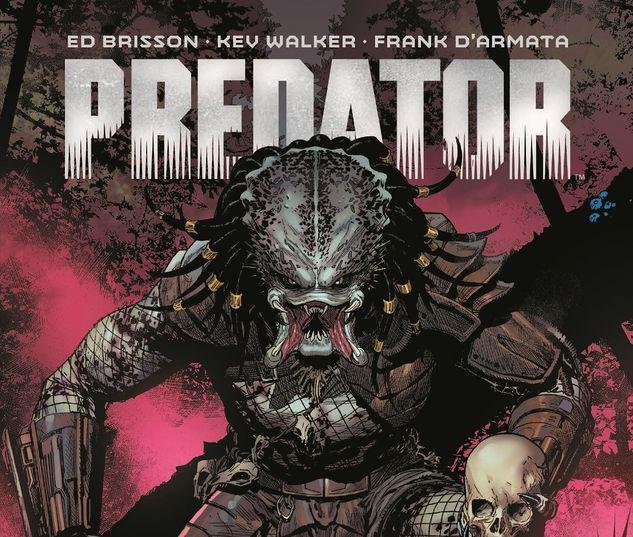
For a fairly clean ongoing comic narrative, read Ed Brisson’s modern series in publication sequence. They follow Theta Berwick, a survivor who becomes a relentless hunter of Predators. The books make an effective parallel to Dutch and Naru: instead of escaping and hoping never to see the aliens again, Theta builds her life around finding them.
| Read | Issues | Why it matters |
|---|---|---|
| Predator: Day of the Hunter | 2022 series #1–6 | Meet Theta and her hunt |
| Predator: The Preserve | 2023 series #1–5 | Explore an alien game preserve |
| Predator: The Last Hunt | 2024 series #1–4 | Continues Theta’s story and reconnects with John Schaefer |
The Last Hunt storyline gives the old Dark Horse-connected John Schaefer character a surprising appearance. There are comic-era dates associated with Theta’s adventures — commonly 2056, 2062 and 2068 — but this is a comic continuity track, not a license to assign those dates to the unconfirmed Killer of Killers cryogenic epilogue.
3. Marvel crossovers: a playground, not a compulsory film history
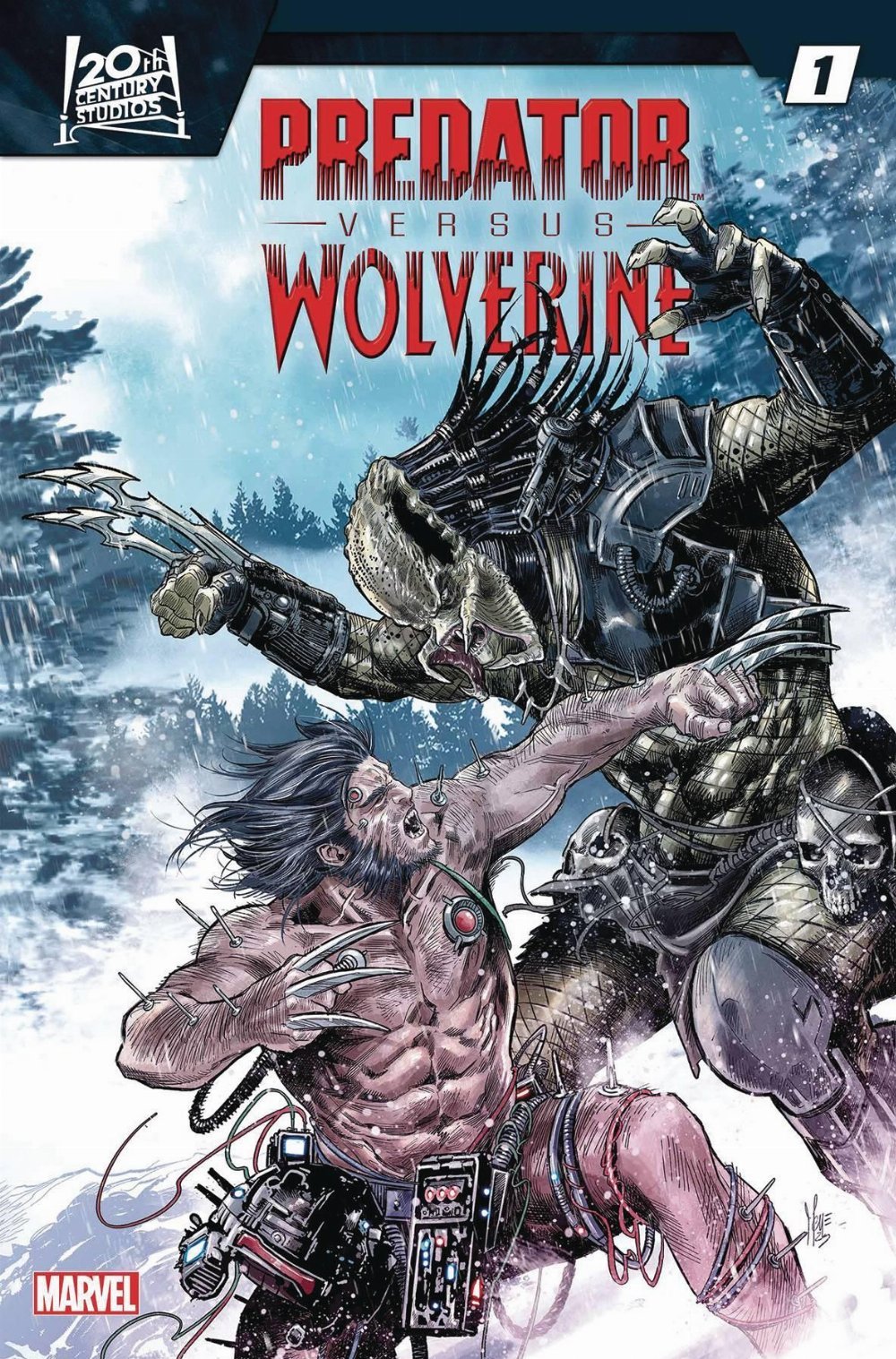
If you want to watch the Yautja hunt familiar superheroes, Marvel has made that its own ridiculous and entertaining proposition. Start with Marvel’s official crossover reading guide, which covers Predator vs. Wolverine (2023), Predator vs. Black Panther (2024), Predator vs. Spider-Man (2025) and the escalating Predator Kills the Marvel Universe (2025).
The important thing to recognize is that Wolverine’s comic battle does not establish a meeting between Yautja and the MCU’s on-screen X-Men. Think of those books as imaginative encounters using the strengths of both properties. As reading experiences they might be terrific; as evidence for a film timeline they are not reliable.
The important exception: Badlands has an official comic prequel
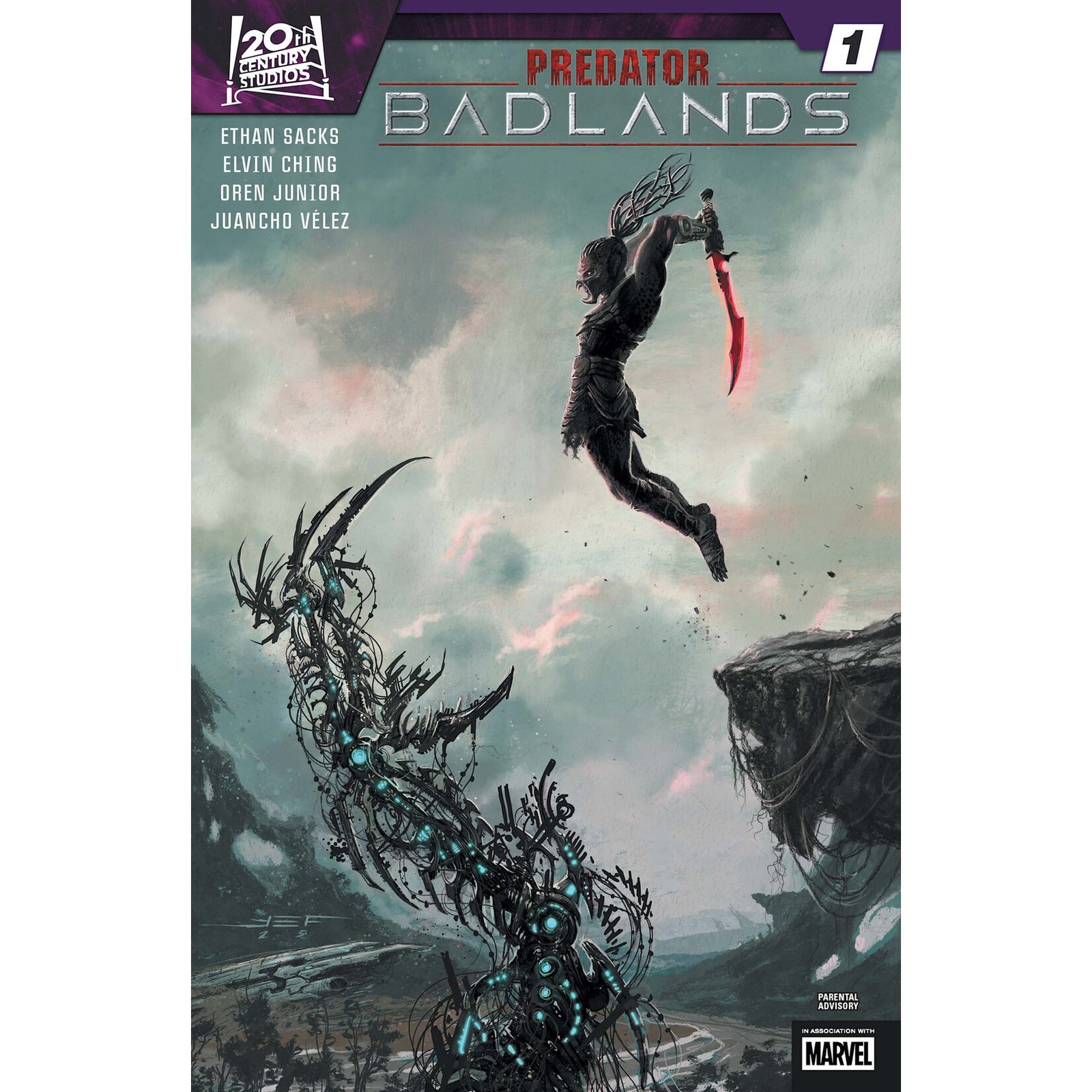
Predator: Badlands #1, released November 12, 2025, is a special case. Written by Ethan Sacks with art by Elvin Ching, it was produced in collaboration with Trachtenberg as a prequel to the movie. It follows a young Dek on a dangerous mission before the film’s events. This is the comic most naturally placed directly adjacent to Badlands in a story watch/read order.
Read the comic first if you enjoy extra setup; read it after the movie if you want the film’s unfamiliar world to surprise you without prior context. Either way, it is a substantially stronger continuity connection than assuming the Marvel superhero crossovers all take place in the same screen universe.
What is new in Predator comics in 2026?
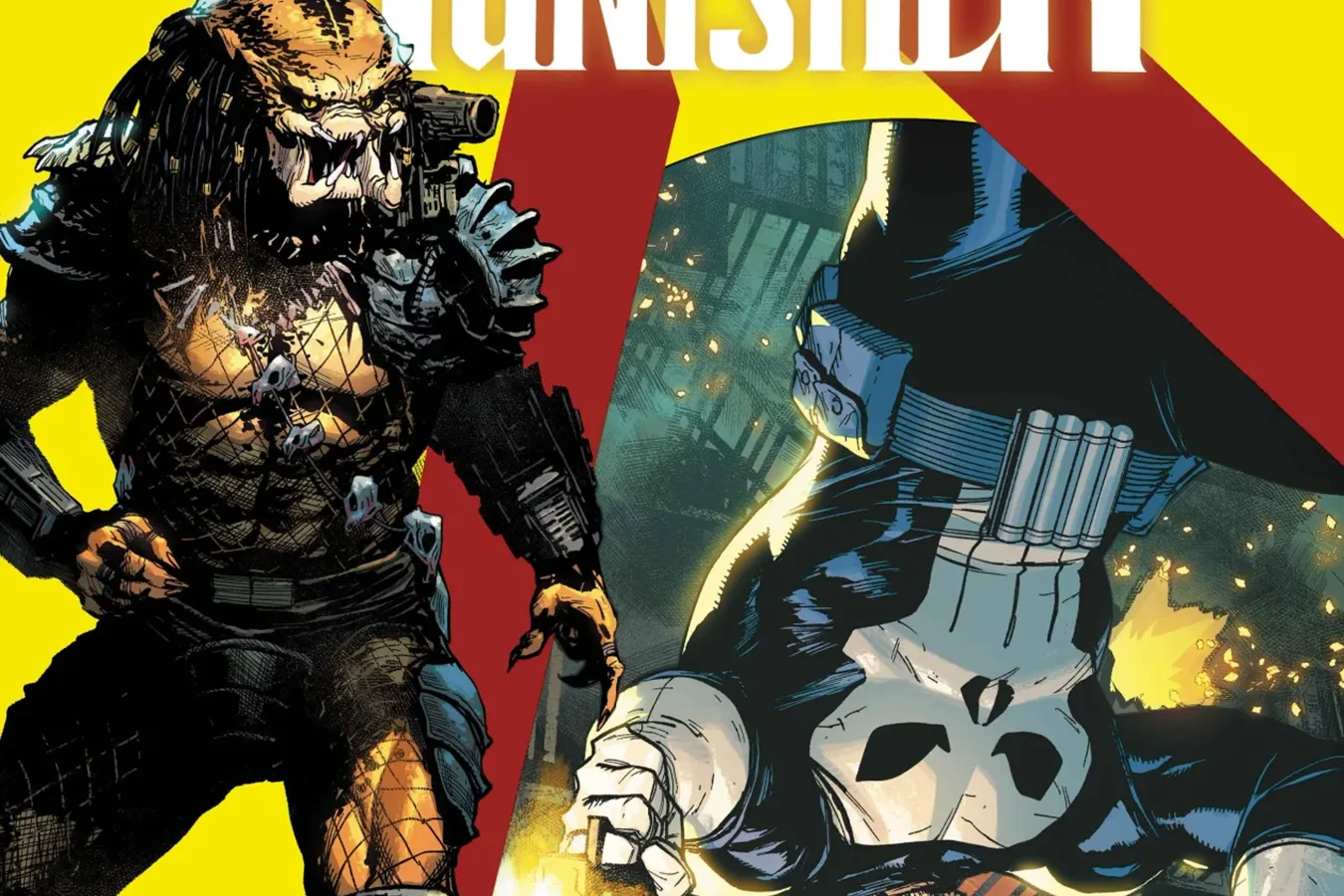
The hunting grounds keep expanding. Predator: Bloodshed (2026) uses a martial-arts tournament, Predator vs. the Planet of the Apes (2026) introduces a conflict among Yautja, apes and humans, and Predator vs. Punisher #1 went on sale November 11, 2026. The last title pits the alien hunter against Frank Castle’s famously obsessive approach to violence.
The wildness of these crossovers is part of the fun. The Predator concept can be horror, military science fiction, time-travel-adjacent adventure, superhero combat or black comedy depending on which human obsession the Yautja collide with. But the more branches that exist, the more important it becomes to distinguish film events, explicitly connected film prequels, and imaginative alternative continuity.
Predator timeline FAQ: what should I watch or read first?
What is the first Predator story chronologically? Among the three main-period stories in the 2025 animated film, the Viking episode begins in 841. Prey in 1719 is the earliest standalone live-action Predator film. Optional ancient flashbacks and comics explore older events.
When is Predator 2 set? In 1997, even though it was released in 1990.
Is Badlands connected to Alien? Yes, it features Weyland-Yutani-associated synthetic technology. That does not resolve every crossover continuity question.
Will Dutch meet Naru? The extended animated ending creates a way for both characters to exist in the same narrative frame. A future live-action meeting has not been officially announced.
What reading order is best for comics? For a coherent contemporary trilogy, choose Day of the Hunter → The Preserve → The Last Hunt. For historical context, start with Dark Horse’s Concrete Jungle. For a direct film supplement, read Badlands #1. For fun crossovers, follow Marvel’s Wolverine/Black Panther/Spider-Man sequence.
Next on PYLCROW: The best Predator movies ranked, with the complete release order and shortcuts for new viewers · Arnold Schwarzenegger’s Dutch comeback talks, Commando 2 and King Conan: the verified news. Also see our Blade Runner 2099 feature if you’re interested in another franchise wrestling with what makes someone human.
Sources and continuity notes
20th Century Studios: Predator; Predator 2; Prey; Killer of Killers; Badlands; Digital Spy’s film chronology analysis; The National’s interview with Trachtenberg; Marvel’s Theta issues; Marvel’s official Badlands prequel; AvP Central’s Dark Horse history. Comic continuity designations are interpretive rather than an official universal franchise chronology.
Humans use a timeline to understand the hunters. The hunters might use our entire history as a hunting map.