GTA 6’s Skunk Ape and Roadside Ghost: The Real Folklore Behind Rockstar’s Horror
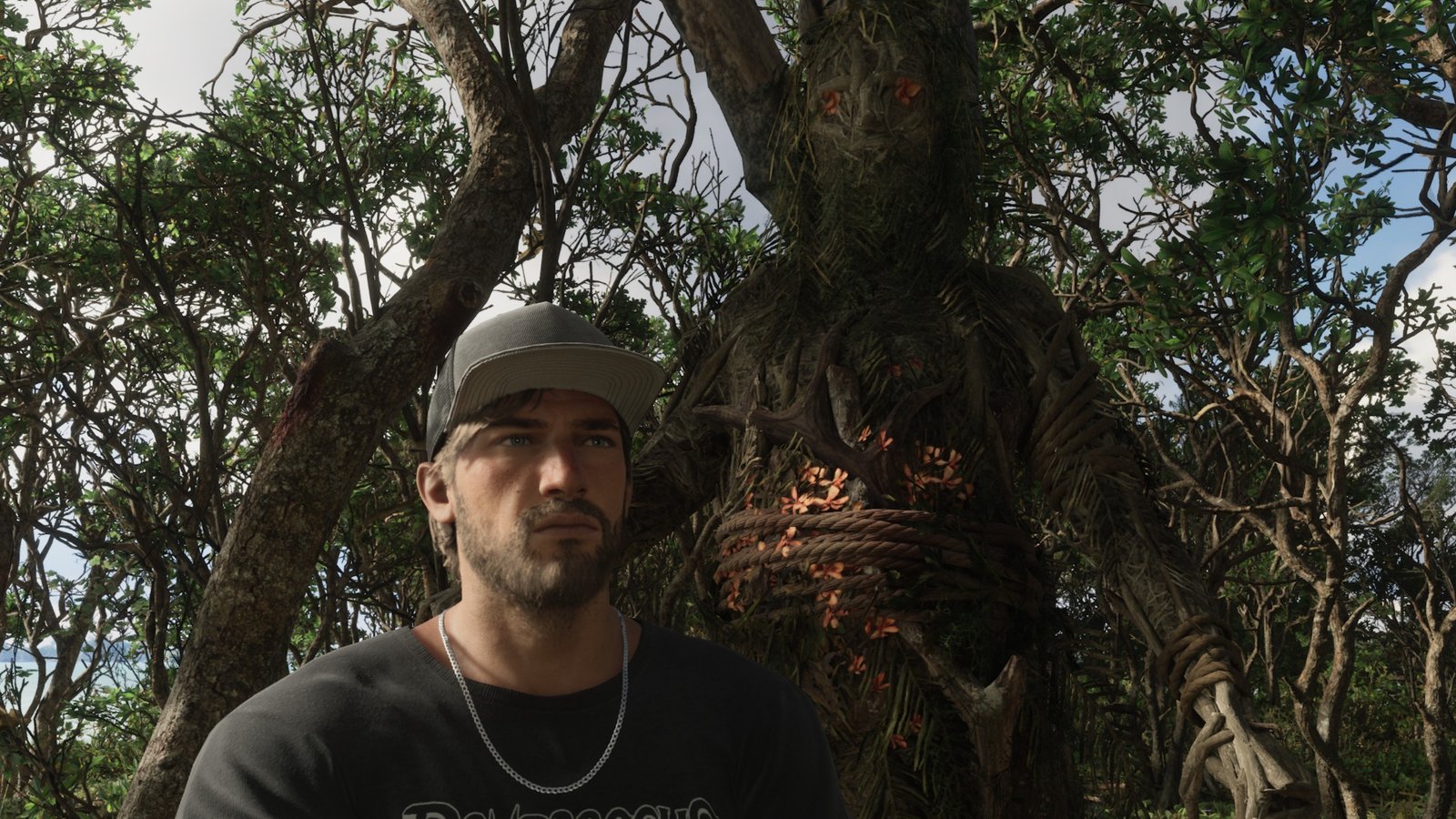
For years, players searched San Andreas for a creature that wasn’t there. Now Rockstar has given them a new reason to be afraid of the trees.
There is something particularly unsettling about horror in a game that isn’t supposed to be a horror game. In Grand Theft Auto VI, you can leave the noise of Vice City behind and find yourself alone in the wetlands. Suddenly, a tree doesn’t look quite right. A routine drive becomes something out of a ghost story.
What makes these encounters interesting isn’t how many secrets Rockstar has hidden. It’s how much history exists outside the game. Florida has its own version of Bigfoot, and the image of a mysterious woman appearing on a lonely road belongs to several older storytelling traditions. GTA also has a history with monsters its players invented long before its developers made them real.
Light spoilers for optional encounters follow. This is an exploration of the folklore, not a walkthrough.
The Bigfoot Rockstar never put in San Andreas
In 2004, GTA: San Andreas gave players a huge countryside that felt capable of hiding almost anything. There were forests, isolated cabins, mountains and long stretches of road. Leave the cities and the game became strangely quiet.
Then came the rumours. Players claimed to have seen Bigfoot. Screenshots and videos circulated, and a mixture of modified games, hoaxes and hearsay kept the story alive. GamesRadar’s retrospective on GTA myths documents how the legend persisted despite the absence of the creature in the original game.
It is easy to forget what discovering secrets felt like before a new release could be dissected by thousands of creators in a matter of hours. You could hear an impossible story at school or on a forum, spend an evening testing it, and go to bed without an answer. Failure to find Bigfoot didn’t necessarily kill the rumour. It made the next rumour more interesting.
Rockstar eventually acknowledged the mythology through later games, including GTA V. In GTA VI, the joke has developed into an encounter with its own storyline. PC Gamer’s documented hunt describes following a creature near Key Lento, investigating an effigy and subsequently working with a cryptid enthusiast named Kirk.
What began as a rumour about one fictional state has become a story about a creature associated with a real one. That’s the part worth digging into.
Florida’s very own Bigfoot
Bigfoot tends to evoke the forests of the Pacific Northwest. Florida’s Skunk Ape belongs to a very different landscape: the hot, humid wetlands of the southern United States. Its memorable distinguishing feature is the terrible smell supposedly accompanying sightings.
In its 2014 feature On the Trail of Florida’s Bigfoot, Smithsonian magazine examined the accounts that have accumulated around the creature, including reports dating back decades, the claims of prominent local investigator Dave Shealy and possible explanations involving other animals.
The story even attracted the attention of Florida lawmakers in the 1970s, when an unsuccessful proposal sought protection for unusual humanoid creatures. That isn’t evidence the state discovered a new species. It shows how far an unusual local belief can travel once enough people start repeating it.
There is no scientifically established population of Skunk Apes. Eyewitness stories, alleged footprints and ambiguous photographs are not substitutes for independently verifiable biological evidence. The absence of that evidence is central to understanding why the legend is so durable: there is always another possibility to argue over.
Why the swamp is the perfect setting
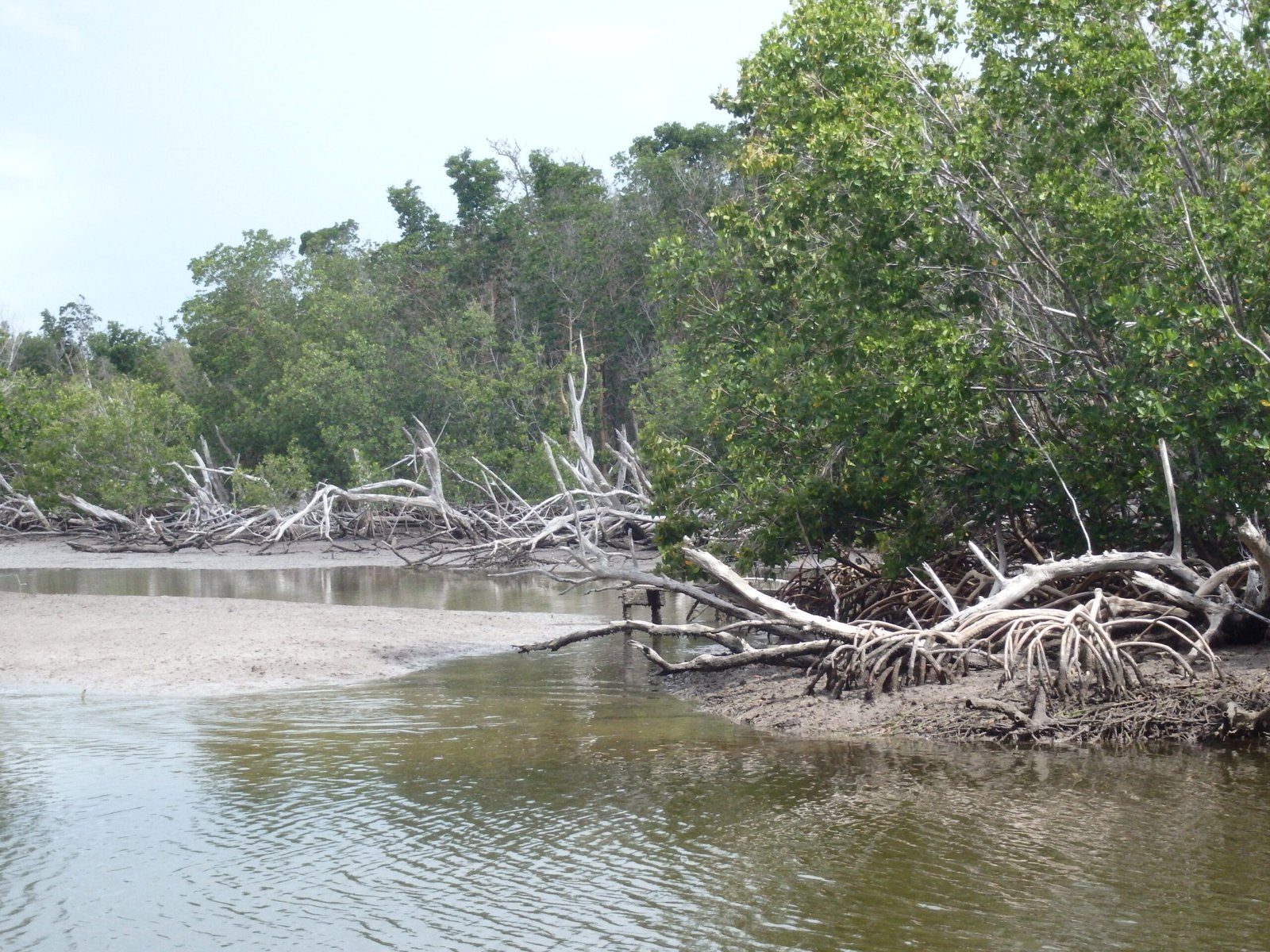
Florida’s wetlands offer a particularly effective setting for this kind of story. Dense vegetation can conceal objects at short distances; reflected light and water complicate what a person sees. A recognisable shape can become difficult to interpret as soon as it moves behind a tree.
Rockstar’s fictional Leonida isn’t a documentary reconstruction of Florida. But its official world overview establishes an environment where wetlands and isolated communities sit alongside the spectacle of Vice City. The regional creature fits that geography far better than an arbitrary monster imported from another mythology.
That’s an editorial interpretation, rather than a statement of the studio’s intent. The explicit connection is the creature’s name. The idea that Rockstar is using the landscape to make its horror more convincing follows from what the game presents.
The woman on the road
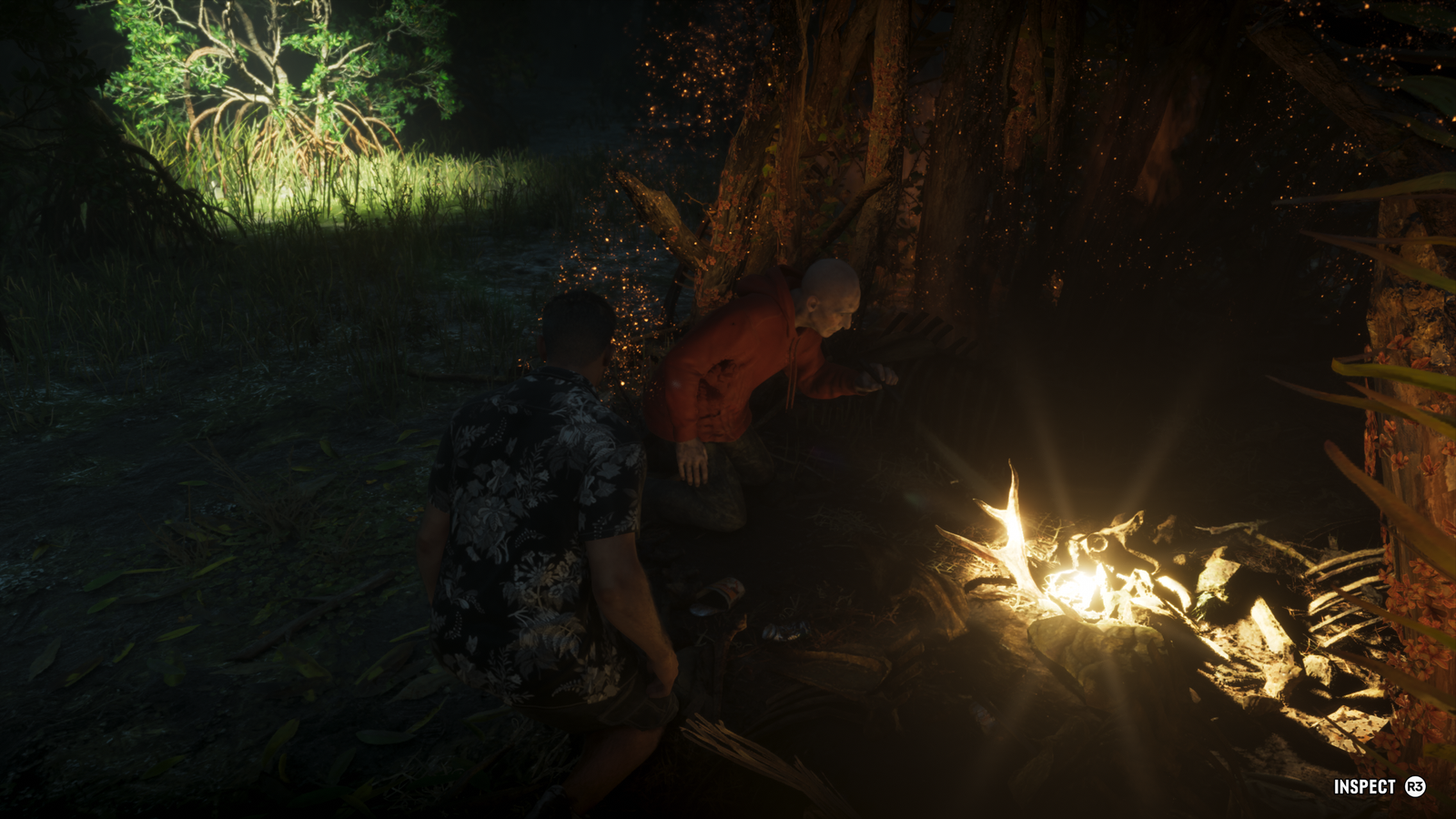
The other encounter is more difficult to trace to a single tradition. Dread Central’s coverage describes a pale figure approaching a vehicle after it stalls at night. Its account also notes that players have reported the encounter in different places. Treat a precise location offered online as a lead, not an established universal trigger.
Some viewers will immediately recognise the visual language of The Ring. Others may see the White Lady stories found in different countries or the Latin American legend of La Llorona. These are useful comparisons, not interchangeable names for the same character.
La Llorona is usually associated with the cries of a woman mourning her children. The Library of Congress’s exploration of the legend examines its varied roots, including Indigenous accounts and possible Spanish influences. There isn’t one universally accepted original version. Different communities have retold it in ways that reflect their own fears and traditions.
Then there is the vanishing hitchhiker: the story of a stranger encountered on a road who disappears, leaving the person who met them to discover that something is deeply wrong. The resemblance is structural, not literal. GTA’s ghost does not need to ask for a ride for the road itself to become a place of supernatural uncertainty.
The player-recorded footage linked in Dread Central’s reporting is useful for seeing the encounter in context, even if individual interpretations are not official explanations.
Why GTA’s horror works better when you don’t expect it
Horror games generally announce what they are. You enter a haunted building expecting something terrible to happen. GTA has the advantage of breaking an entirely different promise: its world is meant to be familiar, absurd, dangerous and fundamentally understandable.
Then something happens that doesn’t obey the rules you thought you understood. A creature lives where you expected scenery. A car stops being a means of escape. An ordinary journey becomes a story you want to tell someone else.
That uncertainty is also what kept the San Andreas myth alive. Players turned the game into an informal folklore network. Modern video clips spread faster, but they still produce the same fundamental reaction: someone sees something, someone else doubts it, and a third person goes looking.
Rockstar doesn’t need every strange encounter to become an entire horror game. The fact that its world returns to normal afterwards is part of what makes the encounter memorable.
Where the evidence ends
- Documented in the game: the Skunk Ape storyline and roadside apparition, as reported by PC Gamer and Dread Central.
- Documented outside the game: the Florida Skunk Ape legend and the varied traditions surrounding La Llorona and supernatural roadside encounters.
- Interpretation: the possible relationships between those traditions and the ghost’s design.
- Unproven: the existence of the actual Skunk Ape, the ghost’s official identity, and a direct Rockstar statement identifying the specific sources behind the apparition.
We haven’t independently played through these encounters for this article. Gameplay details come from the published reporting and player accounts cited here.
The rabbit hole
For the Florida story, start with Smithsonian. For the history of the weeping woman, the Library of Congress is an excellent place to begin. USGS provides a look at the real landscape behind the fictional setting.
For more from Leonida, read our ranking of GTA 6’s in-game video games or visit our GTA 6 hub. For a different kind of darkness, explore Goya’s Black Paintings.
Sources: PC Gamer (Nov. 22, 2026); Dread Central (Nov. 23, 2026); GamesRadar+ (Nov. 2026); Smithsonian magazine (2014); Library of Congress (2021); Rockstar Games; USGS.