Lucifer and the Art of Fear: Why Some Paintings Feel Haunted
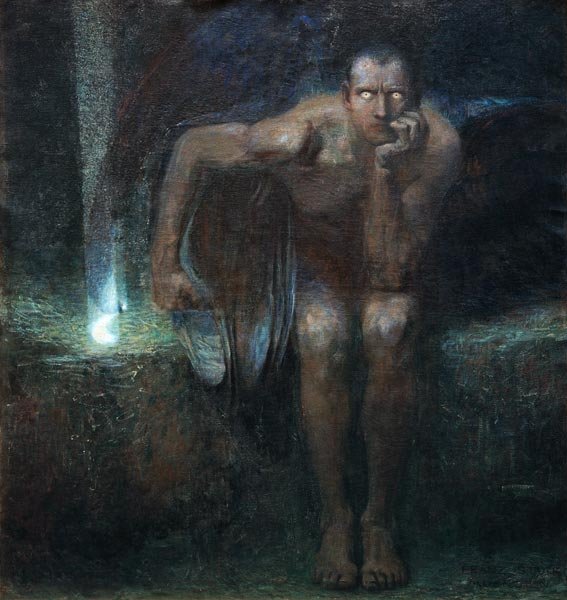
There is something unsettling about a painting that seems to notice you before you notice it.
At first, Franz von Stuck’s Lucifer looks like a man sitting alone in a dark place. Then you see the eyes. The longer you look, the more the darkness seems to reveal: a muscular figure, enormous wings, a faint source of light. Nothing moves. Nothing needs to.
It is an image from 1890 that understands a principle modern horror still depends on: sometimes the most frightening thing is not what appears, but what might already be in the room.
That brings us down a much larger rabbit hole. Why do some paintings leave us uncomfortable long after we stop looking at them? And how did certain works acquire reputations for being haunted, cursed or even demonic?
Lucifer: the devil who does not need to move
The National Gallery of Bulgaria dates the painting to 1890. Unlike conventional depictions of Satan, Stuck gives us no horns, pitchfork or theatrical inferno. The figure rests his cheek against his hand, in a pose that might otherwise suggest boredom or contemplation. But the pale, luminous eyes make the pose feel like something else entirely: a predator waiting, or a fallen being considering its next move.
Notice how little information the painter gives us about the surroundings. The dark wings almost dissolve into them. The small light to the left hardly illuminates the space; instead, it makes the remaining darkness feel deeper. The name Lucifer comes from Latin for light-bringer, making that relationship between light and darkness particularly suggestive.
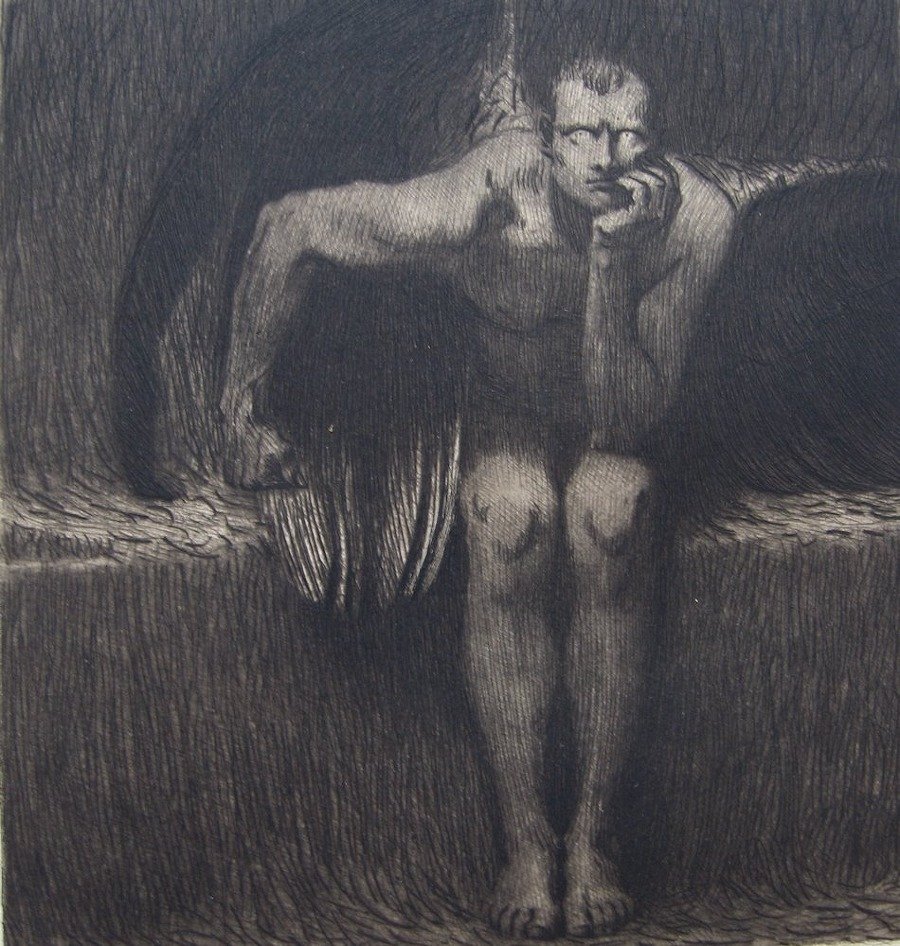
There is also an etching of the figure, made around the same period. Here the wings are much easier to distinguish. Seeing the two versions together changes the way you read the painting. What first seemed to be an indistinct background becomes part of the creature itself.
The painting was acquired by Ferdinand I of Bulgaria. A 2006 art-historical catalogue hosted by Heidelberg University cites an account from the German art journal Die Kunst für Alle in 1903 referring to Bulgarian courtiers crossing themselves before the image. That is a fascinating historical anecdote, not evidence of paranormal activity. The stronger viral version, that the painting terrorized specific ministers, should not be treated as independently established fact.
Who was Franz von Stuck?
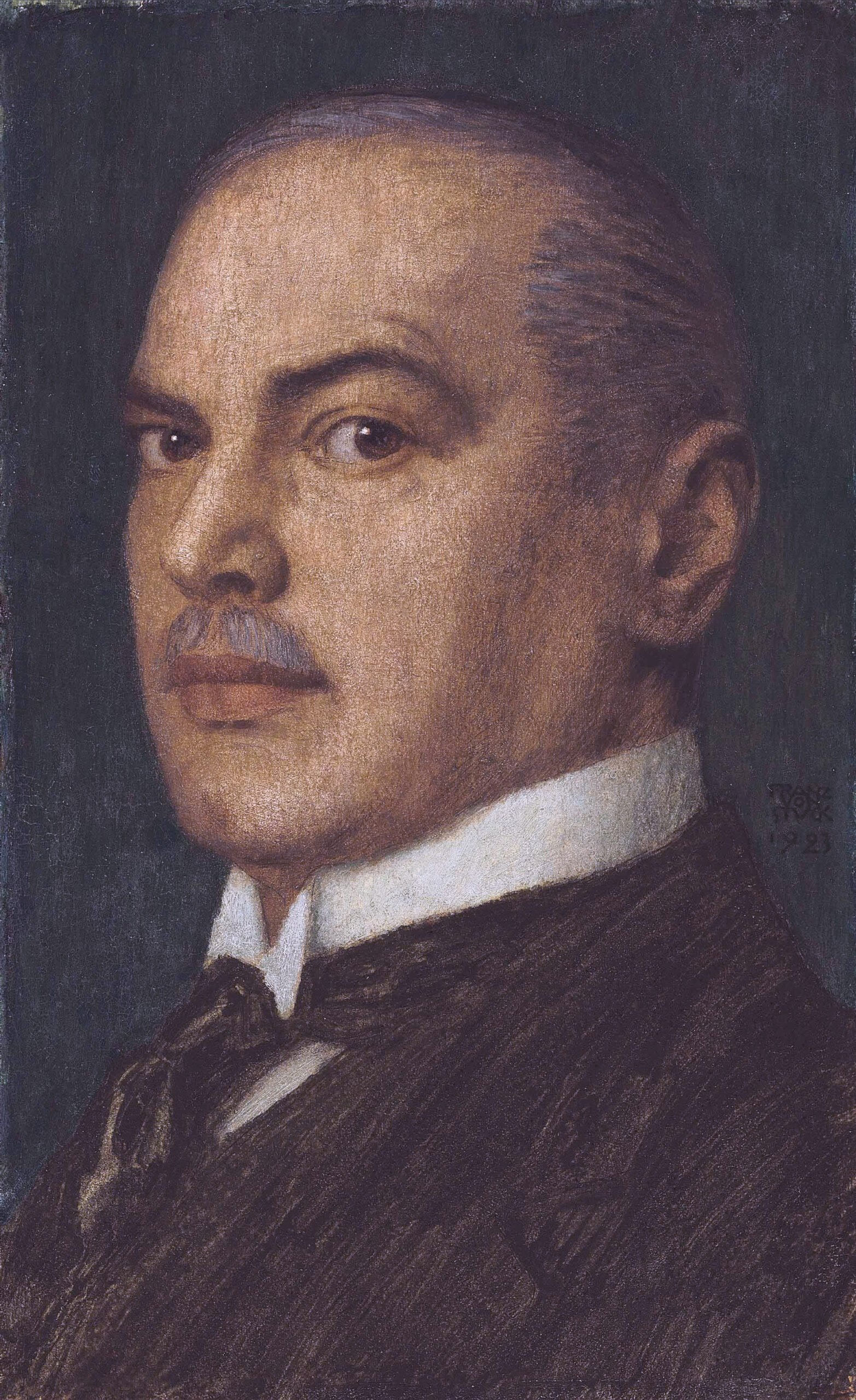
Born in Bavaria in 1863, Franz von Stuck was a German painter, sculptor and designer working at the intersection of mythology, psychology and religious imagery. He died in Munich in 1928. His art was concerned with what people fear, desire and struggle to explain.
He belonged to the late nineteenth-century world of Symbolism, a movement that emerged in France during the 1880s and spread through Europe. According to the Metropolitan Museum of Art and MoMA, Symbolists rejected the idea that art should simply reproduce visible reality. Mythical figures, dreams, spiritual imagery and expressive colors became vehicles for internal experience.
The period is often called the fin de siècle, the end of the century. Industrialization, scientific change and new ways of thinking about the mind existed alongside a fascination with death and the supernatural. The Frye Art Museum’s retrospective, organized with Museum Villa Stuck, situates his work amid these intellectual shifts and documents his influence on later artists. Other paintings worth investigating include The Sin and Inferno.
Stuck’s demons were not necessarily declarations of belief. They could embody temptation, rebellion, desire or the disturbing parts of being human. Lucifer works because it gives a mythological idea an almost recognizable human presence.
Four paintings that make the world feel wrong
Henry Fuseli — The Nightmare (1781)
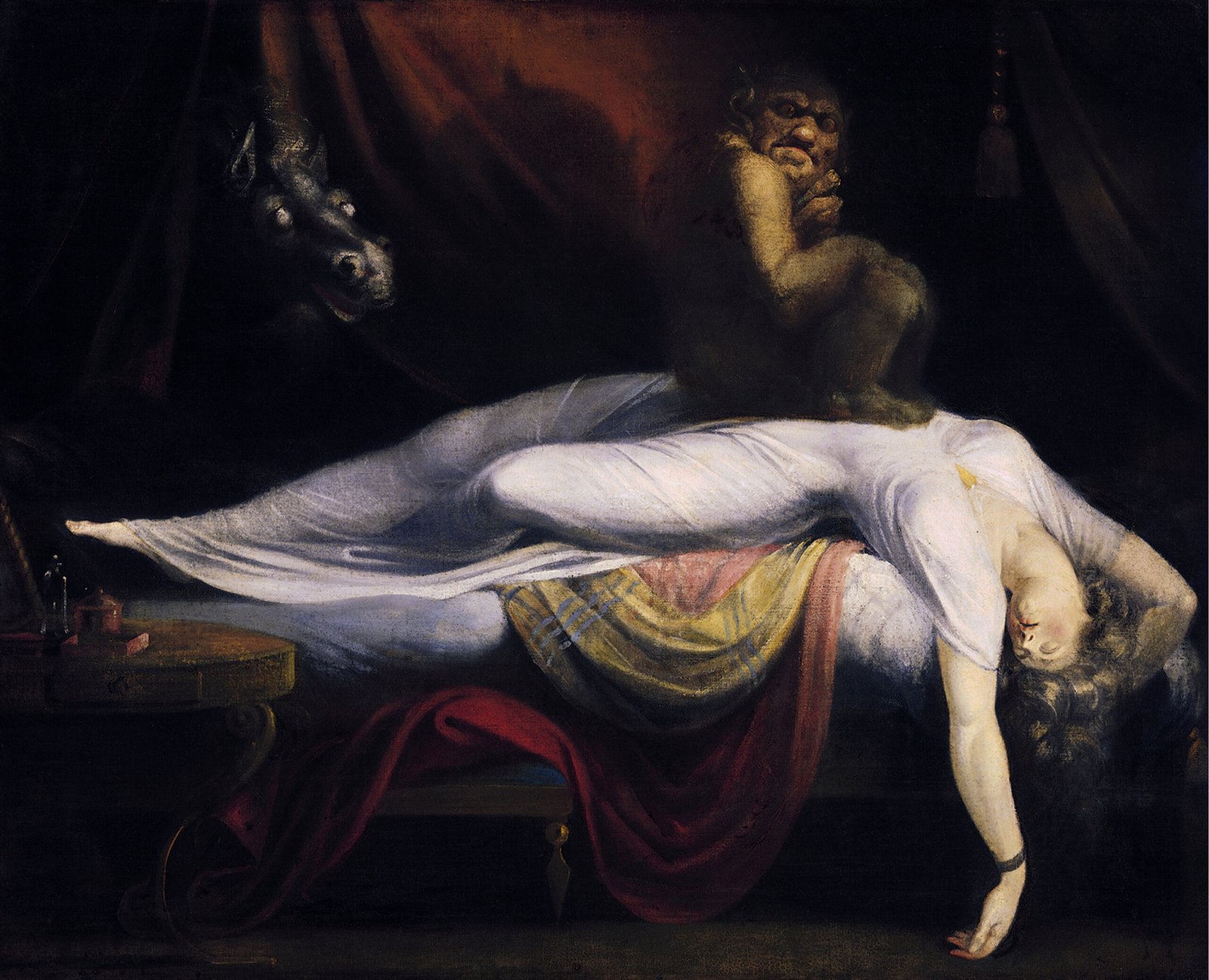
A woman lies unconscious. A grotesque incubus sits on her chest, looking outward, while a horse emerges from the curtains. The setting is recognizable as a bedroom, which is precisely why the intrusion feels so disturbing.
The Detroit Institute of Arts interprets the painting as a visualization of the experience of being trapped in a demonic nightmare. Modern viewers may also recognize imagery reminiscent of sleep paralysis: helplessness, chest pressure and a threatening presence. That resemblance is not proof of what Fuseli personally experienced.
The painting predates Symbolism by a century. Its horror comes from violating the sense of safety associated with sleep.
Francisco Goya — Saturn Devouring His Son (c. 1819–1823)
Content note: the following artwork depicts graphic mythological violence.
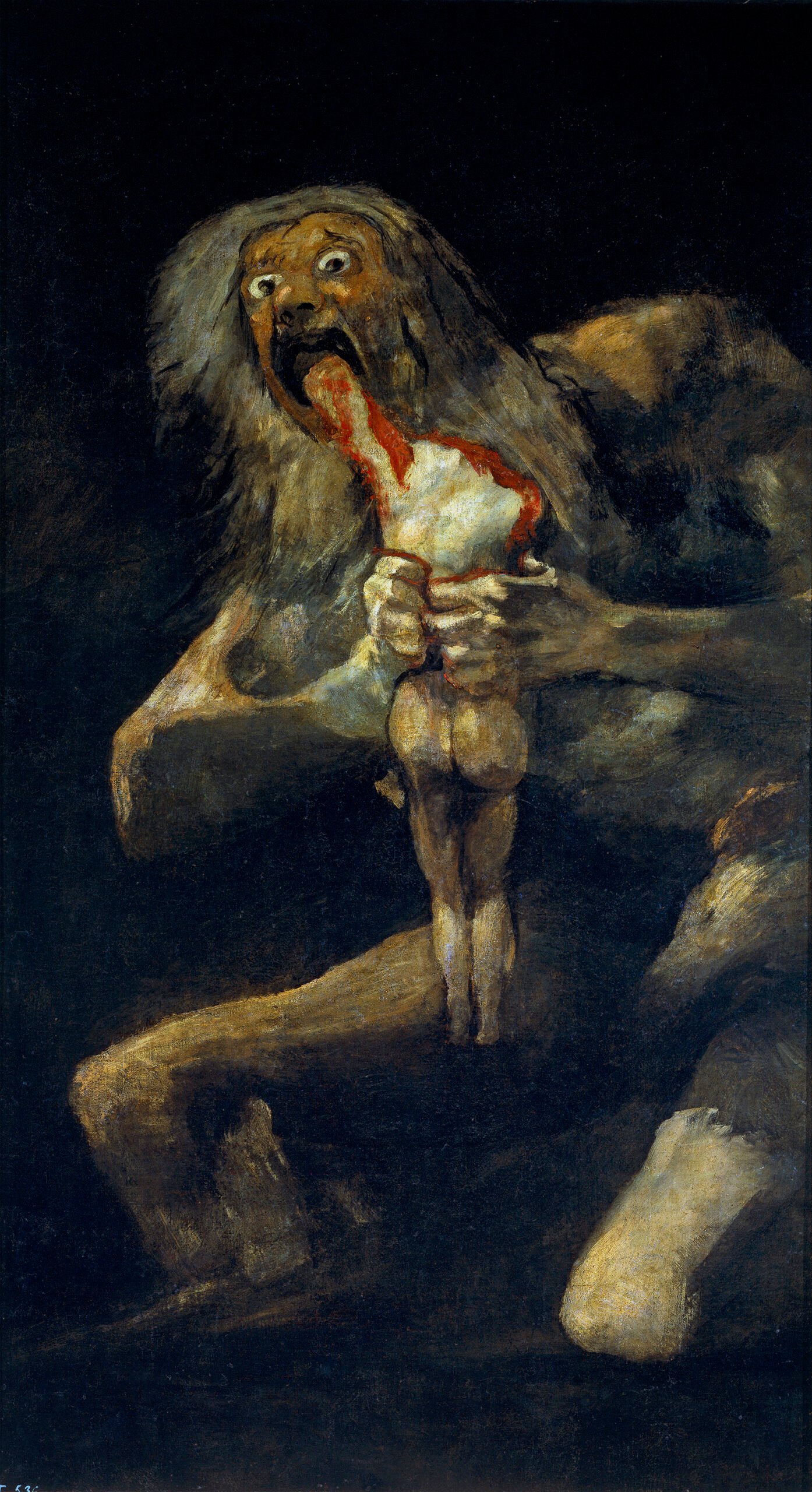
Goya’s Black Paintings were originally painted on the walls of his own house near Madrid. Among them is an image traditionally understood as Saturn consuming one of his children to prevent his overthrow.
Unlike a heroic classical representation of mythology, there is no grandeur here. The figure appears frantic and frightened by the terrible act he is committing. There is no explanatory scene around him, only darkness. The result feels like a glimpse of something we were never supposed to witness. The work now belongs to the Museo del Prado.
It is tempting to speculate about what Goya was thinking when he painted such images in his home. But we do not have access to his private intentions, and the Black Paintings should not be reduced to a diagnosis or a curse.
Arnold Böcklin — Isle of the Dead (1880–1886)
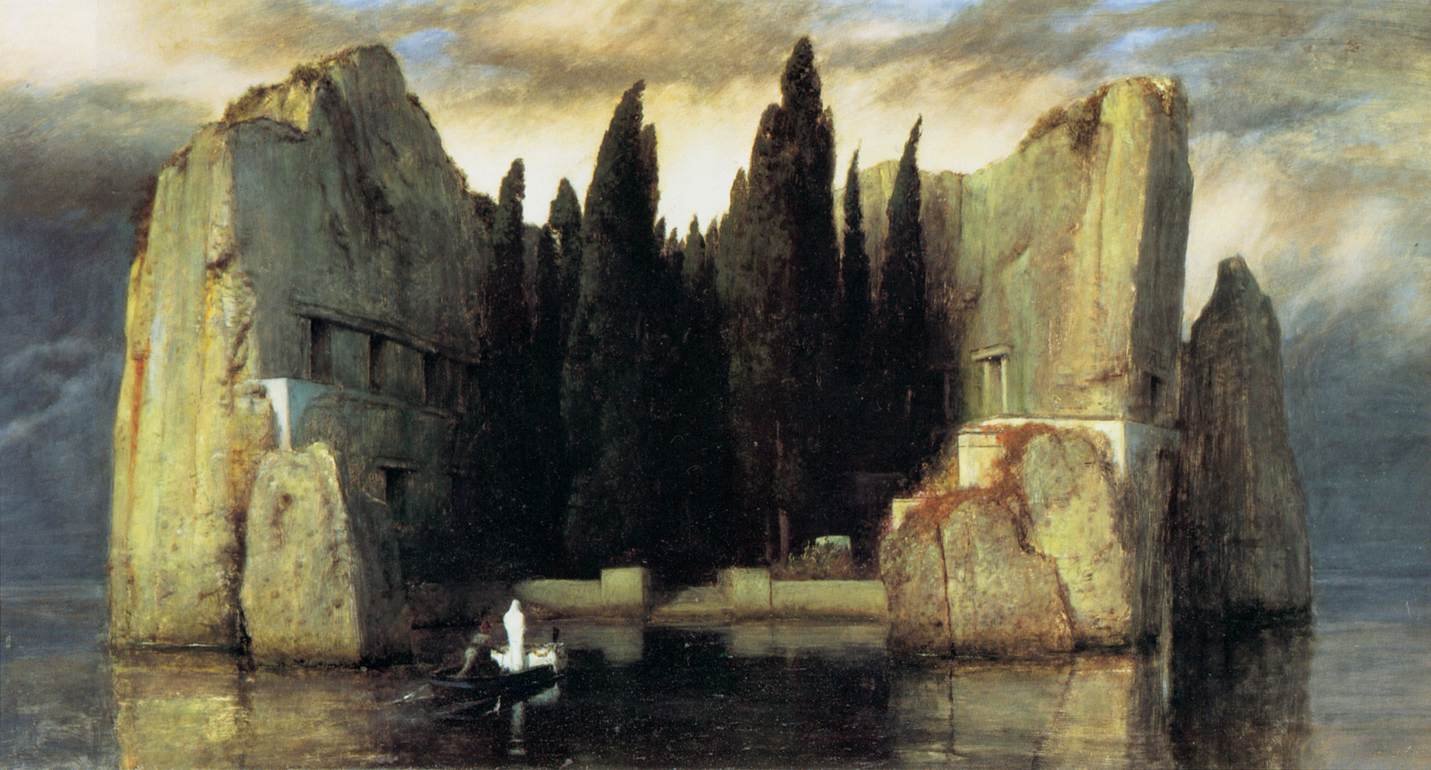
There is no demon in this painting. No blood, no attack, no expression of terror. Just a boat, a pale figure, a coffin and an island that appears to have swallowed every sound.
Swiss artist Arnold Böcklin painted several versions. The Met’s 1880 version was commissioned by Marie Berna in memory of her late husband. The subject later inspired Sergei Rachmaninoff’s symphonic poem Isle of the Dead. It demonstrates how melancholy and anticipation can be as haunting as explicit horror. What waits on the island? The painting refuses to say.
Edvard Munch — The Scream (1893)
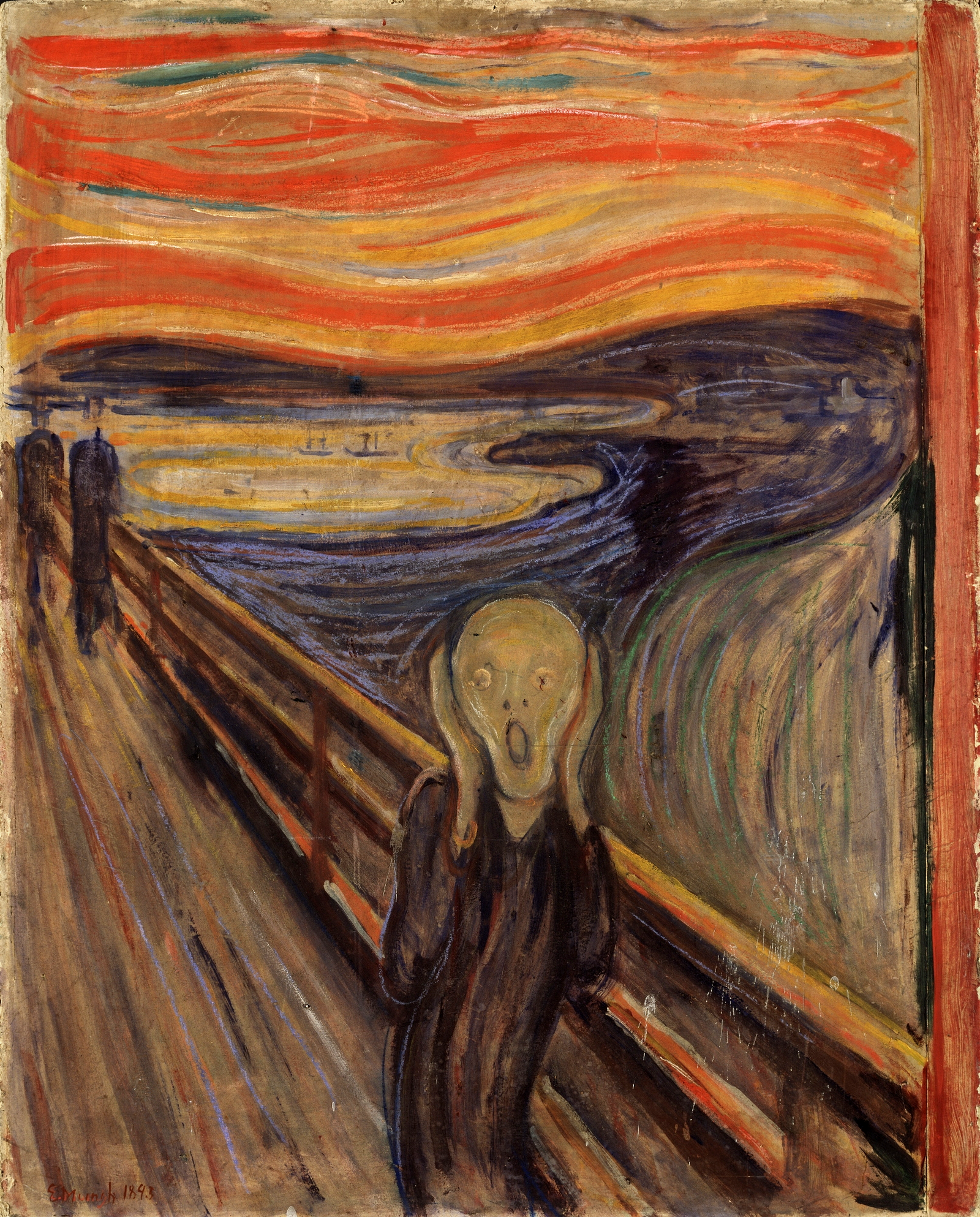
What if the frightening thing is not a monster at all, but the experience of being alive? Munch turns the landscape into a distorted emotional state. A figure holds its head while the sky and water twist around it. Two distant people continue walking, apparently untouched by the disturbance.
The MUNCH museum connects the motif to Munch’s description of experiencing a scream in nature. The figure may be hearing the scream rather than producing it. That ambiguity changes the image: the whole world seems to share the anxiety, and yet the person experiences it alone.
When disturbing art becomes a supposedly haunted object
There is a difference between a painting of a demon and a painting that people believe contains one. The former is an artistic subject. The latter is a claim about reality that needs evidence. Two fascinating examples show how the boundary gets blurred.
Bill Stoneham — The Hands Resist Him (1972)
A boy stands beside a doll-like girl in front of a glass door. Behind them are numerous small hands. The image looks like a childhood photograph that has been transformed into something unfamiliar.
In 2000, an eBay listing alleged that figures in the painting moved or left the canvas at night. The story became one of the early internet’s best-known haunted-object legends. In the artist’s own account, the composition grew out of a childhood photograph, and the glass and hands symbolized a boundary and other lives. Stoneham himself encourages skepticism about the mythology surrounding it.
See the original painting, its sequels and the full account on Stoneham Studios. The work remains copyrighted, so we are linking directly to the artist’s gallery.
The Crying Boy — a curse manufactured through headlines
In Britain, mass-produced portraits of crying children became associated with house fires during the 1980s. Stories claimed that copies survived fires while surrounding belongings were destroyed. In 1985 and 1986, tabloid newspaper The Sun turned the reports into a national curse narrative.
Folklore researcher David Clarke’s 2026 scholarly article examines how reports by firefighters became an embellished supernatural legend through press coverage. Ordinary prints were suddenly treated as ominous objects. A surviving print is not evidence that it caused a fire.
For another rabbit hole, watch BBC Radio 4 investigate the supposed curse. The distinction between what happened and what people believed happened is the most interesting part of the story.
Why do some paintings feel as though they are watching us?
We are unusually attentive to faces and eyes. A 2009 Journal of Vision study found that the expression of anger influenced whether people interpreted a gaze as directed at them. This research did not test Stuck’s painting specifically, but it offers a useful way to think about its stare. The eyes seem intensely interested in the viewer, while the rest of the figure remains still.
Then there is ambiguity. Dark areas, incomplete forms and unfamiliar expressions leave room for the imagination. A fully described monster gives us something concrete to confront. A nearly human figure whose intentions cannot be read leaves us suspended between recognition and threat.
Context changes the experience as well. See a portrait in a museum and you may pay attention to its composition. See the same portrait after reading that it is cursed and you may start looking for signs of danger. The picture has not changed. The story you bring to it has.
These are different routes to unease: the gaze in Lucifer, the violation of safety in The Nightmare, the moral horror of Goya, the silence of Böcklin, the anxiety of Munch and the reputation surrounding Stoneham’s work. No supernatural explanation is required to take the discomfort seriously.
The PYLCROW take: horror before horror movies
We tend to associate horror with a soundtrack, a sudden cut or something moving in the corner of the frame. These artists accomplished something with none of those tools. They created images in which the viewer provides the movement, the story and often the fear.
That is what makes Stuck’s Lucifer so effective. We are never shown what he does next. The threat is suspended, possibly forever. And perhaps the most disturbing interpretation is that he is not even preparing to do anything. He simply sees us.
There is no reliable evidence here of a painting being possessed or cursed. But art can be genuinely haunting without being haunted. The fact that pigment on a flat surface can create a feeling of presence, more than a century after its maker died, is remarkable enough.
Down the Rabbit Hole
Continue with The Bat-Woman: Albert Pénot and the Dark Art of the Femme Fatale, our companion exploration of the uncanny and the history connecting bat imagery across Gothic art, Dracula and Batman.
If this kind of atmosphere fascinates you, explore Melk, an animated horror story that begins with a fish, and CopyPaste!, the dress-up game that becomes existential horror. Both explore the unsettling transformation of familiar things through very different media. More discoveries in Deep Cuts.