
Dune Great Houses Explained: Atreides, Harkonnen, Corrino and the History Behind Part Three

Smart summary
House Atreides ruled Caladan before being sent to Arrakis, where House Harkonnen and Emperor Shaddam IV of House Corrino plotted their destruction. Paul survived, united with the Fremen and took the imperial throne by defeating the Corrino regime and marrying Princess Irulan. In Dune: Part Three, set nearly two decades later, those family ties still define power. This guide explains the three central Great Houses, their homeworlds, the Landsraad, CHOAM, the Spacing Guild, the Bene Gesserit, the Bene Tleilax and why the Fremen are not simply another noble House.
Think of Dune as a giant family business in which the shareholders have private armies, the banks control access to space travel, and the board of directors occasionally arranges for entire bloodlines to be murdered. And the one essential product everybody depends on is harvested from a desert world the owners barely understand.
That is the Imperium. The worms and prophecy are spectacular, but the political machinery is why the story keeps moving. The Houses form the ruling aristocracy, the Guild transports their wealth and troops, and the Fremen inhabit the world that makes it all possible. If you remember that arrangement, you can understand most of the first two films — and why Dune: Part Three is set to be so dangerous for Emperor Paul.
This is a film-focused primer, with historical context from Frank Herbert’s books where useful. We will label what belongs to the novels rather than treat every later book development as a confirmed movie twist.
Dune Great Houses at a glance
| House | Homeworld / power base | Main figures | What they want |
|---|---|---|---|
| Atreides | Caladan originally; Arrakis then the imperial throne | Duke Leto, Jessica, Paul, Alia | Survival, legitimacy and later imperial control |
| Harkonnen | Giedi Prime; formerly controlled Arrakis | Baron Vladimir, Rabban, Feyd-Rautha | Wealth, dominance and defeat of Atreides |
| Corrino | Imperial seat at Kaitain; dynastic ties to Salusa Secundus | Shaddam IV, Princess Irulan | Preserve or reclaim imperial authority |
All three are genuine political dynasties. That distinction matters because many other factions in Dune are extraordinarily powerful without being Houses in the same sense. The Bene Gesserit, the Spacing Guild and the Bene Tleilax each have different roles in the system; the Fremen are desert inhabitants whose lives are shaped by the world that everyone else exploits.
House Atreides: from Caladan to the imperial throne

Where they started: Caladan, a green, rainy world that looks nothing like the deserts of Arrakis. Important members: Duke Leto Atreides, Lady Jessica, their son Paul, and later Paul’s sister Alia.
In the first film, Duke Leto’s reputation matters. He is trusted by many of the other noble Houses, and that popularity is part of the problem for Emperor Shaddam IV. When Leto is ordered to leave Caladan and govern Arrakis, the move appears to be a promotion. But taking charge of the galaxy’s precious spice source also makes the Atreides dangerously exposed to their enemies.
House Atreides is almost destroyed in the Harkonnen assault on Arrakis, supported secretly by imperial Sardaukar troops. Leto dies. Jessica and Paul escape into the desert and are taken in by the Fremen. Paul’s later victory turns the entire arrangement upside down: the displaced heir becomes the Emperor himself.
My favorite contradiction is that the supposedly “good House” wins the game and inherits the consequences of the game. By Dune: Part Three, Paul can no longer claim he is merely reacting to what stronger Houses do to him. He is the center of the political order. Our Part Three pre-release guide explains how the new film’s time jump intensifies that responsibility.
House Harkonnen: wealth, fear and the machinery of exploitation
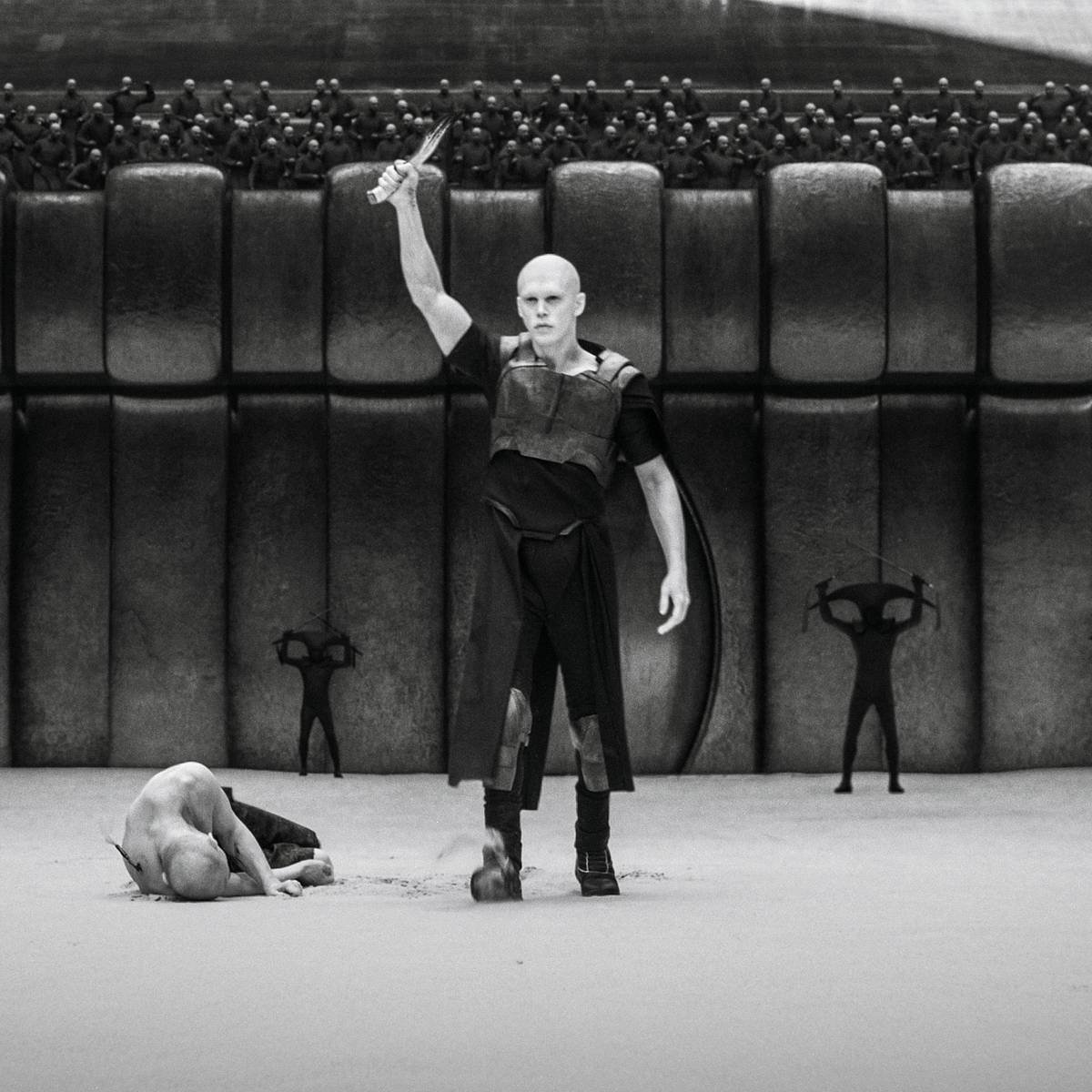
Homeworld: Giedi Prime, industrial and visually drained of color in Villeneuve’s Part Two. Key figures: Baron Vladimir Harkonnen, his nephew Glossu “Beast” Rabban and Rabban’s younger brother Feyd-Rautha.
The Harkonnens previously administered Arrakis and exploited its spice production. The Emperor uses them to attack the Atreides after making the latter publicly responsible for Arrakis. That political maneuver is brutally efficient: one noble family destroys a rival while the supposedly impartial Emperor preserves a layer of plausible distance.
Baron Harkonnen is defined by the belief that politics is an exercise in using people. Rabban rules through violence. Feyd-Rautha is cultivated as a more promising successor, capable of manipulating public perception as well as instilling fear. Their family feud with House Atreides stretches far deeper than one disputed spice concession.
The frightening secret is that Paul also has Harkonnen blood. Jessica is the Baron’s daughter, meaning the family lines meet inside the person supposedly destined to defeat the Harkonnens. That revelation complicates any neat interpretation of the story as one inherently virtuous dynasty overthrowing an inherently evil one. It’s a story about what people choose to do with inherited power, not whether their blood is pure.
House Corrino: the dynasty that ruled before Paul
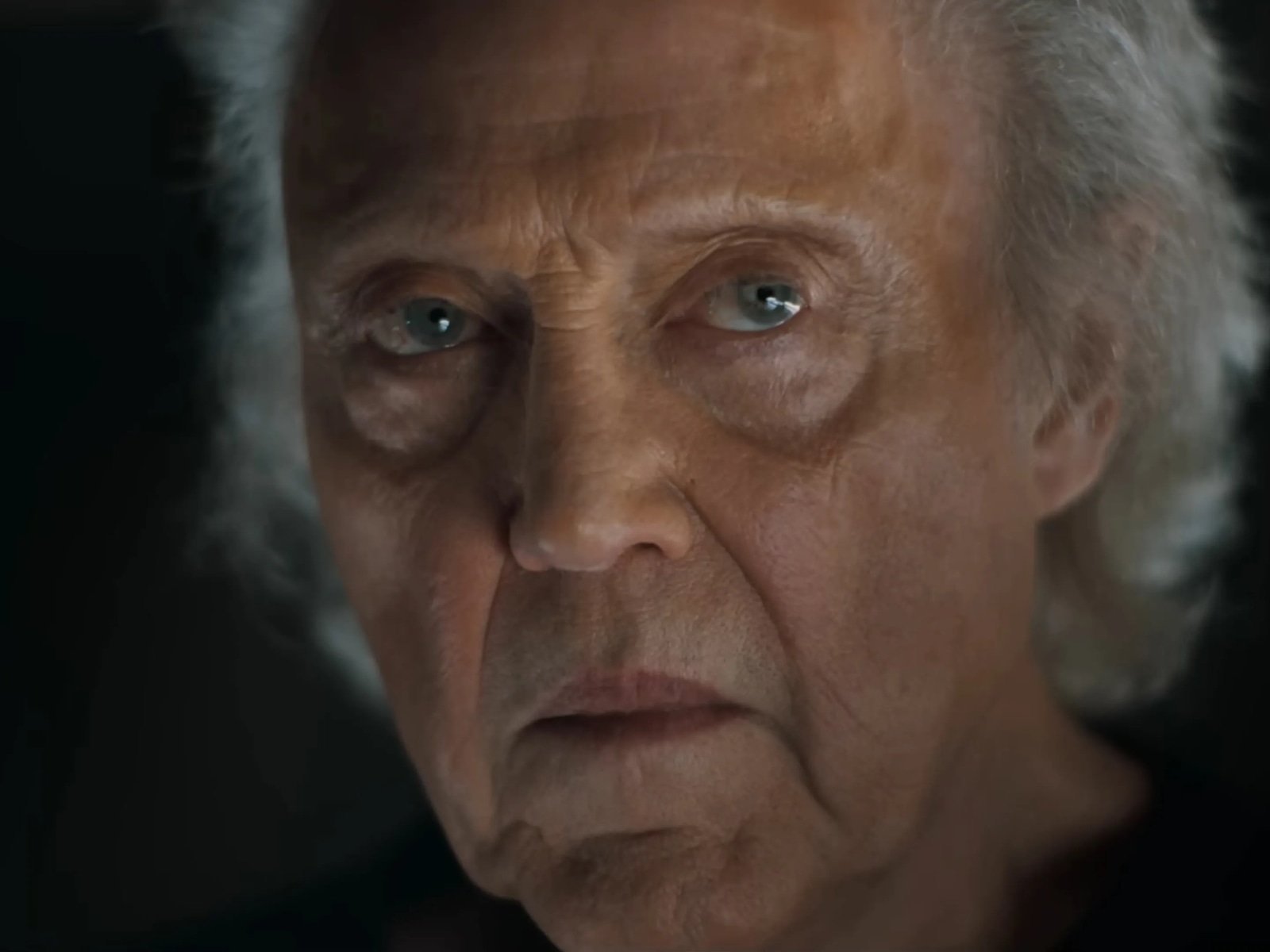
Imperial seat: Kaitain, with the dynasty historically associated with Salusa Secundus, the brutal world where the feared Sardaukar are trained. Important figures: Emperor Shaddam IV and his daughter Princess Irulan.
For millennia in Frank Herbert’s fictional history, House Corrino represented the imperial throne. The old system balanced the Emperor’s power with the collective power of noble Houses through the Landsraad. The Emperor possessed the Sardaukar, a military force so formidable that simply learning it might intervene could change the behavior of an entire noble family.
But Shaddam’s fear of House Atreides helped bring him down. His cooperation with the Harkonnens destroys Duke Leto, yet Paul survives and eventually confronts him. Paul then marries Princess Irulan, creating a dynastic connection to the former ruling House while taking the throne for himself.
That makes Irulan’s presence in Part Three politically fascinating. She isn’t just Paul’s wife. She is living evidence of the empire he replaced. Any move she makes could be interpreted as a personal choice, an institutional loyalty or an attempt to preserve her family’s influence. See the full Dune 3 character and loyalty guide for her place alongside Chani, Jessica and Alia.
The history: how the old empire created its own downfall
Start with the old system: a Padishah Emperor from House Corrino, the Landsraad of noble families, the Spacing Guild as a near-indispensable transport power, and CHOAM as the system through which the great powers share profits from trade. Spice from Arrakis keeps much of the machine operating because it is essential to Guild navigation and extraordinarily valuable.
Next, the Emperor fears the rising influence of Duke Leto Atreides. Control of Arrakis is transferred from the Harkonnens to the Atreides. That transfer disguises a trap. The Harkonnens attack with imperial help, Leto dies, and Paul disappears into the desert.
Finally, Paul discovers that the Fremen are not helpless subjects waiting to be rescued. They are formidable inhabitants of Arrakis with their own culture, ecological ambitions and religious history. He gains their support, claims the messianic role many have been conditioned to expect, and leverages control over spice to challenge imperial power itself. The final political marriage to Irulan formalizes his takeover. What looked like an attempt to destroy House Atreides ends with that House controlling the Imperium.
The Fremen: not a House, but the people every House underestimated

The Fremen are not simply another noble family on the Landsraad. They are the desert communities of Arrakis, with tribes, sietches, water customs, fighting traditions and ambitions far older than Paul’s arrival. Their relationship with spice, the desert and Shai-Hulud is cultural and spiritual, not merely commercial.
In Villeneuve’s films, Chani and Stilgar embody different responses to Paul’s rise. Stilgar increasingly sees the fulfillment of prophecy. Chani fears the use of religion to convince her people to submit to a ruler who claims a special destiny. Their disagreement is central to the third film’s political stakes. It also explains why Paul gaining a throne is not necessarily the same thing as the Fremen gaining freedom.
If you’re preparing to rewatch the first two movies, our recap focuses specifically on what Chani saw in Paul’s rise.
These powerful factions are NOT Great Houses

| Faction | Actual job | Why it matters to Part Three |
|---|---|---|
| Bene Gesserit | Influential sisterhood conducting political, psychological and breeding programs | Jessica, Mohiam, prophecy and bloodline control |
| Spacing Guild | Near-monopoly on safe interstellar travel, dependent on spice | A powerful pressure point on whoever rules Arrakis |
| CHOAM | Commercial power structure distributing profits across the empire | Helps explain why spice is also political and financial power |
| Landsraad | Assembly of Great Houses | Collective nobility’s interest in resisting imperial overreach |
| Bene Tleilax | Secretive faction with extraordinary biological engineering | Scytale and Hayt become major new variables |
| Fremen | Desert people of Arrakis, not a singular noble dynasty | The empire depends on their world and their allegiance |
The most important new name here is the Bene Tleilax. Robert Pattinson’s Scytale is a Face Dancer associated with that faction, while Jason Momoa’s Hayt is a ghola produced using Tleilaxu practices. The official Part Three character descriptions explicitly distinguish these from ordinary noble lineages. Treating Scytale as “House Tleilax” oversimplifies his role and gets the political structure wrong.

What about other Great Houses?
Herbert’s broader universe contains many more noble families than the three most prominent in Villeneuve’s trilogy. The Landsraad exists because aristocratic power is distributed across numerous planetary Houses, not just Atreides, Harkonnen and Corrino. Later novels and expanded-universe material explore additional dynasties such as House Richese and the Vernius family associated with Ix, but the films don’t require you to memorize them before seeing Part Three.
One more important distinction: a surname is not automatically a Great House. Count Fenring and Lady Margot Fenring, for example, have roles connected to the imperial circle and Bene Gesserit activity, but their relevance is not a reason to place “House Fenring” alongside the main dynasties without explaining the difference.
The family tree that changes how you read the whole trilogy
In simplified form, Duke Leto Atreides + Lady Jessica → Paul Atreides and Alia Atreides. Jessica is a daughter of Baron Vladimir Harkonnen. Paul, therefore, is both Atreides and Harkonnen by ancestry. His marriage to Princess Irulan Corrino connects the victorious Atreides ruler to the deposed imperial dynasty. Chani remains central to Paul’s personal and Fremen relationships.
That tangle is what makes the third movie compelling. Bloodline, religion, commerce and personal loyalty all claim to provide the legitimate foundation of power, and none fits comfortably with the others. You can tell the story of House Atreides taking revenge on the Harkonnens in one sentence. You cannot so easily explain what Paul is entitled to do after winning.
Who is in charge by Dune: Part Three?
| Question | Answer before Part Three |
|---|---|
| Who holds the imperial throne? | Paul Atreides |
| Who was deposed? | Emperor Shaddam IV of House Corrino |
| Who is Paul’s political wife? | Princess Irulan Corrino |
| Who does Paul love? | Chani, a Fremen warrior |
| What happened to House Harkonnen’s leaders? | Baron Vladimir, Rabban and Feyd-Rautha were defeated or killed in Part Two |
| Who controls the essential spice world? | Paul’s regime holds the strategic power centered on Arrakis |
| Which new faction complicates the situation? | The Bene Tleilax, including Scytale and the creation of Hayt |
Next on PYLCROW: Who is who in Dune: Part Three? Full cast and official portraits · Dune 3 pre-release watch order and what to remember · Can Part Three make us regret cheering for Paul? · Our Part One and Part Two recap.
Sources and adaptation notes
Official Dune: Part Three synopsis and character profiles; Warner Bros. Dune Part Two film page; Ars Technica’s plot and cast briefing; Los Angeles Times: Feyd-Rautha and the Harkonnens; Vogue on Part Three’s Bene Tleilax characters. House histories synthesize Herbert’s original novels and film narrative; where they differ, the article prioritizes the films.
Paul defeated the old Houses. Now he has to live in the political system that taught him how to become their most powerful successor.