
Godzilla Minus One vs. Minus Zero: Which Is Better — and Why Bigger Is Not Always Better
Smart summary
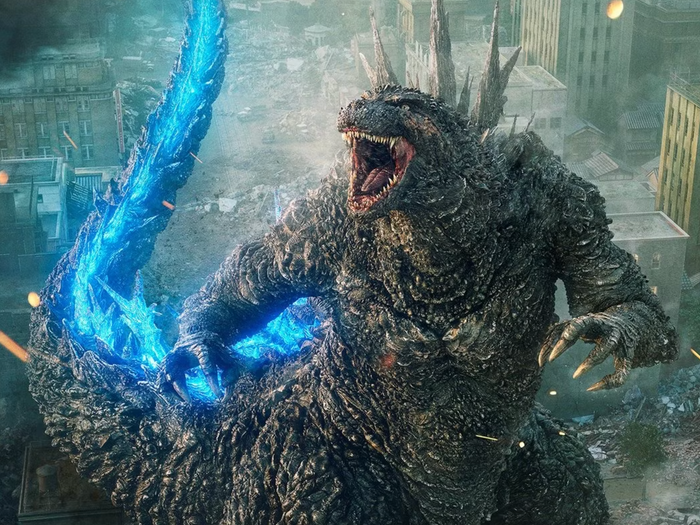
Godzilla Minus One (2023) is the stronger, more focused human drama; Godzilla Minus Zero (2026) offers greater spectacle, King Ghidorah and an IMAX-first experience. Rotten Tomatoes currently lists Minus Zero at 91% critics and 96% verified audience, while critics remain divided over whether it improves on the Oscar-winning original. The movies are directly connected, but each succeeds at a different job. Here is our category-by-category comparison, with light story spoilers.
If you make a movie about a 50-metre nuclear nightmare and audiences come away talking about one man’s guilt, you have done something unusual. That was the magic of Godzilla Minus One. It was a film that happened to have an enormous monster, not a gigantic effects reel trying desperately to locate a human pulse.
Its sequel, Godzilla Minus Zero, has a different problem. The audience already loves these characters. The film can give them bigger monsters, bigger destruction and a bigger screen, but it cannot recreate the surprise of discovering that a Godzilla film can make you care this deeply about someone who is barely able to live with himself.
So which one is better? I think Minus One is a better film. But that does not mean Minus Zero is an inferior cinema experience. Those can be different questions. If you haven’t started either, our guide to watching Minus One before Minus Zero is the spoiler-conscious first stop.
Godzilla Minus One vs Minus Zero: quick comparison
| Category | Minus One (2023) | Minus Zero (2026) | Our take |
|---|---|---|---|
| Central story | A survivor struggling with shame and guilt | A family confronting new threat and renewed state control | Minus One |
| Monster spectacle | Focused, terrifying attacks | Expanded kaiju conflict including Ghidorah | Minus Zero |
| Emotional impact | Earned through the central character’s transformation | Builds on affection for returning characters | Minus One |
| Visual ambition | Oscar-winning VFX | First Japanese feature filmed for IMAX, bigger set pieces | Different strengths |
| Best first watch | Fully standalone | Direct sequel; richer after Minus One | Minus One first |
| For monster-battle fans | Humans against an unknowable threat | Kaiju versus kaiju as well as humans | Minus Zero |
Minus One made Godzilla frightening by making a person matter
Takashi Yamazaki’s 2023 film follows Koichi Shikishima, a former kamikaze pilot haunted by his failure to die as the wartime system demanded. A country devastated by war struggles to rebuild, and Godzilla threatens to destroy what little remains. It is a monster movie whose central moral claim is startlingly humane: people who survived a catastrophe are not obliged to die to prove that they deserved survival.
The movie won the 2024 Academy Award for Best Visual Effects, but the Oscar did not explain all its appeal. The digital monster is persuasive because the ordinary people feel painfully real. Their homes, uncertain jobs and makeshift families give the destruction something to erase. That is why I would still choose this movie as the better introduction. Netflix’s background guide details the plot and production, while our deeper analysis explores why living is the film’s real act of courage.
Minus Zero can do something the first film never tried: Godzilla versus Ghidorah
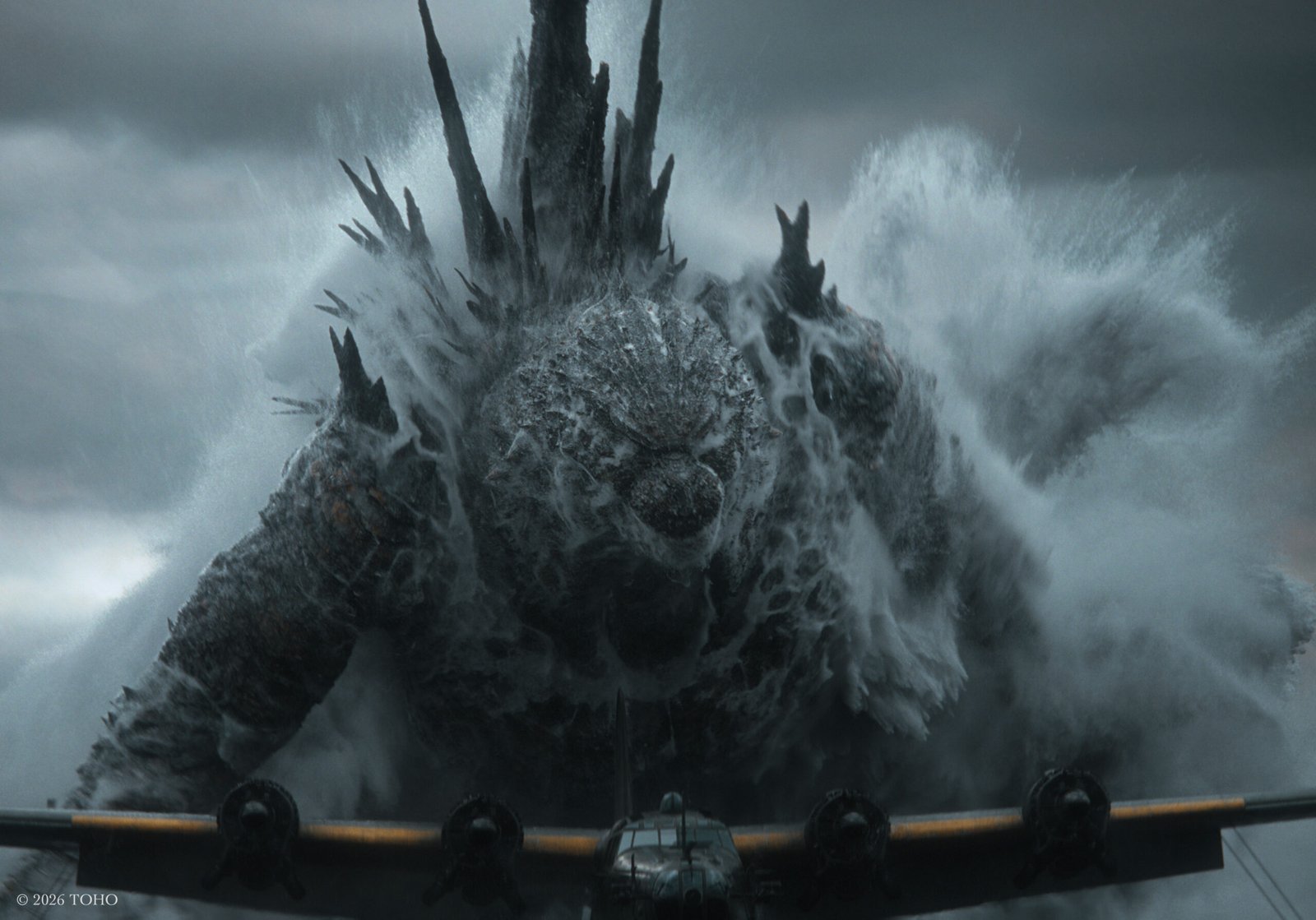
Minus Zero takes place in 1949, two years later. Koichi and Noriko are together with Akiko, but the peace is fragile. The crisis escalates into a struggle involving Ghidorah, Godzilla and the agencies trying to manage them. This is where the film departs most visibly from its predecessor. The first was an impossible survival story. The second looks more like an enormous political and military disaster in which the monsters are weapons no institution can reliably control.
Critics disagree on the trade-off. BFI’s Sight and Sound praised the mix of large-scale spectacle and postwar politics. TheWrap saw an ambitious, satisfying sequel whose emotional structure was less coherent than the original. That division tells us more than a neat winner/loser rating would.
The scenes are bigger. The stakes are not automatically deeper.
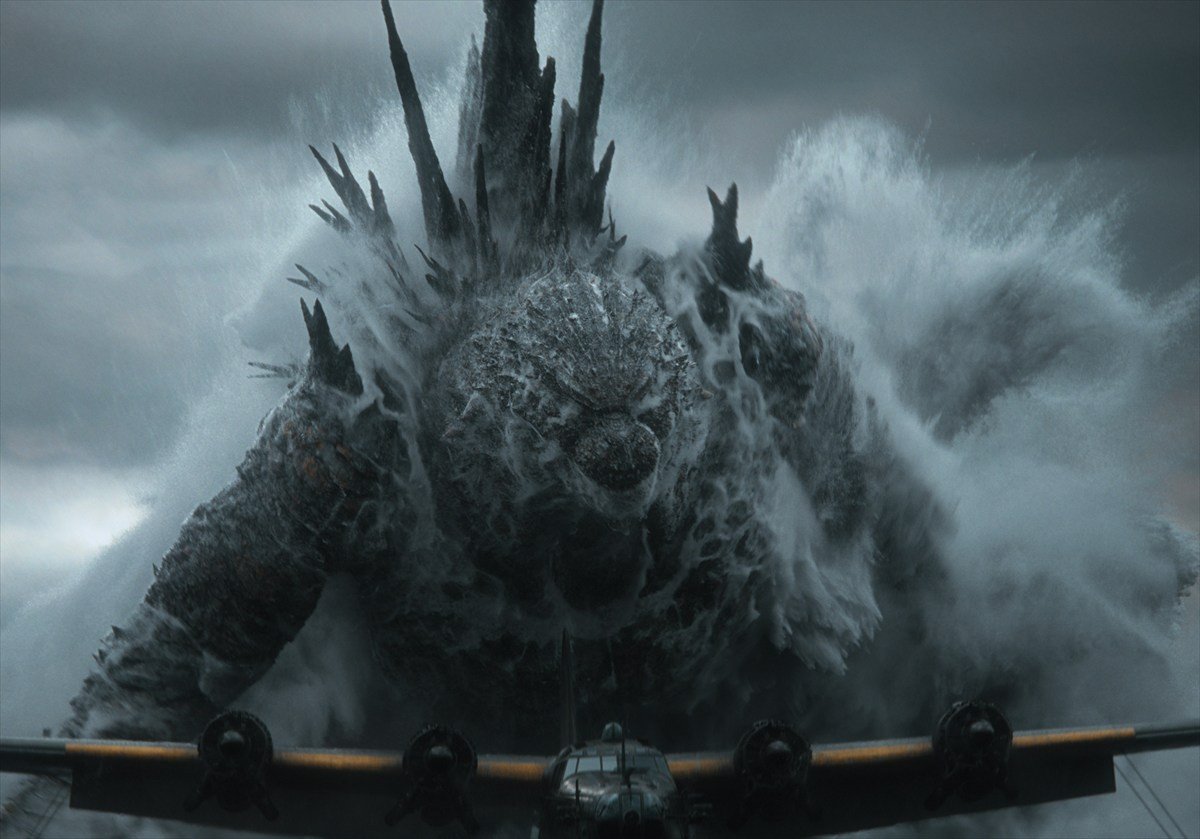
The distinction between spectacle and emotion matters. IMAX reported that Minus Zero generated $21.3 million worldwide in IMAX alone during its opening, accounting for 34% of global opening receipts. That is an exceptional share of ticket spending devoted to a premium-screen presentation. It is not evidence that 34% of moviegoers chose IMAX, because tickets cost different amounts. IMAX’s November 9 statement gives the figures, and our original box-office report explains them.
For someone who loves the sensation of a giant monster occupying the entire screen, Minus Zero delivers something close to the perfect invitation. The first movie could make a boat’s wake horrifying. The sequel is engineered to make the roof of a cinema feel too small.
But these two kinds of scale do different work. In Minus One, the terror is always measured against human beings who could disappear in an instant. In Minus Zero, the central attraction is increasingly what happens when two colossal threats clash. A thrilling change, yes. A change that inevitably risks making the humans seem less important, also yes.
Koichi and Noriko: the first movie earned their future, the second tests it

Minus One is built around the question of whether Koichi can accept a life he does not think he deserves. It creates a bond between him and Noriko that is stronger for remaining imperfect. Minus Zero places both characters inside a more complicated machinery of biological research, emergency planning, politics and an escalating monster war.
That makes thematic sense, but it dilutes the simplicity of the earlier journey. The RogerEbert.com review similarly notes that the sequel reuses some of its predecessor’s thematic material. In our view, the story is most compelling when it returns from the battle to the family’s right to remain together.

There are major developments in the ending, including Noriko’s biological connection to Godzilla and the outcome of the battle. To avoid spoiling the full resolution here, I separated them into a dedicated Godzilla Minus Zero ending explainer. It is a better page for readers who actively want the details.
What the reviews actually say
As checked on November 13, Rotten Tomatoes lists Minus Zero at 91% from 196 critics and 96% from more than 2,500 verified audience ratings. That is a strong reception, especially for a sequel facing unusually high expectations. But aggregate scores obscure a disagreement over the exact thing that made Minus One remarkable.
Reviewers have celebrated the new film’s inventive destruction and dazzling effects while questioning whether its emotional themes land with the same clarity. Rotten Tomatoes’ critic roundup captures that split. The point is not that fans are wrong to love it. Rather, the two films offer different rewards, and a single percentage cannot tell you which matters more.
Which one should you watch in IMAX?
In a theater capable of displaying the larger 1.43:1 sequences, I would prioritize Minus Zero for the sensory experience. Its certified IMAX capture and expanded framing were part of the production, not simply a format conversion. Toho’s official trailer announcement explains the format decisions.
At home, I would choose Minus One first. Its story remains gripping without a colossal screen. That makes it more likely to survive a decade of television rewatches, not just a weekend of maximum-volume theatrical excitement.
Final verdict: one film gives you a monster, the other gives you a reason to fear him
My preference is still Minus One for story and emotional precision, and Minus Zero for the sheer exhilaration of enormous creatures colliding. Both can be good films. The second does not erase the first, and the first does not need to be diminished for the second to earn a place in the series.
If you are new, watch Minus One before Minus Zero; if you’ve already watched both, read the symbolism and ending of Minus One and then what the new film’s finale really means. Those two interpretations reveal why this is more than an arms race in computer-generated destruction.
More on PYLCROW: Do you need to watch Minus One first? · Minus Zero’s IMAX box office · The best Predator movies and watch order · Can Blade Runner 2099 live up to its predecessors?
Sources
Rotten Tomatoes current film ratings; BFI; TheWrap; RogerEbert.com; IMAX; Netflix Tudum; Godzilla official site. Comparisons are editorial judgment; Rotten Tomatoes percentages are snapshots, not permanent values.
Minus Zero goes bigger. Minus One goes deeper. The real achievement is that Godzilla can convincingly do both.