Netflix’s The Altruists: An $8 Billion Fraud Is Not a Love Story — Until It Is
Smart summary
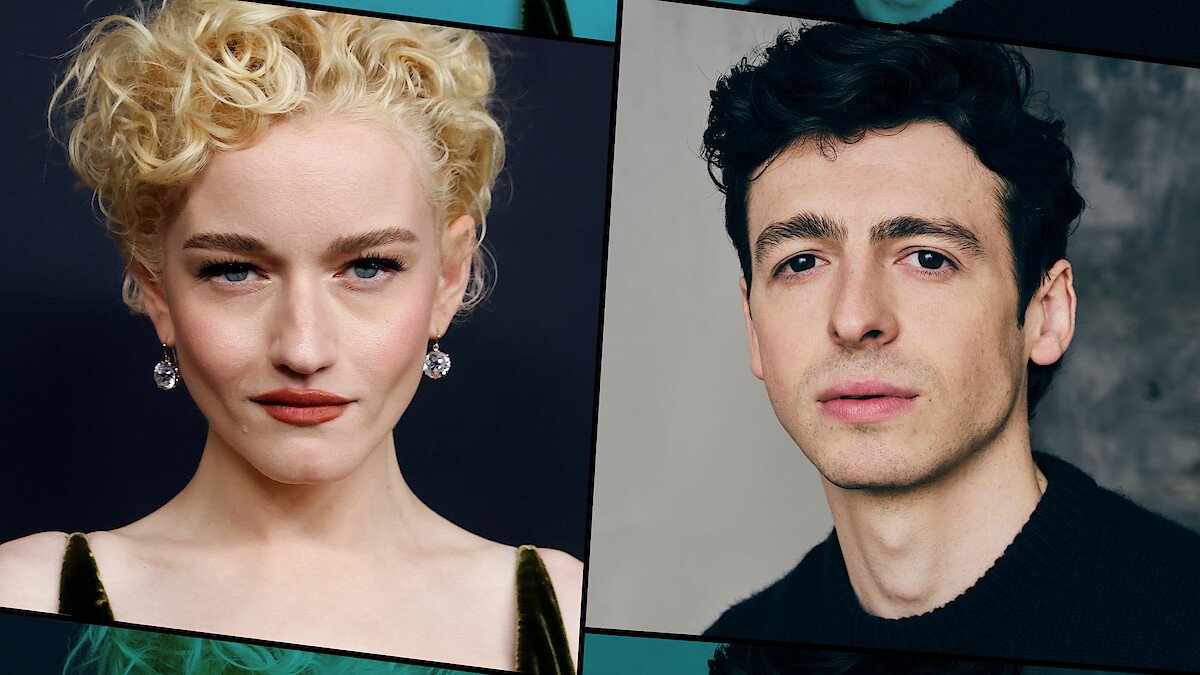
Netflix’s eight-episode The Altruists premieres November 19, 2026, with Julia Garner as Caroline Ellison and Anthony Boyle as Sam Bankman-Fried. Based on reporting about the FTX fraud scandal, the series looks at ambition, intimacy and self-justification. Our question: can it tell the protagonists’ story without losing sight of the people harmed?
Eight billion dollars is the kind of number that turns into background noise when you stare at it long enough. Put it in a headline, add a picture of two young people in expensive offices, and suddenly it begins to look like an improbably glamorous television pitch. Netflix’s The Altruists is about the people at the center of the FTX disaster — and that gives it a much harder assignment than simply making the collapse entertaining. It has to explain how people can imagine themselves doing good while participating in something devastatingly bad.
The obvious hook is a crypto scandal. The more unsettling hook is a human habit most of us recognize: once you’ve convinced yourself you are destined to do something important, you can become very talented at explaining away what you’re doing right now.
When a $8 billion scandal becomes a love story

Netflix’s official Media Center confirms that The Altruists is an eight-episode limited series premiering November 19, 2026. Julia Garner portrays Caroline Ellison and Anthony Boyle portrays Sam Bankman-Fried. Graham Moore and Jacqueline Hoyt serve as showrunners, and the project is inspired by reporting in New York magazine.
The studio has pitched the protagonists as idealists whose plan to change the financial system unravels into accusations of stealing billions. Netflix’s trailer preview emphasizes their personal relationship and uses the charged comparison to Bonnie and Clyde. It’s a compelling frame, but it risks shifting the camera from the people affected by the fraud to the chemistry of the people involved in it.
I want to understand those characters, not be asked to excuse them. There is a difference — and it will define whether the show has something valuable to say.
The most dangerous word in the title isn’t “fraud.” It’s “altruists.”
Altruism is supposed to describe caring about other people. But when someone adopts that word as an identity, it can become a powerful personal loophole. If the future outcome is enormous enough, virtually any unpleasant decision in the present can be recast as temporary, necessary or misunderstood.
That is my central interest in The Altruists: not whether the series can dramatize financial transactions, but whether it understands the psychology of the story it is telling. The characters may be smart. They may sincerely believe they are trying to make the world better. Neither quality makes them immune to responsibility.
The real-world legal outcome is documented. A U.S. jury convicted Bankman-Fried of fraud-related crimes, and he was sentenced to 25 years in prison in March 2024. The U.S. Department of Justice described misappropriation of billions of dollars in FTX customer funds. Those facts are not screenwriter inventions. The private conversations Netflix imagines around them inevitably are.
Julia Garner and Anthony Boyle have two different acting problems

Garner is often most interesting when a character appears fragile or underestimated while hiding an extraordinary capacity to adapt. Boyle, meanwhile, is playing a man audiences have already seen in interviews and courtroom reporting. Too much mimicry risks reducing him to a collection of recognizable mannerisms. Too little risks evading what made the real figure so unsettling.
There is a stranger opportunity here. Give the characters conflicting stories they tell themselves. Have one talk about the future and the other talk about the next crisis. Show how the language of saving humanity becomes less meaningful when it cannot survive a routine question about a missing dollar.
None of those scenes is a confirmed account of what happens in the episodes. They are the standard I’d like the series to meet. You can watch the official trailer and interviews and decide whether its tone gives you confidence.
Three questions to ask while watching
| The question | Why it matters |
|---|---|
| Who is telling this scene? | A dramatization’s perspective can make a character seem more sympathetic than the verified record does. |
| Who benefits from the rationalization? | Good intentions can coexist with terrible incentives. |
| Whose losses are we not seeing? | Real people and businesses can be reduced to a montage of numbers. |
The final question is especially important. Prestige dramas often make charismatic wrongdoers fascinating. That’s fine. But every dramatic close-up of a troubled founder has a cost if the people harmed disappear from the narrative. Netflix’s own synopsis begins with two ambitious protagonists. I hope the series eventually broadens its lens.
Why the FTX story belongs beside our other obsession with getting rich
People looking for a quick explanation of crypto may be disappointed if they mistake this show for a financial documentary. Its job is drama. Our job as viewers is to keep the distinction clear.
For a grounded companion read, try PYLCROW’s The Internet Is Obsessed With Making You Rich. Here’s What It Leaves Out. It takes apart the sales pitch around fast wealth. For a practical foundation, start with what to understand before buying your first stock or how ETFs actually work.
If you’re watching primarily for the performances and prestige-drama angle, we also compared The Dropout and other stories of corporate deception. And if you’re deciding which services deserve your entertainment money, see our streaming subscription price comparison.
The series doesn’t need to prove everyone is a monster
A simplistic villain story would be comforting. We could file the perpetrators away as alien exceptions and return to our own decisions untroubled. The more useful drama will recognize that harmful decisions can come from intelligent, persuasive people who can still sincerely describe themselves as doing good.
But complexity must not become absolution. The justice system has findings and records; television has invented scenes and emotional journeys. Viewers deserve to know which is which. For other new shows on the calendar, see our Blade Runner 2099 preview and Percy Jackson Season 3 guide.
Where the facts come from
Checked November 13, 2026: Netflix’s official show listing, release date and cast, Netflix’s first-look interview, Netflix’s trailer breakdown, and the U.S. Justice Department’s sentencing release. This is an editorial preview, not a review of episodes that have not yet premiered.
My hope is that The Altruists makes us understand the seduction of a grand moral mission — without asking us to forget the people who paid for it.