Loki Before Avengers: Doomsday: One God, Infinite Lives and Marvel’s Worst Throne
Smart summary
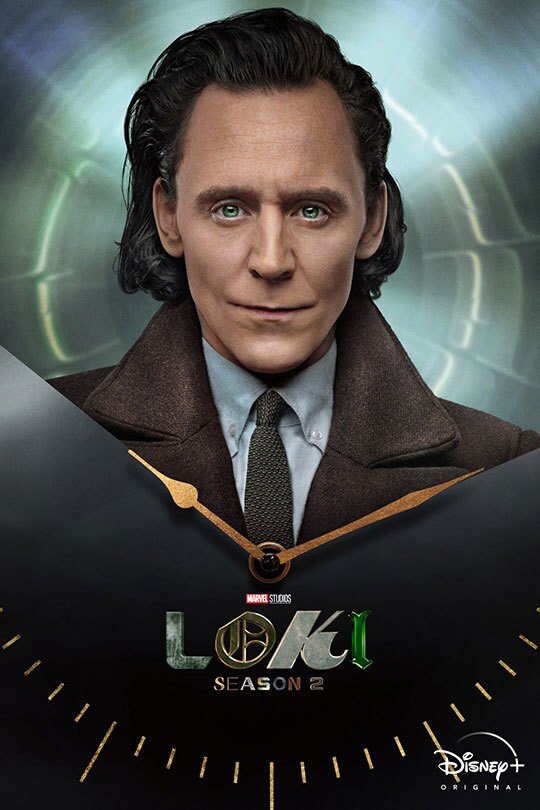
At the end of Loki season two, Loki sacrifices his freedom to sustain branching timelines. Tom Hiddleston is confirmed for Avengers: Doomsday, but Loki’s role remains unknown. Our theory: his choice to protect free will may be the moral opposite of Doctor Doom’s need for control.
Before Avengers: Doomsday asks which universe deserves to survive, a man is already sitting alone with the answer nobody wants: all of them. The man is Loki. He used to want a throne because he couldn’t stand being second. He finally got one because he couldn’t bear the idea of his friends losing their right to exist. And now Marvel is bringing him back into a movie featuring a villain who might consider that generosity the greatest weakness in creation.
Full spoilers for both seasons of Loki follow. No Doomsday plot leaks are presented as fact.
First, remember who this Loki actually is
The Loki of the Disney+ series is not quite the Loki who died trying to stop Thanos in Infinity War. The series follows a 2012 version who escapes with the Tesseract during the time-travel events of Avengers: Endgame. The Time Variance Authority (TVA) captures him, labels him a variant and introduces him to a system built to keep history on one approved track.
That distinction matters. This Loki begins with the selfish ambitions of the original 2012 villain. He has not lived through all the reconciliation, grief and growth that the main MCU Loki experienced. The show has to earn that transformation from scratch. It does so by putting a man obsessed with control inside a machine that has been controlling everyone all along.
The TVA was never a neutral clock-repair service
At first, the TVA tells itself an attractive story: it prevents chaotic deviations from an intended timeline. In reality, the institution’s mythology is manipulated. Its workers have been deprived of their own histories, and the structure serves the agenda of He Who Remains, the figure who has engineered a system to prevent rival versions of himself from producing a multiversal catastrophe.
The Sacred Timeline is therefore not simply “the correct future.” It is a managed order. Branches that don’t fit are pruned. Lives are erased because an authority claims the alternative is worse.
Now notice what the argument sounds like: Trust me. I alone understand the catastrophe. Give up your choices and I can keep everyone safe. We have no official evidence Doctor Doom says anything like that in Doomsday. But if the film uses Doom as a savior who demands obedience, the ideological connection to Loki’s TV story could be extraordinary.
What actually happened in the season two finale?
The Temporal Loom was supposed to manage the branching timelines coming from the Sacred Timeline. As branches multiply, the Loom becomes the center of an impossible engineering crisis. Loki tries to fix it, repeatedly. He learns to control his involuntary time-slipping and spends what amounts to centuries studying the problem in search of a technical answer.
Then the cruel point lands: there is no sufficiently large version of the machine. The Loom is not the neutral cure he hoped it would be. His final choice is not between two kinds of machinery, but two kinds of values. Preserve the imposed order, with the terrible sacrifices it requires, or reject that order and shoulder the consequences himself.
He destroys the Loom. The branching timelines begin to die. Loki gathers them and uses his powers to sustain them, climbing into a throne at the center of a vast structure that looks like Yggdrasil, the World Tree of Norse mythology. The visual-effects studio Framestore has explained how the finale’s timeline strands were deliberately designed to become that tree-like form.
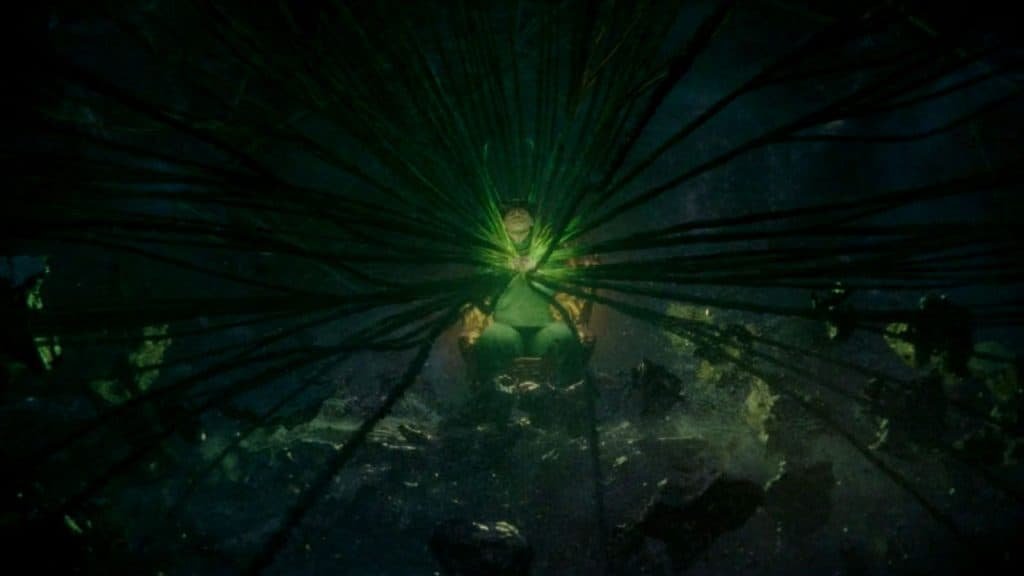
He gets the throne. He loses the ability to sit beside the people he saved. The most selfish person in the room becomes the one prepared to take responsibility for everyone else’s freedom.
Why the ending is sadder than a death scene
A heroic death ends an obligation. Loki’s ending begins one. There is no final battle followed by applause, no family reunion to reassure him that it was worth it, no scene in which someone puts a hand on his shoulder and tells him he did well. He keeps the branches alive while his friends are permitted to live in them.
And the people who were so important to his transformation — Mobius, Sylvie, Hunter B-15, O.B. — are not reduced to audience members watching their rescuer. Their right to choose is the thing he is protecting. That’s the point. He doesn’t seize their lives as his reward.
Tom Hiddleston has described the finale’s irony himself: Loki finally reaches the responsibility and belonging he wanted, but he belongs from a place of loneliness. TheWrap’s interview captures how the creative team built that transformation around the phrase “glorious purpose.”
The twist is not that Loki becomes powerful. He was powerful when we met him. The twist is that he stops treating power as proof that other people should obey.
The detail that changes the entire Doomsday conversation
We keep talking about Doomsday as a movie where old heroes return and universes crash into each other. But Loki gave that conversation a hidden moral foundation: the current order of branching timelines exists because someone has chosen not to delete the lives inside them for convenience.
That doesn’t mean Loki personally controls every separately defined Marvel universe. The MCU uses “timeline,” “universe,” “reality” and “dimension” in ways that are not always interchangeable, and the show never provides a complete technical diagram of how Loki’s throne relates to every other Marvel world. Anyone claiming a precise map of his control before Doomsday is overstating what the screen has established.
But the broad thematic tension is clear. Loki protects possibility. Doctor Doom, as a character, is defined by the conviction that superior intelligence grants authority. If Doom approaches a multiverse crisis by imposing a single correct solution, Loki may represent the one principle Doom cannot tolerate: people are allowed to make choices that create dangerous, uncertain futures.
Three ways Loki could matter — and what we genuinely do not know
Possibility one: Loki is the obstacle Doom cannot simply punch
This is our theory. Perhaps Doom’s plan requires changing the structure that keeps timelines alive. Loki would not be a cameo waiting to fight alongside Thor. He would be the cosmic restraint Doom must circumvent. That could turn their conflict into something like an argument between a gardener and an architect: one protects an unruly living tree, the other thinks the world would be safer if every branch followed his blueprint.
Possibility two: Doom offers to free him
Imagine a villain who can see exactly how lonely Loki’s achievement is. Doom might not need to threaten Loki. He could offer to take the burden away. A single universe under stable control; no more endless branches to hold; no more solitude. That is not a reported scene or a confirmed ability. It’s a dramatic possibility, and a better temptation than “join me and become stronger.”
The hardest test of Loki’s growth would be an opportunity to have the life he wants if he agrees to take freedom away from everyone else.
Possibility three: the Avengers misunderstand Loki
What if the heroes see a cosmic throne as another problem to solve? They know a history in which Loki invaded New York and demanded humanity kneel. They may not fully understand what changed at the TVA. A confrontation could begin not because Loki betrays anyone, but because the heroes misread his sacrifice as an attempt to rule.
All three scenarios are speculation. Disney has confirmed Tom Hiddleston in the cast, not Loki’s mission, screen time or his relationship with Doctor Doom.
Thor is the emotional landmine nobody needs to overcomplicate
Chris Hemsworth and Tom Hiddleston are both confirmed. That makes a possible encounter irresistible. But the version of Loki at the end of his series has experienced a very different journey from the brother Thor remembers. One has spent years grieving a brother who died a hero. The other has spent what felt like centuries deciding that heroism means never getting to leave the chair.
Reunions are often written as a reward for the audience. This one could be more interesting as a recognition problem. What does Thor do when he discovers the brother he wanted to save has become responsible for something Thor cannot even fully comprehend?
Marvel doesn’t need them to exchange a dozen references to the old films. A quiet moment in which Thor understands the price would be enough.
What to rewatch before Doomsday, and what to look for
Start with the Avengers: Endgame 2012 escape, then Loki season one’s opening episode, the episode in which Loki and Sylvie reach He Who Remains, and the final two episodes of season two. A full six-episode rewatch of season two is better if you have the time. Watch for the evolution of one repeated question: does Loki want to rule people, or does he want a place among them?
Pay attention to Mobius and Sylvie, not just the timeline mechanics. Without them, the finale is a technical solution to an imaginary problem. With them, it becomes a decision to give the people you love futures that you won’t get to share.
The theory I keep coming back to
Thanos wanted to destroy half of life to save the rest. A compelling Doom could want to end the chaos of competing realities to save some vision of a coherent world. Loki is the answer to both philosophies: you do not get to make everyone else’s existence a variable in your equation.
Of course, preserving infinite possibility is not free of consequences. Timelines collide. Conflicts spread. There may be good reasons to challenge the system Loki now sustains. That’s why the argument is worth having, and why I want Doomsday to confront it rather than turn Loki into a glowing battery the heroes have to unplug.
His arc began with a demand that people kneel. It ended with him sitting alone so they would never have to. Before Doctor Doom makes his case for saving the universe, Loki has already paid the price for letting it be free.
Related PYLCROW reading: the Doomsday story and cameo question and which confirmed cast members could actually shape the story.
Sources and what remains uncertain
This analysis is based on the two seasons of Loki, the official Disney+ press materials, Framestore’s explanation of the timeline-tree finale, Entertainment Weekly’s finale interview, and Disney’s confirmed Doomsday cast. The potential Loki-versus-Doom philosophical conflict and all possible plot scenarios above are original interpretation, not claims about leaked footage or Marvel’s unreleased story.
To place Loki’s choice alongside the wider MCU story, visit the Marvel and Doomsday reading hub.